
Picking
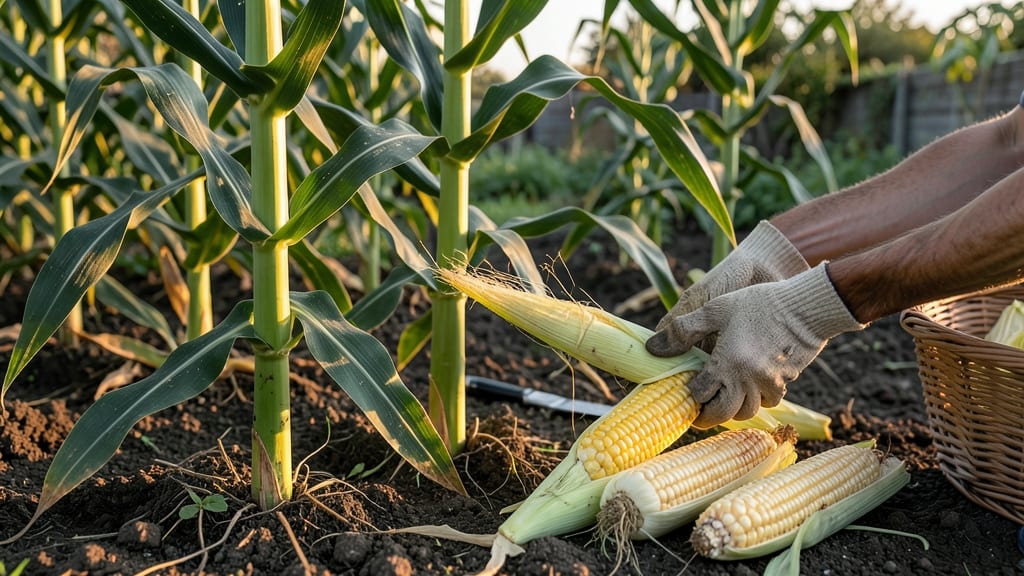
To pick corn from the garden at its sweetest, watch for 20-22 days after pollination when the kernels pass a simple 3-second test.
If you’ve ever bitten into a garden-fresh ear of corn only to find it woody and flavorless, timing is the culprit—picking too early or too late ruins everything. The secret to sweet, juicy corn lies in a simple 3-second kernel test that even beginner gardeners can master.
Start by peeling back the husk and checking the silks: they should be brown and dry, not green or crumbly. Then press a kernel between your thumb and forefinger—if it feels firm but gives slightly, it’s ready. Too hard? Wait a day or two.
Beyond the test, heat waves or early frosts can speed up ripening, so adjust your timing. Once picked, cook within 30 minutes to lock in that fresh-off-the-cob flavor. Here’s how to nail it every time.
How to Use the 3-Second kernel test for perfectly ripe garden corn
Nothing beats the taste of homegrown sweet corn picked at the perfect moment. But determining ripeness can be tricky—especially when visual cues like husk color or silk drying don’t always tell the whole story.
That’s where the 3-second kernel test comes in, a foolproof method to ensure your corn is at peak sweetness and texture. This tactile approach works for sweet corn varieties like Silver Queen or Honey & Pearl, as well as standard types like Golden Bantam.
The 3-second kernel test focuses on the milk stage of kernel development, where sugars are at their highest and starches haven’t yet taken over. When kernels reach this stage, they’ll feel plump but slightly yielding when pressed—like a ripe peach.
If you’ve ever picked corn that’s too starchy or underdeveloped, this simple test will change your harvesting game forever. Let’s break it down step by step.
-
Step 1: Choose a mature ear
Select an ear that’s reached the expected size for your variety (e.g., 6–8 inches for most sweet corn). Look for browned silks and a greenish-yellow husk. -
Step 2: Peel back the husk
Gently remove the outer husk leaves to expose the kernels. Avoid damaging the ear—you want to preserve its natural moisture. -
Step 3: Press a kernel firmly
Use your thumb and forefinger to press a kernel near the center of the ear. Apply moderate pressure for exactly 3 seconds. -
Step 4: Check the indentation
Release pressure and observe the kernel’s reaction. If it springs back slightly (like a ripe tomato), it’s perfectly ripe. If it stays dented, it’s overripe. If it bounces back immediately, it’s underripe. -
Step 5: Verify with another kernel
Test 2–3 kernels along the ear to confirm consistency. If most pass the test, your corn is ready for harvest!
The 3-second kernel test works because it taps into the kernel’s moisture content and starch-to-sugar ratio. When corn is underripe, kernels are hard and watery, lacking the sweetness that develops as sugars convert from starch.
Overripe corn, on the other hand, becomes mealy and starchy, with kernels that dent permanently when pressed. This test cuts through guesswork by giving you a tactile confirmation of ripeness.
But here’s where many gardeners go wrong: relying solely on silk color. While brown or tan silks are a good sign of pollination, they don’t guarantee sweetness. Some varieties, like supersweet corn, may have brown silks but still need the kernel test to confirm ripeness.
Similarly, husk color can be misleading—green husks don’t always mean unripe corn, and yellowing husks don’t always mean it’s ready. Always combine visual cues with the 3-second test for accuracy.
Regional climate also plays a role in corn ripeness. In hot, dry climates, corn may mature faster, so test kernels earlier (around 18–20 days after pollination).
In cooler or humid regions, kernels might take longer to reach the milk stage, so wait until 22–25 days post-pollination.
Pay attention to your local first frost dates—if frost is approaching, harvest even if kernels aren’t perfectly ripe, as cold temperatures can turn sweet corn starchy overnight.
One common mistake is harvesting at the wrong time of day. Corn is most flavorful in the morning after dew has evaporated but before the heat of the day sets in.
If you pick in the late afternoon, kernels may have lost some moisture, making them seem firmer than they are. Always aim to harvest between 7 AM and 10 AM for the best results. This timing also helps preserve the natural sugars that make garden corn so irresistibly sweet.
For sweet corn varieties, timing is even more critical because their sugars break down quickly after harvest. If you’re growing supersweet or sugar-enhanced hybrids, like Ambrosia or Peaches and Cream, the 3-second test becomes even more essential.
These types lose sweetness faster than standard corn, so don’t wait until the last possible day—pick them at the first sign of ripeness to enjoy that buttery, sugary flavor.
Once you’ve mastered the 3-second kernel test, you’ll never second-guess when to pick corn again. This method ensures your ears are plump, sweet, and tender, ready to be enjoyed fresh, grilled, or boiled. And the best part?
You’ll avoid the disappointment of woody, underripe corn or starchy, overripe ears that ruin the harvest experience. With practice, you’ll develop an instinct for the perfect moment—when that kernel just gives under your thumb.
So next time you’re standing in your garden, ear of corn in hand, take those 3 seconds to press a kernel. Your taste buds—and your dinner guests—will thank you. Happy harvesting! 🌽
Best times of day and seasonal factors that affect corn harvesting
Timing your corn harvest isn't just about checking kernel color—it's a dance with temperature, humidity, and even the time of day. Morning harvests yield the sweetest corn because cooler overnight temps preserve natural sugars.
In hot climates like the Southwest, I often pick by 10 AM to avoid the midday heat that turns kernels starchy.
Seasonal shifts demand flexibility. Late-summer heat waves can force corn to mature faster, while early frost in northern states (like Zone 4) means harvesting 2-3 weeks early, even if kernels aren't perfectly plump.
In humid regions, like the Southeast, I watch for silk browning as a secondary cue—moisture can delay traditional ripening signs.
Regional variations matter too. Gardeners in California's Central Valley might harvest July-August, while New Englanders often finish by early September. The key? Adjust your schedule based on your last frost date and average summer temps—not just calendar months.
For sweet corn varieties like 'Silver Queen' or 'Ambrosia', I prioritize kernel milk stage over size. In dry climates, I water deeply the night before harvesting to plump kernels—just don't overdo it, or you'll dilute sweetness.
Pro tip: Shuck the ear and check for creamy white liquid when cut—this is your sweetness indicator.
Late-season stress from drought or pests can force early harvesting. In these cases, I focus on kernel plumpness over color. For storage corn varieties (like 'Golden Bantam'), you can wait longer, but fresh-eating corn demands precision.
Remember: Every day counts—corn's sugar converts to starch within 24 hours of peak ripeness.
My final advice? Start checking ears 18 days after pollination, then harvest every 2-3 days for continuous freshness. Keep a harvest journal to track what works in your climate—your future garden-fresh corn will thank you. 🌽