
Picking
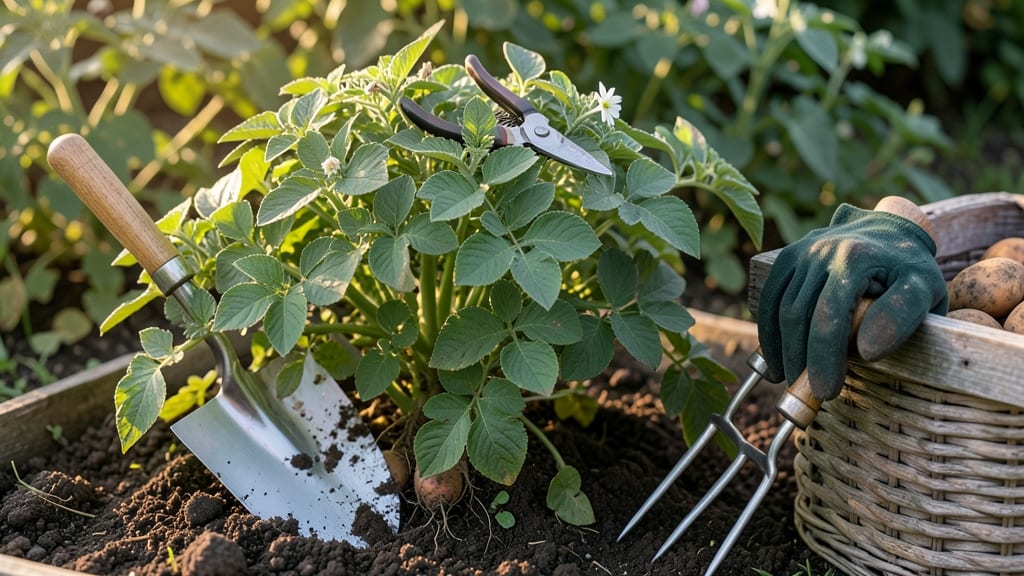
To pick potatoes from the garden at the perfect time means catching them when they’re fully formed but still firm—before they split or rot in the soil.
Digging up potatoes too early means small, underdeveloped tubers, while waiting too long risks splitting or rotting—so how do you know the exact moment to harvest for maximum yield? The answer lies in watching your 🥔 plants for five key visual cues, each signaling a different stage of readiness.
New potatoes, like Yukon Gold, can be harvested as soon as they’re golf-ball-sized and the skin resists a gentle squeeze. Mature varieties, such as Russets, need to wait until the foliage yellows and dies back entirely—a clear sign the tubers have finished growing.
In this guide, I’ll break down those visual cues, adjust for your climate zone, and share storage tips to keep your harvest fresh for months. No more guesswork—just perfect timing for a bountiful potato harvest.
5 Visual cues to determine when potatoes are ready for harvest
Timing your potato harvest is all about reading your plants—because unlike fruits that ripen on the vine, potatoes mature underground and give subtle clues when they're ready. Miss these visual signals, and you could end up with green, bitter tubers or rotting clumps from waiting too long.
The good news? Your potato plants will literally tell you when it's time to dig!
Start by checking for these five key visual cues that indicate your potatoes are nearing peak harvest time. Each signal corresponds to a different stage of maturity, so knowing which variety you're growing helps narrow down the perfect window.
For example, new potatoes (like Red Pontiac) may be ready earlier than storage varieties (like Russets). Let's break down each cue step-by-step.
📌 Numbered-Highlights Visual Guide:
For flowering varieties like Yukon Gold
Watch for fully open flowers—this typically signals 2-3 weeks until maturity for most varieties. Some gardeners even harvest new potatoes when half the flowers have bloomed for smaller tubers.
Classic sign of maturity
When 50-70% of leaves turn yellow or brown and start dying back, it's time to check for readiness. This happens 1-2 weeks before full harvest time for most varieties.
Press with your thumbnail
Gently press a fingernail into a tuber through the soil. If it doesn't puncture easily, the skin has thickened enough for harvest. For new potatoes, slight resistance is ideal.
Diameter matters!
Dig up a test potato when tubers reach 2-3 inches in diameter. For storage varieties, wait until they're 3-4 inches—smaller ones won't store well and may sprout prematurely.
Final harvest signal
When stems turn brown and collapse completely, it's your last chance to harvest before tubers split or rot in the soil. This is critical for late-season varieties like Kennebec.
Pro tip: Combine these cues with your potato variety's days to maturity. For example, early varieties (like 'Early Red') may show these signs in 70-80 days, while late varieties (like 'Idaho Russet') might take 100-120 days. Always check your seed packet for specific guidelines.
One common mistake? Harvesting only when flowers appear without checking other cues. Some varieties (like non-flowering types) never bloom, so rely on leaf color and skin toughness instead. For these, dig a small test trench to peek at tuber development without disturbing the entire plant.
If you're growing new potatoes, you can harvest as soon as you see small tubers forming (usually when plants are half their mature height).
But for storage potatoes, wait until the entire plant senesces—meaning all foliage has died back. This ensures maximum starch development and longer shelf life.
Remember: Cool weather accelerates maturity, while hot, dry spells can slow it down. In Zone 5 or colder, aim to harvest before the first frost, even if plants aren't fully senesced. For warmer climates (Zones 8-10), potatoes may mature more slowly—watch for leaf yellowing as your primary cue.
Once you've confirmed readiness, harvest on a dry, sunny day to let tubers cure properly. Use a fork or spade to gently loosen soil, then brush away dirt to reveal your harvest. Handle tubers carefully—they bruise easily, which shortens storage life.
🥔 Now that you're equipped with these five visual cues, you'll never guess wrong about harvest timing again. The key is observation: spend 5 minutes weekly checking your plants for these signals, and you'll enjoy perfectly sized, flavorful potatoes every season!
Best harvest times by potato variety: early vs. late season guidelines
Not all potatoes are created equal when it comes to harvest timing. New potatoes like Yukon Gold can be harvested early for tender, small tubers, while storage varieties such as Russet or Kennebec need time to fully mature before digging.
Understanding these differences saves you from underdeveloped or rotten potatoes—and ensures a bountiful harvest.
Your climate zone also plays a critical role. In cool regions (USDA Zones 1-5), early varieties like Red Pontiac mature in 70-90 days, while late-season types like Idaho Russet take 100-120 days.
Warmer climates (Zones 6-10) may need to adjust timing by 1-2 weeks earlier to avoid heat stress before harvest.
For new potatoes, dig when tubers are baby-sized (1-2 inches)—usually 50-70 days after planting. Look for tender green skin and use a fork to gently lift them from the soil.
These varieties thrive in cool weather and won’t store well, so harvest early to enjoy their buttery texture.
If you’re growing storage potatoes like Russets, wait until the foliage yellows and dies back completely. This signals the tubers have fully matured and developed a thick protective skin. In warm climates, harvest before the soil temperature exceeds 85°F to prevent sprouting or rot.
Pro tip: Hill soil around plants every 2-3 weeks to encourage deeper tuber formation. This extra care pays off when harvest time arrives, giving you larger, healthier potatoes regardless of variety. Just remember—timing is everything! 🥔