
Picking
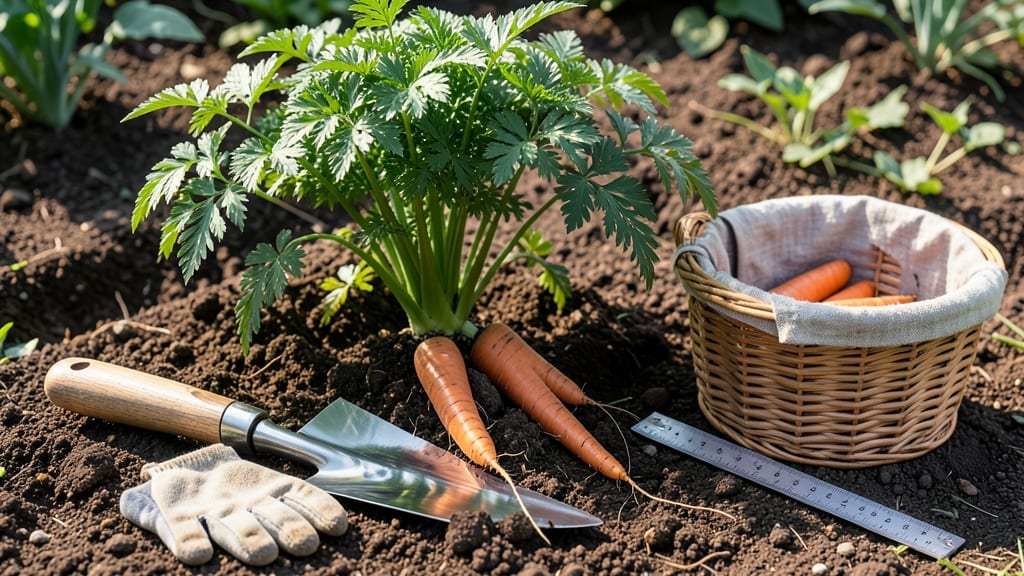
Picking carrots at the right time turns your garden into a treasure trove of crisp, sweet roots 🥕 — but wait too long, and you’re left with tough, bitter disappointments.
Most gardeners assume size is the only clue, but the truth is far more nuanced: soil resistance, leaf color, and even the time of day can signal the perfect moment.
I’ve learned the hard way that a carrot pulled just a week too early won’t store well, while one left too long turns woody and loses flavor.
In this guide, I’ll walk you through the exact signs to watch for—from the firmness test to the color cues—and when to adjust for your climate. Whether you’re growing short-season varieties or stretching your harvest into fall, these tricks ensure you never miss the window again.
You’ll also discover how to avoid common mistakes that waste your garden effort, like harvesting before bolting or after frost, and how to store your crop for maximum freshness. Ready to turn your carrot patch into a perfect harvest every time?
How to test carrot soil for perfect harvest timing
Carrots don’t send obvious signals when they’re ready to harvest—unlike tomatoes or peppers. Instead, you must read the soil and observe subtle cues to avoid pulling them too early (small and watery) or too late (woody and tough).
The key lies in three science-backed tests: the finger squeeze, root visibility, and color consistency. Mastering these will help you time your harvest for maximum sweetness and crisp texture.
First, understand that carrot varieties mature at different speeds. Short-season types like 'Paris Market' (50–60 days) need early testing, while long-season varieties like 'Danvers' (70–80 days) require patience. The soil tests below work for all types but align with their ideal maturity windows.
For example, if your 'Nantes' carrots (60–70 days) still feel soft at 60 days, wait another week—they’re not done yet.
Why soil tests matter: Carrots grow best in loose, stone-free soil. If your garden has rocks or compacted dirt, roots may fork or split, making them harder to test. Before planting, amend soil with compost and remove debris to ensure even growth. This step is critical because uneven soil conditions create inconsistent maturity across your crop.
| Variety | Days to Maturity | Soil Test Timing | Harvest Window |
|---|---|---|---|
| Paris Market | 50–60 days | Test at 45 days | 50–55 days |
| Nantes | 60–70 days | Test at 55 days | 60–65 days |
| Danvers | 70–80 days | Test at 65 days | 70–75 days |
| Chantenay | 65–75 days | Test at 60 days | 65–70 days |
Test #1: The Finger Squeeze is the simplest way to check readiness. Gently press the soil around the base of a carrot’s foliage. If the root resists slightly but doesn’t feel hard (like a rock), it’s likely mature. For short-season varieties, aim for a firm but yielding feel—like a ripe avocado. Overripe carrots will feel wooden and unyielding, while underripe ones will crush easily. Do this test on 3–5 carrots for accuracy.
Test #2: Root Visibility works best in raised beds or containers where you can see the roots. Gently loosen the soil around the base of the plant and look for roots that are 1–2 inches in diameter and deep orange or consistent in color. If roots are smaller than a pencil or still white at the core, they need more time. This test is especially useful for heirloom varieties like 'Purple Haze', where color depth indicates maturity.
Test #3: Color Consistency is a dead giveaway. Mature carrots should have uniform color from tip to tail. Dig up one carrot and check for even pigmentation. If the center is lighter or pale, the carrot isn’t fully developed. For purple or yellow varieties, the color should be deep and vibrant—not washed out. This test is foolproof for long-season varieties like 'Black Nebula', where color intensity signals peak flavor.
Timing your harvest by soil conditions also depends on the season. In spring, carrots mature faster due to cooler temps, so test earlier (50–60 days). In fall, slower growth means you should wait until 70–80 days for full sweetness.
If a light frost is forecast before your carrots are ready, harvest them anyway—they’ll tolerate light frost but may become slightly woody if left too long.
Pro tip: Harvest in the morning when soil is moist but not soggy. This makes roots easier to pull and preserves their crisp texture. Use a fork or spade to loosen the soil around the carrot, then grip the foliage and pull gently.
If the carrot resists, wiggle it side to side—never force it, or you’ll risk breaking the root. For containers or small gardens, a hand trowel works perfectly.
Once harvested, store carrots properly to extend their shelf life. Trim the greens (leave 1 inch) and store in a plastic bag in the fridge for up to 3 weeks. For long-term storage, cure them in a cool, dark place for
5 Signs your carrots are ready to harvest (beyond size)
Counting days until harvest isn’t always reliable—especially with carrots, where soil conditions and leaf signals often reveal readiness better than a ruler. I’ve learned that waiting for the perfect moment prevents those tough, stringy roots that ruin even the best garden plans.
Let’s dive into the 5 key indicators that tell you it’s time to pull your carrots—before they overstay their welcome in the ground.
First, ignore the seed packet days-to-maturity as a hard rule. While 60–80 days is typical, your local climate and soil type can shift that window by weeks. For example, my purple heirloom carrots in sandy soil mature faster than the same variety in clay-heavy beds.
The real magic happens when you combine visual cues with a simple soil test—here’s how to do it right.
- 🌱 Leaf Color Shift: Look for yellowing or browning at the leaf base. Healthy green leaves mean more growing time, but blunt, dried tips signal the plant is redirecting energy to the root.
- 🤏 Soil Resistance Test: Gently squeeze the topsoil near the plant. If the root resists but doesn’t feel rock-hard, it’s ready. A soft squeeze means it needs more time.
- ✂️ Root Shape: Dig up one test carrot—if the shoulder (top) is 1.5–2 inches wide and the taproot tapers smoothly, the rest are likely ready.
- 🌡️ Temperature Cues: For fall crops, harvest 2–3 weeks before the first frost. The cool nights sweeten roots, but freezing turns them mushy.
- 🌿 Leaf Size: If the outer leaves are 3–4 inches tall and the inner leaves are curling (not from pests!), the root is prioritizing storage over growth.
One mistake I’ve made? Harvesting based on leaf size alone. Sure, 4-inch tops are a classic cue, but in my shady garden patch, the leaves stayed small while the roots grew massive.
Always pair leaf signals with the soil resistance test—it’s the foolproof way to avoid underripe or overmature carrots.
Pro tip: If your carrots bolt (send up flower stems), they’ve gone past their prime. Bolting happens when days get too long or hot, and the roots turn woody and bitter.
To prevent this, use shade cloth in summer or opt for short-season varieties like ‘Paris Market’, which mature in just 50 days.
Finally, timing matters for storage life. Carrots harvested at peak ripeness store 3–4 weeks in the fridge, while overripe ones spoil in days. For the best flavor, aim to harvest in the morning after dew dries—this preserves moisture and crispness. Now grab your trowel and check those beds!