
Picking
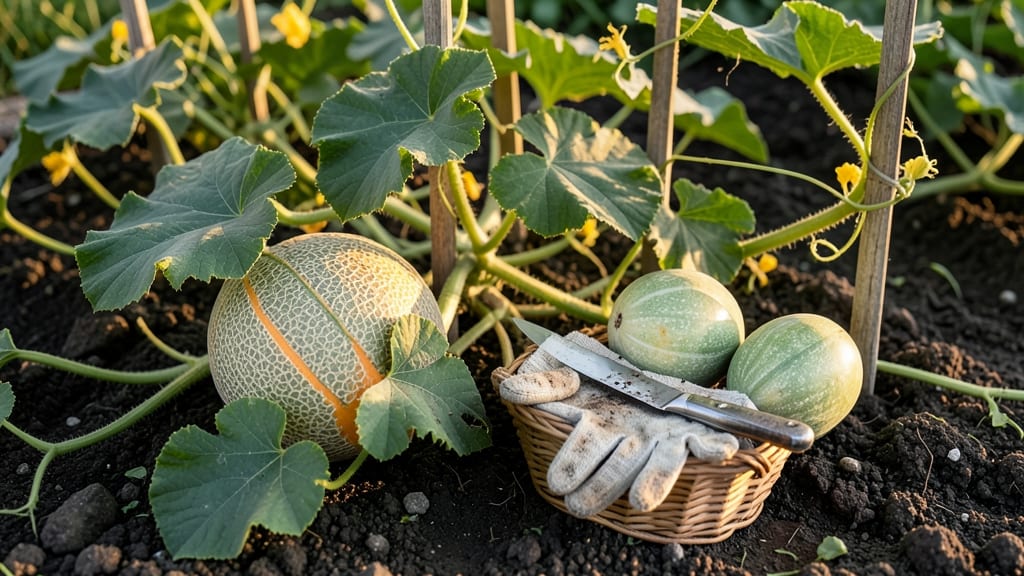
To pick cantaloupe from your garden at the perfect moment means the difference between a burst of sweetness and a mealy letdown—here’s how to get it right every time.
Picture this: you’ve nurtured your 🍈 cantaloupe all season, only to slice into one that’s either rock-hard or mushy. The key to avoiding that frustration? Learning the 5 foolproof tests that tell you—without a doubt—when your melon is ready to harvest.
From the way the stem detaches to the scent at the blossom end, these visual and physical cues cut through the guesswork. Whether you’re in USDA Zone 6a or a warmer climate, knowing when to pluck your cantaloupe ensures you never miss peak ripeness again.
Below, I’ll walk you through each test step-by-step, plus how to adjust for your cantaloupe variety and growing conditions. No more second-guessing—just perfectly ripe fruit straight from your garden.


5 Visual and physical tests to determine cantaloupe ripeness
There's nothing worse than biting into a cantaloupe that's still rock-hard or so overripe it's mushy—yet knowing the perfect moment to harvest can feel like guessing. After years of testing (and a few too many mealy slices), I've learned these 5 visual and physical tests that never fail me.
The key? Pay attention to what the plant shows you, not just what you think you see.
Cantaloupes don't ripen on the vine like tomatoes—they need to be picked at the peak of ripeness for that explosion of sweetness. That means checking for color shifts, texture changes, and even scent signals that most gardeners miss.
I'll walk you through each test step-by-step, so you can go from guessing to confident harvesting in no time.
🍈 The Vine Separation Test
Gently grasp the fruit stem near the vine and give it a firm twist. If it snaps cleanly with just a little resistance, your cantaloupe is ready. If it holds tight or tears, wait 1-2 days. Pro tip: The stem should detach easily—no brute force needed!
👃 The Scent Test
Sniff the stem end (the blossom end) of the cantaloupe. A ripe cantaloupe should smell powerfully sweet—like a mix of honey and musk. If it smells mild or floral, it's not ready. And if it smells fermented or sour, it's past its prime.
🟡 The Color Test
Look for a creamy-yellow hue on the underside of the cantaloupe (where it rested on the ground). The netting should be well-defined and the color should contrast sharply with the green stem end. Avoid picking if the rind is still dull green or patchy.
🤏 The Thumb Pressure Test
Press your thumb gently into the blossom end (the flat side). A ripe cantaloupe will feel slightly soft but not mushy—like pressing a ripe peach. If it springs back hard, it's not ready. If it dents easily, it's overripe.
✂️ The Sound Test
Tap the fruit surface with your knuckles. A ripe cantaloupe will make a deep, hollow sound. If it sounds dull or flat, it's underripe. This test works best on fully grown fruit—don't confuse it with the sound of an unripe melon!
Here's the secret I learned after years of trial and error: Combine these tests for the most accurate results. For example, a cantaloupe might pass the color test but fail the scent test—meaning it needs more time on the vine.
I always check the vine separation and scent first, as these are the most reliable indicators of true ripeness.
One common mistake I see is picking cantaloupes based on size alone. A cantaloupe can be large but still underripe, or small but perfectly sweet. The texture and aroma matter more than the scale!
I've harvested cantaloupes as small as 2 pounds that were sweeter than 10-pound monsters because I trusted the tests, not the tape measure.
If you're growing cantaloupes in hot climates, they may ripen faster, so check them every 2-3 days once they reach full size. In cooler areas, give them extra time—they'll develop that deep sweetness more slowly.
I once left a cantaloupe on the vine for 10 days past what I thought was ripe, and it was still perfect—just don't let it get overripe and attract pests!
Once you've picked your cantaloupe, store it at room temperature for 2-3 days to let the sugars fully develop. Never refrigerate until it's fully ripe—cold temperatures will kill the flavor.
I like to place mine on a sunny windowsill for a day or two before cutting into it, and the difference in taste is night and day.
Remember, every cantaloupe variety has slightly different ripening traits. For example, muskmelons often develop a more intense aroma, while honeydews may have a smoother rind. Pay attention to what works best for your specific variety, and soon you'll be harvesting cantaloupes that taste like they came
How to adjust harvest timing based on cantaloupe variety and climate
Not all cantaloupes ripen on the same schedule—variety differences and climate conditions can shift your harvest window by weeks. For example, muskmelons like 'Ambrosia' mature faster than honeydews like 'Earlidew,' while cooler temperatures delay ripening in northern gardens.
Understanding these factors helps you time your harvest perfectly for maximum sweetness.
Muskmelons typically ripen in 70-80 days, while honeydews take 80-90 days from transplant. In hot climates (Zones 8-10), expect harvests as early as late June, but in cooler regions (Zones 4-6), wait until mid-to-late August. Even within the same variety, daytime highs above 90°F can speed up ripening, while cloudy, cool weather slows it down.
🌱
| Variety | Days to Maturity | Best Climate Zones | Harvest Window | Key Ripeness Cue |
|---|---|---|---|---|
| Muskmelon (e.g., 'Ambrosia') | 70-80 days | Zones 4-10 | Late June-August | Stem slips easily, creamy netted rind |
| Honeydew (e.g., 'Earlidew') | 80-90 days | Zones 5-9 | Mid-July-September | Smooth rind, sweet aroma at stem |
| Mini Cantaloupe (e.g., 'Minnesota Midget') | 60-70 days | Zones 6-10 | Early July-August | Small size, bright yellow blossom end |
| All Varieties in Cool Climates | +10-15 days | Zones 1-5 | Late August-September | Wait for full color, firm texture |
If you're growing cantaloupes in containers, expect harvests 1-2 weeks earlier than in-ground plants because potted soil warms faster. Conversely, shady spots or heavy clay soil can delay ripening by 10-14 days, so choose varieties like 'Athena' that tolerate cooler conditions.
Always adjust your harvest timing by monitoring stem separation—this is the most reliable cue, regardless of variety or climate.
For extended harvests, try succession planting in warm zones: sow seeds every 2-3 weeks from late spring to early summer. This spreads out your ripening window and ensures a steady supply of sweet cantaloupes. In cooler areas, opt for early-maturing varieties like 'Tasty Breeze' to beat the first frost.
🌡️
Pro tip: Keep a garden journal to track your cantaloupe's progress. Note when vines start running, flowers appear, and fruit sets—this helps you predict future harvests.
Over time, you'll fine-tune your timing based on your specific microclimate, ensuring every cantaloupe is picked at its peak for maximum flavor and texture.