
Fertilization
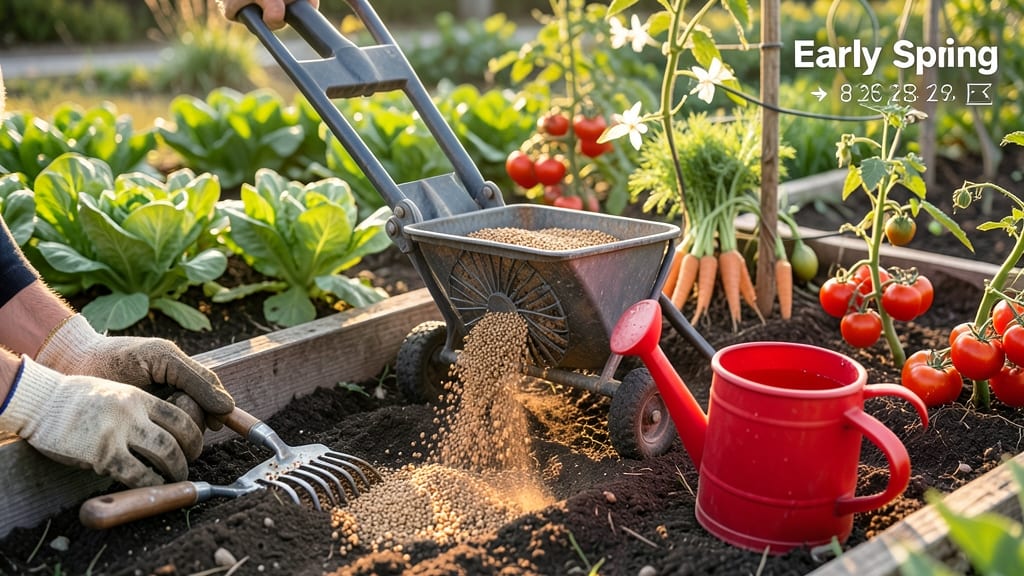
Apply fertilizer to your vegetable garden at planting and again 4-6 weeks later—this two-step timing unlocks the most productive harvests, whether you're growing tomatoes 🥕 or leafy greens.
Timing your fertilizer applications can mean the difference between a thriving vegetable garden and one that struggles to produce—yet most gardeners apply it at the wrong times, wasting nutrients and stressing plants.
Think about it: too early, and roots won’t have time to establish before nutrients flood the soil. Too late, and your plants miss the growth boost they need when it matters most.
Below, I break down the exact schedule for pre-planting, early growth, flowering, and fruiting stages—plus how to adjust for Zone 6a conditions and crop-specific needs.
Soil-test-based fertilizer application timing for vegetable gardens
Your soil test results are like a roadmap for your vegetable garden's success. They reveal pH levels, nitrogen (N), phosphorus (P), and potassium (K)—the four pillars that determine when and how much fertilizer to apply.
Ignoring these numbers often leads to wasted nutrients or stressed plants, especially when growing nitrogen-heavy crops like lettuce versus phosphorus-dependent fruits like tomatoes. Let's decode your soil test and create a fertilizer schedule tailored to your garden's needs.
First, check your pH level. Most vegetables thrive in slightly acidic to neutral soil (pH 6.0–7.0). If your test shows a pH below 6.0, your garden may be locking out essential nutrients like phosphorus and potassium—even if you apply fertilizer.
In this case, lime or wood ash should be added 2–3 months before planting to adjust the pH before any fertilizer. For pH above 7.0, sulfur or peat moss will help lower it gradually.
Now, focus on the NPK values. If your soil test shows low nitrogen (N) (below 50 ppm), prioritize leafy greens like spinach or kale, which need extra nitrogen for lush growth.
For root crops (carrots, beets) or fruiting vegetables (tomatoes, peppers), aim for balanced NPK ratios like 10-10-10 or 5-10-10 to avoid overstimulating foliage at the expense of fruit production.
| Soil Condition | Action | Best Time to Apply | Example Crops |
|---|---|---|---|
| Low Nitrogen (<50 ppm) | Apply high-nitrogen fertilizer (e.g., blood meal or 10-0-0) | Pre-planting and early growth stage | Lettuce, Spinach, Kale |
| Low Phosphorus (<20 ppm) | Use bone meal or rock phosphate | 2–3 weeks before flowering | Tomatoes, Peppers, Squash |
| Low Potassium (<150 ppm) | Add potassium sulfate or wood ash | Fruiting stage (6–8 weeks after planting) | Tomatoes, Eggplant, Corn |
| High pH (>7.0) | Apply sulfur or peat moss to lower pH | 3 months before planting | All vegetables (improves nutrient uptake) |
| Balanced NPK (50-100 ppm each) | Use slow-release fertilizer (e.g., 10-10-10) | Pre-planting and mid-season | Carrots, Beets, Onions |
For cool-season crops like broccoli or peas, apply half your fertilizer at planting and the remaining half 4–6 weeks later. These plants grow quickly and benefit from early nitrogen, but too much later in the season can lead to bolting (premature flowering).
Warm-season crops like tomatoes and peppers, however, need a gradual approach. Start with a light application at planting, then feed again when flowers appear and a final time when fruits begin to form.
Seasonal timing is critical.
In spring, focus on nitrogen-rich fertilizers to jumpstart growth, but avoid overdoing it in late summer, as this can encourage tender new growth vulnerable to frost. Fall crops like kale or Brussels sprouts need a balanced fertilizer applied 6–8 weeks before harvest to ensure they store nutrients properly for winter.
Always water fertilizer in thoroughly to prevent root burn.
Organic fertilizers like compost or manure release nutrients slowly, making them ideal for pre-planting applications. Synthetic fertilizers, on the other hand, provide immediate results and are better suited for mid-season boosts.
For example, if your soil test shows low phosphorus, apply bone meal 2–3 weeks before flowering to support root and fruit development in tomatoes or peppers.
One common mistake is applying fertilizer
Critical fertilizer application windows by vegetable type (with plant growth stages)
Fertilizing your vegetable garden at the right time is like feeding your plants a perfectly timed meal—they need nutrients when they’re most hungry, not when they’re already full. Cool-season crops like spinach and kale have different needs than warm-season powerhouses like tomatoes and peppers, and applying fertilizer at the wrong stage can lead to wasted nutrients or even plant stress.
The key is understanding each crop’s growth stages and adjusting your fertilizer schedule accordingly.
For example, leafy greens thrive with nitrogen-rich fertilizer early in their growth cycle, while fruit-bearing plants need phosphorus and potassium when they start flowering. Over-fertilizing during drought or heat stress can burn roots, so timing matters just as much as the type of fertilizer you use.
Let’s break down the critical windows for each stage, so you can feed your garden like a pro.
-
1. Planting Stage (Cool-Season Crops)
Apply a balanced fertilizer (e.g., 10-10-10) or compost at planting for spinach, lettuce, and peas. Cool-season crops need nutrients to establish roots quickly before cooler temps slow growth. Avoid high-nitrogen fertilizers in late summer for fall crops to prevent tender growth before frost. -
2. Early Growth (Warm-Season Crops)
Tomatoes, peppers, and cucumbers need a light nitrogen boost (e.g., 5-10-10) 2-3 weeks after transplanting to support leafy growth. Skip heavy feeding—too much nitrogen delays flowering and fruiting. Water deeply after applying to prevent root burn. -
3. Flowering Stage (All Crops)
Switch to a phosphorus-heavy fertilizer (e.g., 5-10-10 or 3-4-6) when plants start flowering. This supports root and fruit development in tomatoes, squash, and beans. Apply in the morning to avoid attracting pests like aphids. -
4. Fruiting Stage (Heat Stress Adjustments)
Use a low-nitrogen, high-potassium fertilizer (e.g., 2-4-6) during fruiting to improve disease resistance and fruit quality. Reduce or skip fertilizer during drought or extreme heat—plants can’t absorb nutrients efficiently, leading to leaf scorch or blossom drop. -
5. Post-Harvest (Fall/Winter Prep)
After harvesting, apply compost or organic matter to replenish soil for next season. Avoid synthetic fertilizers in late summer/fall—they encourage late-season growth vulnerable to frost. Let the soil rest to rebuild nutrients naturally.
Adjusting your fertilizer schedule based on plant growth stages and seasonal needs ensures your vegetables get exactly what they need when they need it.
For example, spinach and kale benefit from a nitrogen boost in early spring, while tomatoes and peppers need phosphorus and potassium as they transition from leaves to fruit. During drought or heat stress, always check soil moisture before fertilizing—dry soil locks out nutrients, making them useless to your plants.
One common mistake is fertilizing stressed plants, like those struggling with pests or disease. Instead, address the root cause first (literally and figuratively) before adding more nutrients. For instance, if your cucumbers are wilting in heat, focus on shade and watering before reaching for fertilizer.
Once the plant recovers, a light feeding can help it bounce back stronger.
For container gardens, reduce fertilizer amounts by half since pots dry out faster and nutrients leach more quickly. Use a slow-release fertilizer or liquid feed every 2-3 weeks during the growing season. Always follow the label’s instructions—over-fertilizing in containers can lead to salt buildup, which harms roots over time.
Remember, the goal is consistent, balanced growth, not rapid but unsustainable spikes. By aligning your fertilizer applications with each crop’s natural cycle, you’ll enjoy healthier plants, bigger yields, and fewer wasted nutrients. Happy gardening!