
Fertilization
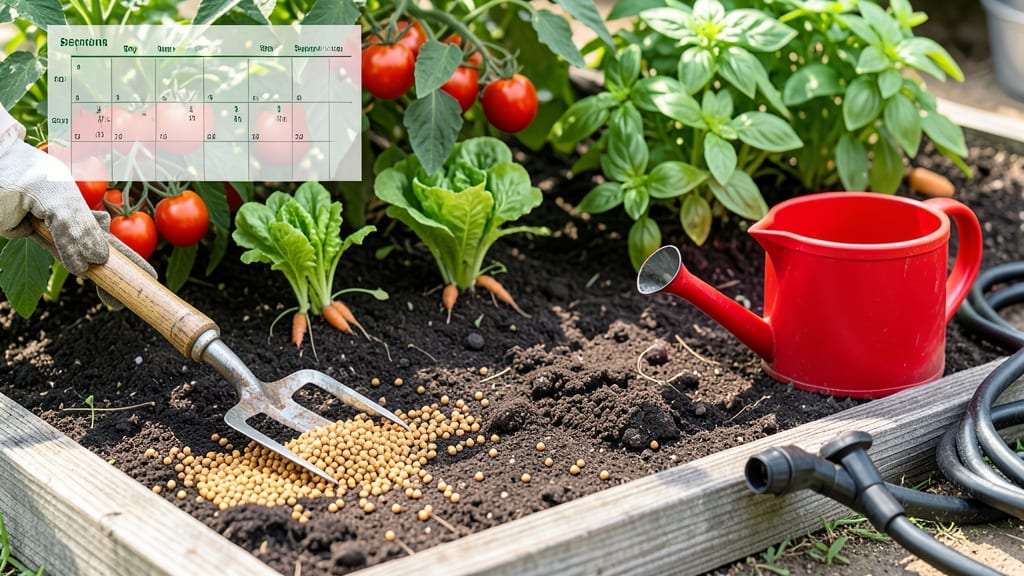
Should you fertilize your garden now or wait until later? Timing matters more than you might think—too early and you waste nutrients, too late and your plants miss out on critical growth.
Timing your garden fertilization isn’t just about throwing nutrients into the soil—it’s about giving your plants the right boost at the right moment to maximize growth and yield. But with seasonal changes and plant-specific needs, when exactly should you fertilize?
For most gardens in Zone 6a, the best times to feed your 🌱 are early spring (March-April) and again in early summer (June), when roots are active and plants are hungry. But vegetables, flowers, and lawns each have their own schedules—and skipping or overdoing it can backfire.
Below, you’ll find a month-by-month breakdown, signs your garden is begging for nutrients (or begging you to stop), and how to choose between organic and synthetic fertilizers for the best results.
Seasonal fertilization schedule for vegetables, flowers, and lawns
Fertilizing your garden at the right time can mean the difference between lush, productive plants and struggling ones. Seasonal changes trigger different growth phases, and each plant type—whether it's vegetables, flowers, or lawns—has unique nutrient needs.
For example, leafy greens like spinach and lettuce need nitrogen early in the season, while flowering plants like tomatoes and roses benefit from phosphorus-rich fertilizers when buds form. Even your lawn has specific windows for feeding to stay green and resilient.
Climate zones also play a critical role. In USDA Zone 6a, where frost dates typically range from mid-April to mid-October, the growing season is shorter than in warmer zones. This means fertilization timelines shift earlier in the year.
For instance, spring fertilization might start as early as March, while in warmer zones like Zone 8, you could begin in February. Always adjust based on your local last frost date and soil temperature—60°F (15°C) is ideal for most plants to wake up from dormancy.
Below is a month-by-month guide tailored to vegetables, flowers, and lawns, with adjustments for cooler and warmer climates. Use this as your roadmap to feed your garden efficiently without overdoing it.
| Month | Vegetables | Flowers | Lawns | Notes |
|---|---|---|---|---|
| January | None | None (dormant) | None | Focus on soil prep (compost) |
| February | None (Zone 6a) | None (Zone 6a) | Light (warm zones) | Warmer zones: Fertilize bulbs |
| March | Feed (nitrogen) | Feed (bulbs) | Feed (spring green-up) | Use 10-10-10 or compost |
| April | Feed (planting time) | Feed (new growth) | Feed (root development) | Avoid high nitrogen for flowers |
| May | Light feed (foliar spray) | Feed (phosphorus) | Feed (summer prep) | Use 5-10-10 for blooms |
| June | Feed (fruit set) | Light feed (maintenance) | Feed (drought stress) | Water deeply after fertilizing |
| July | Light feed (organic) | None (unless wilting) | Feed (heat recovery) | Avoid late-season nitrogen |
| August | None (harvest focus) | None (prep for fall) | Light feed (fall color) | Stop fertilizing 6 weeks before frost |
| September | Feed (fall crops) | Feed (bulbs) |
Signs your garden needs fertilizer (and when to avoid it)Your garden speaks to you through its leaves, stems, and blooms—if you know what to listen for. Yellowing leaves, especially between veins, often signal nitrogen deficiency, while stunted growth or small, sparse blooms may mean your plants are hungry for phosphorus or potassium. These visual cues help you determine if your garden needs a nutrient boost. But timing matters just as much as the fertilizer itself. Applying nutrients at the wrong time—like mid-summer heat waves or late fall before dormancy—can stress plants instead of helping them. Understanding these signs helps you fertilize strategically, ensuring your garden thrives without unnecessary waste or harm. ⚠️ Critical Warning: When NOT to Fertilize
Over-fertilizing can kill plants by disrupting root systems or causing nutrient imbalances. Always check soil moisture and plant health first! Start by testing your soil pH—most vegetables prefer 6.0-7.0, while blueberries need 4.5-5.5. If your soil is already nutrient-rich (dark, crumbly, and earthy-smelling), your plants may not need extra fertilizer. Instead, focus on organic matter like compost or aged manure to improve soil health naturally. For flowering plants, watch for poor bloom production or weak stems. Phosphorus-rich fertilizers (like bone meal) can encourage stronger roots and more vibrant flowers. Apply these in early spring or when you notice buds forming, but avoid heavy applications—too much phosphorus can lock out other nutrients. Herbs and leafy greens often show nitrogen deficiency first, with pale or yellowing leaves. A light application of fish emulsion or blood meal can revive them, but time it right: apply in early spring or after harvesting to support regrowth. Never fertilize during flowering—this shifts energy away from leaves and toward blooms. Lawns need special attention. If your grass is thin, patchy, or discolored, it’s likely starving for nutrients. Apply a slow-release fertilizer in early spring and late summer, but avoid fertilizing in fall if your region has freezing temperatures. Over-fertilizing can lead to brown patches or even algae growth in nearby water sources. Always water your garden before and after applying fertilizer to help nutrients absorb into the soil. And remember: less is often more. A little fertilizer goes a long way when timed correctly—so observe your plants, adjust as needed, and watch them thrive! 🌱 |