
Tools
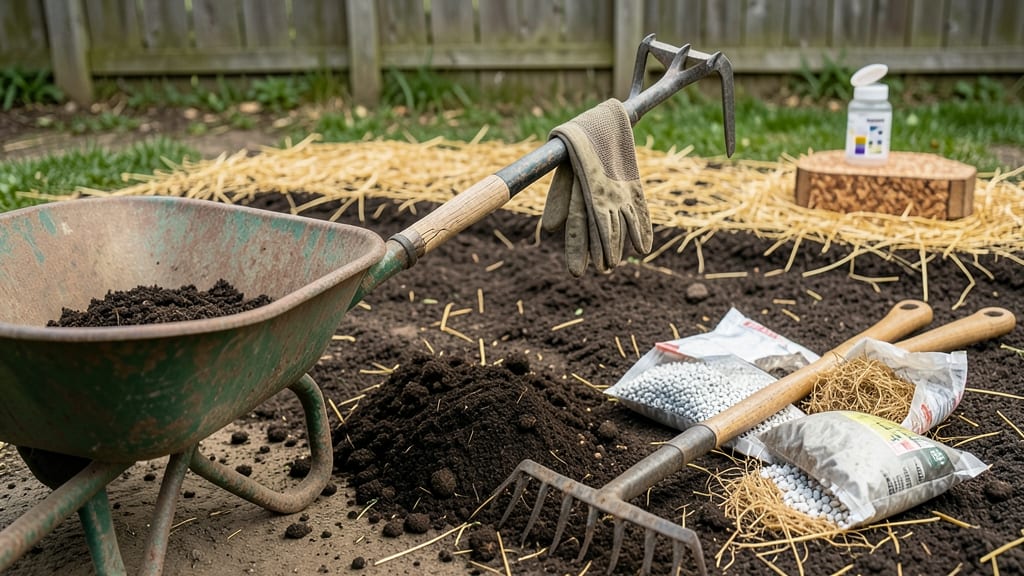
To prepare soil for a flower garden, test the pH, clear out weeds and rocks, mix in compost, and break up compacted areas to create loose, fertile ground that promotes strong root growth and vibrant blooms.
Creating the perfect bed for flowers starts with understanding what your plants actually need. 🌸 Most bloomers thrive in soil with a pH between 6.0 and 7.0, though some like azaleas prefer slightly acidic conditions.
The texture matters just as much—too much clay can suffocate roots while sandy soil drains nutrients too quickly. I've found that adding a 2-3 inch layer of compost works wonders for both structure and nutrition, giving flowers the energy they need to produce those showstopping blossoms.
Don't overlook the importance of timing—prepping soil in early spring gives plants a head start, while fall preparation builds a nutrient-rich foundation for next year's growth. For heavy clay soils, mixing in coarse sand or perlite can work miracles in just a few weeks.
The key is patience: proper soil prep might take a weekend, but it pays off with healthier plants that bloom longer and more beautifully.
💡 In This Article
- Flower Garden Soil Science: pH, Texture, and Nutrient Needs
- Step-by-Step Soil Prep Guide for Different Flower Types
Flower garden soil science: pH, texture, and nutrient needs
Flower roots thrive when soil chemistry and structure align perfectly with their needs. The pH scale—ranging from 0 (acidic) to 14 (alkaline)—directly affects nutrient availability. Most flowers prefer a slightly acidic to neutral range of 6.0-7.0, but blueberries (acid-loving) need 4.5-5.5 while sweet peas flourish at 6.5-7.5.
A simple home test kit reveals your soil's pH in minutes, helping you adjust with lime (to raise pH) or sulfur (to lower it). The difference is dramatic: roses in 6.5 pH soil produce 30% more blooms than in 5.5 pH conditions.
Texture determines how well roots breathe and access water. Clay soil—dense and sticky when wet—can suffocate roots unless amended with 20-30% coarse sand or perlite to improve aeration. Sandy soil, on the other hand, drains too quickly, so adding 3-4 inches of compost helps retain moisture and nutrients.
Think of it like a sponge: clay holds too much water, while sand lets it all escape. The ideal "loamy" soil (equal parts sand, silt, and clay) balances drainage and nutrient retention, creating the perfect growing medium for flowers.
Nutrients are the fuel for vibrant blooms, and the big three—nitrogen (N), phosphorus (P), and potassium (K)—work together like a symphony. Nitrogen promotes leafy growth, phosphorus strengthens roots and flowers, while potassium boosts disease resistance.
A soil test reveals deficiencies, but most gardeners benefit from a balanced 5-10-5 fertilizer applied at planting time. For example, petunias need more phosphorus (P) for their showy blooms, while snapdragons thrive with extra potassium (K) for resilience.
Organic options like bone meal (high in P) or greensand (rich in K) offer targeted nutrition.
Microorganisms hidden in the soil—like mycorrhizal fungi—act as nature's nutrient delivery system, helping roots absorb water and minerals. These beneficial microbes thrive in soil with 5-10% organic matter, which is why compost is non-negotiable.
A single teaspoon of healthy soil can contain billions of bacteria and fungi, breaking down organic material into plant-available nutrients. The more diverse this microbial community, the more efficient your flowers become at converting soil resources into stunning blooms. 🌱
Seasonal changes also impact soil health. In spring, focus on adding compost and testing pH before planting. By late summer, soil often becomes depleted, so a light top-dressing of compost or a slow-release fertilizer keeps flowers thriving until frost.
The key is consistency: flowers don't just need nutrients at planting—they need a steady supply throughout their growing season to produce continuous blooms. Think of it like feeding a hungry plant: one big meal won't sustain it for months.
For example, hydrangeas change color based on soil pH—blue in acidic soil (5.5) and pink in alkaline soil (7.0+). This isn't just a quirk; it's a direct result of aluminum availability in acidic conditions.
Testing your soil before planting ensures you can create the perfect environment for your flowers to shine.
The same logic applies to soil texture: amending heavy clay with sand isn't just about drainage—it's about giving roots the space to grow and access oxygen, which is critical for root health and bloom production.
Remember, soil isn't static—it's a living ecosystem. The more you learn about its composition, the better you can tailor it to your flowers' needs. Start with a simple test, make adjustments, and watch your garden transform into a vibrant display of healthy blooms.
The science behind it is fascinating, but the results are even more rewarding. 🌸