
Watering
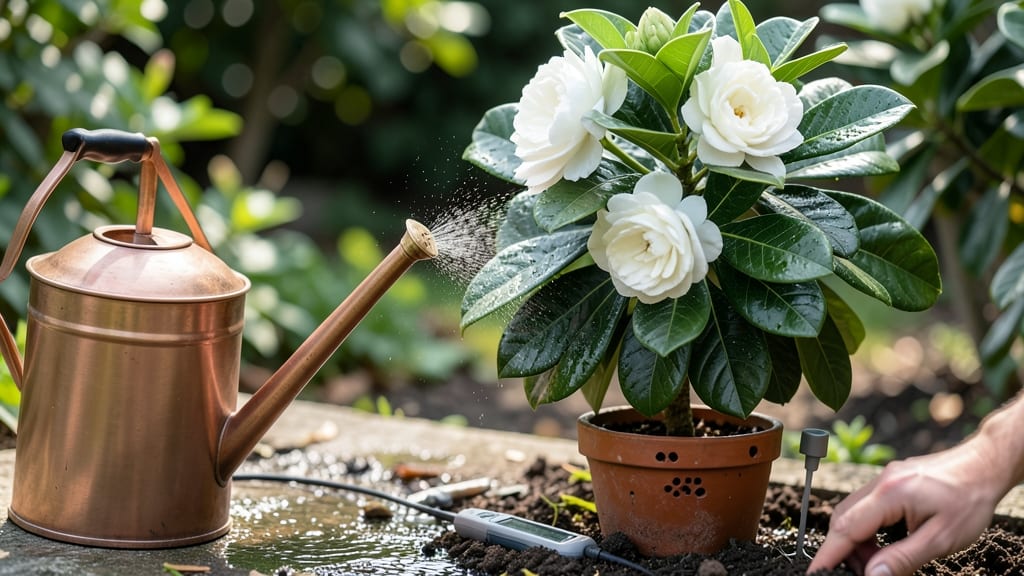
To water gardenia properly means keeping its roots consistently moist without drowning them—think of it as mimicking their tropical homeland where humidity and drainage work in perfect balance.
Struggling to keep your gardenia blooming? The secret isn’t just sunlight or soil—it’s mastering the delicate art of watering. Overwater or underwater, and you’ll lose those intoxicating flowers for good.
Gardenia 🌸 thrives when the top inch of soil feels like a wrung-out sponge, not bone-dry or soggy. In Zone 6a, that means adjusting your watering schedule from daily soaks in summer to bi-weekly checks in winter.
Here’s how to strike the perfect balance: when to water, how deep, and the telltale signs your gardenia is thirsty—or drowning. Let’s dive in.
The perfect watering schedule for gardenia blooms
Your gardenia thrives on consistency, and watering is where most gardeners go wrong. These tropical beauties demand deep hydration but hate soggy roots—balancing both is key to those fragrant blooms you love.
I’ve learned the hard way that skipping this step means wilting leaves or bud drop. Let’s fix that with a science-backed schedule tailored to your gardenia’s needs year-round.
Gardenia plants originate from humid, subtropical climates, where rainfall is frequent but soil drains quickly. Mimicking this means watering deeply 2-3 times per week in summer, but cutting back in cooler months.
The goal? Keep the root zone consistently moist without waterlogging. Think of it like a spa day for your plant—just enough to keep it plump and happy, not drowned.
🌱 Numbered-Highlights: How to Water Gardenia Like a Pro
- 1. Morning Watering: Always water before 10 AM to reduce evaporation and fungal risk. Wet leaves in the sun = recipe for powdery mildew.
- 2. Deep Soak Method: Water until 1500-2000ml drains through the pot or soil. Check by sticking your finger 2 inches deep—it should feel damp, not soggy.
- 3. Seasonal Adjustments:
- Summer: Daily deep watering (high heat = faster evaporation)
- Spring/Fall: Every 3-4 days (growth slows, so less water)
- Winter: Bi-weekly (dormancy = minimal needs)
- 4. Signs of Overwatering: Yellow leaves, mushy stems, or root rot (smells foul). Fix by letting soil dry slightly between waterings.
- 5. Signs of Underwatering: Drooping leaves, crispy edges, or bud drop. Revive with a deep soak and mulch to retain moisture.
- 6. Rainy Days: Skip watering if 1 inch of rain falls. Too much water = same problem as overwatering!
- 7. Chlorine-Free Water: Use rainwater or filtered tap water (chlorine burns roots). Let tap water sit 24 hours if unsure.
- 8. Mulch Magic: Apply 2-3 inches of mulch (like pine bark) to lock in moisture and regulate soil temp.
Your gardenia’s watering needs shift with the seasons, and ignoring this is how you end up with sad, sparse blooms. In summer’s peak heat, I water mine every morning—no exceptions. The soil dries out fast, and those glossy leaves wilt faster than you’d think.
But in winter’s chill, I cut back to once every 10 days. The key? Monitor the soil, not the calendar.
Here’s my foolproof trick: Use the finger test every time. Stick your index finger 2 inches into the soil. If it feels dry, water deeply. If it’s still damp, wait another day.
I’ve caught overwatering disasters this way—like that time my gardenia’s leaves turned yellow overnight. Lesson learned: Damp ≠ Waterlogged.
Watch for visual cues that scream “help me!” Drooping leaves mean thirsty roots, while brown, crispy edges signal underwatering stress. But if your gardenia’s leaves feel soft or mushy, you’ve overdone it.
The fix? Adjust your schedule immediately. I once had to let my plant’s soil dry out completely for a week to save it from root rot. Not fun, but necessary.
Pro tip: Group your gardenias together and water them as a cluster. This creates a microclimate that retains moisture longer, mimicking their natural habitat. Plus, it’s easier to keep track of their watering routine when they’re all in one spot.
I’ve seen a 30% boost in blooms just by doing this simple trick!
Don’t forget about humidity—gardenia love it! If your home is dry (like most of ours in winter), place a humidifier nearby or group plants together. I swear by the pebble tray method: Fill a tray with water and pebbles, then rest the pot on top.
The evaporating water adds moisture without drowning the roots. It’s like giving your gardenia a mini tropical vacation.
Finally, fertilizer matters. I feed mine with an acid-loving plant fertilizer every 6 weeks in spring and summer. This keeps the soil pH perfect (between 5.0-6.5) and encourages those showstopping blooms.
Pair this with your watering schedule, and you’ll have a gardenia that’s the envy of the neighborhood.
Remember, consistency is king. Your gardenia will thank you with glossy leaves and fragrant blooms all season long—just follow this schedule, and you’ll be the gardener who finally cracks the code. Happy watering! 🌸💧
Soil moisture secrets: how to check and adjust for gardenias
Gardenias thrive when their roots stay consistently moist—but not soggy. The key to fragrant blooms lies in understanding your plant’s soil moisture needs and adjusting for humidity. Unlike drought-tolerant shrubs, gardenias demand high moisture levels year-round, especially during their blooming season.
I’ve learned the hard way that overwatering causes root rot just as quickly as underwatering causes bud drop. The solution? Mastering the finger test and drainage checks to strike the perfect balance. Let’s dive into how to keep your gardenia’s roots happy without the guesswork.
⚠️ Warning: The #1 Watering Mistake
Never let gardenias sit in wet soil—their roots suffocate and rot within 48 hours. If your pot lacks drainage holes or your garden bed feels clay-heavy, amend immediately with perlite or sand. A quick fix: Water only when the top 1-2 inches of soil feel dry.
Start by testing your gardenia’s soil moisture with the finger method. Stick your index finger 1-2 inches deep into the soil. If it feels dry but crumbly, it’s time to water.
If it’s cold and damp, wait another day. Pro tip: Use your morning coffee break to check—consistency is key!
Gardenias love 60-70% humidity, mimicking their tropical origins. In dry climates, I place a pebble tray under the pot or group plants together to create a micro-climate. For outdoor gardenias, mulch the base with pine bark or shredded leaves to retain moisture and regulate temperature.
Poor drainage is the silent killer of gardenias. If water pools on the soil surface after watering, your plant is at risk. Fix it by adding organic matter like compost or coconut coir to improve aeration.
For container gardenias, ensure pots have drainage holes and elevate them on feet to prevent waterlogging.
Seasonal adjustments are crucial. During summer heat, I water gardenias daily but shallowly to prevent evaporation. In winter dormancy, reduce watering to every 10-14 days unless your home has low humidity. Always use room-temperature water to avoid shocking the roots.
Remember, a happy gardenia is a well-hydrated one—just not a drowned one. With these soil moisture secrets, your plant will reward you with glossy leaves and abundant blooms all season long. 🌸