
Tools
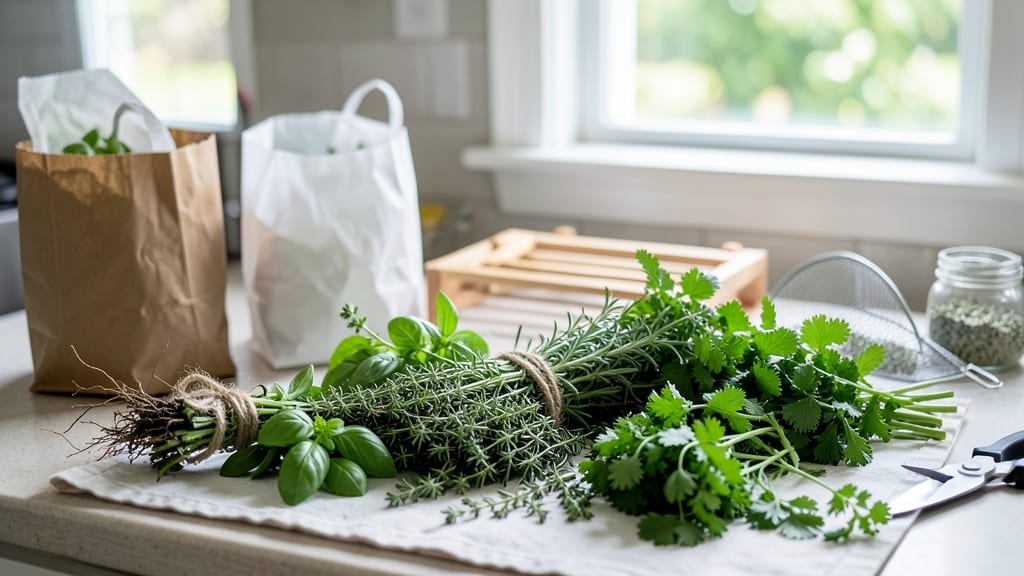
To dry fresh herbs from the garden, bundle stems together and hang upside down in a warm, dry, dark place for 1-3 weeks, or use a food dehydrator on low heat for 2-4 hours. Avoid direct sunlight to preserve color and potency.
Drying herbs at home is one of the best ways to preserve their flavor and extend their shelf life for months. 🌿 The key is controlling moisture and airflow—whether you choose traditional air-drying or a dehydrator, maintaining consistent conditions prevents mold and preserves the aromatic oils that give herbs their punch.
I’ve found that delicate herbs like basil dry fastest in a dehydrator (2-3 hours on low), while hardier varieties like rosemary can handle the slower air-drying method (2-3 weeks) without losing potency.
Once dry, store your herbs in airtight containers away from light to lock in their freshness. A simple test for dryness is to rub leaves between your fingers—they should crumble easily.
The difference between properly dried herbs and those exposed to excess moisture or sunlight is night-and-day in flavor, so take the time to do it right.
💡 In This Article
- Best Drying Methods for Garden-Fresh Herbs
- Preserving Herb Flavor and Potency After Drying
Best drying methods for garden-fresh herbs
When drying herbs, the method you choose directly impacts both drying time and flavor retention. The hanging method works best for hardy herbs like thyme, oregano, and rosemary, where stems are tied into small bundles and hung upside down in a warm (70-75°F), dark, and well-ventilated space.
This slow process (1-3 weeks) allows moisture to evaporate gently, preserving the essential oils that define each herb's aroma. Delicate herbs like basil or cilantro, however, lose their vibrant color and potency when exposed to air for too long, making them better suited for faster methods.
A food dehydrator is ideal for speed and precision, especially for leafy herbs. Set it to 95-115°F—any hotter risks burning the leaves—and spread herbs in a single layer on trays.
Most herbs dry completely in 2-4 hours, though basil and dill may need only 1-2 hours due to their high moisture content.
The dehydrator's controlled airflow ensures even drying, which is critical for herbs like mint that can develop mold if unevenly dried. 🌿 For comparison, air-drying rosemary takes 2-3 weeks but retains its needle-like structure perfectly, while dehydrated rosemary loses some texture but gains a more concentrated flavor.
The choice between methods also depends on your herb's natural resilience. Hardy herbs like rosemary and sage can handle the slow oxidation of air-drying, which actually deepens their flavor over time. Delicate herbs, however, like tarragon or chives, benefit from the dehydrator's rapid drying to prevent wilting or discoloration.
Even with the best method, avoid direct sunlight—UV rays degrade chlorophyll and essential oils, turning once-vibrant herbs into dull, flavorless remnants. A closet with a small fan or a dehydrator with a light cover creates the perfect balance of airflow and protection.
Temperature control is the unsung hero of herb drying. Too much heat (above 120°F) destroys volatile oils, while too little (below 90°F) risks mold growth.
For example, drying oregano at 100°F preserves its earthy notes, but at 140°F, it loses up to 30% of its aromatic compounds within hours. Humidity is another silent saboteur—ideal drying conditions require 40-50% humidity.
In humid climates, consider adding a desiccant like silica gel to your drying space or using a dehydrator with a humidity control feature.
Herb anatomy plays a surprising role in drying success. Leafy herbs like basil dry faster because their large surface area maximizes moisture loss, while needle-like herbs (thyme, rosemary) dry slower due to their compact structure.
Even within a single herb, drying rates vary—stems dry slower than leaves, so bundling them together ensures uniform drying.
Pro tip: Trim leaves from woody stems before drying to speed up the process, but leave 1-2 inches of stem attached to prevent leaves from curling and losing surface area for evaporation.
For those short on time, a microwave method works in a pinch: Spread herbs on a paper towel and zap at 20% power for 1-2 minutes, stirring between intervals. While not ideal for large batches, it’s a lifesaver for small amounts of basil or cilantro that need preserving quickly.
The key is to monitor closely—microwaves can create hot spots that scorch delicate leaves. 💫 This method is best reserved for emergencies, as it doesn’t match the flavor depth of traditional drying.