
Size
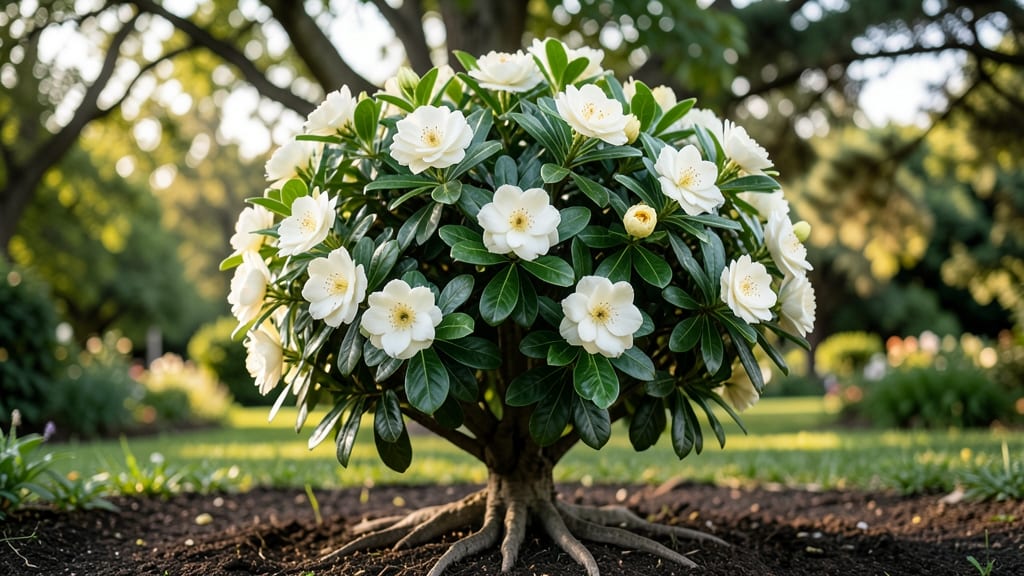
How tall do gardenias get at maturity? They typically range between 3 and 6 feet, depending on the variety and growing conditions.
Wondering if your backyard will soon look like a tropical jungle? Not necessarily — some gardenias 🌸 stay compact, while others reach small-tree proportions. The difference often comes down to the specific type you choose, like the bushy 'Kleim’s Hardy' or the climbing 'Radicans'.
If you’re planning your landscape, knowing these heights helps you pick the right plant for your space. A dwarf variety might fit snugly in a container, while a standard gardenia could become a striking focal point in a garden bed.
Below, I’ll break down the height ranges for popular types, how to control growth with pruning, and which varieties work best for small yards. Ready to find your perfect match?


Gardenia mature height by popular variety: what to expect
Gardenias are prized for their intoxicating fragrance and glossy foliage, but their mature height can vary dramatically depending on the variety. Some stay compact enough for containers, while others grow into small trees, requiring careful planning for your garden layout.
Understanding these differences helps you choose the perfect gardenia for your space—whether you have a cozy patio or a sprawling backyard.
Most gardenias fall into three height categories: dwarf (2–3 ft), medium (3–5 ft), and standard (5–10 ft). The variety you pick will determine how much space you need to allocate, how often you’ll prune, and even whether you can grow it in a pot.
Let’s break down the most popular types and what to expect at maturity.
📌 Tip: Always check the specific variety’s growth habits—some gardenias grow bushier (like 'Radicans'), while others develop taller, more upright stems (like 'Fortuniana'). This affects both their height and their need for support.
| Variety | Mature Height | Growth Habit | Best For |
|---|---|---|---|
| 'Kleim’s Hardy' | 3–5 ft | Bushy, rounded | Cold-hardy zones, containers |
| 'Radicans' | 2–3 ft | Compact, trailing | Hanging baskets, small yards |
| 'Fortuniana' | 6–10 ft | Upright, tree-like | Large landscapes, privacy screens |
| 'Veitchii' | 4–6 ft | Bushy, dense | Foundation plantings, hedges |
| 'Sunset' | 2–3 ft | Compact, mounding | Patios, small gardens |
| 'Mystery' | 3–5 ft | Bushy, upright | Garden borders, mixed beds |
| 'Augusta' | 8–12 ft | Tree-like, sprawling | Large estates, tropical gardens |
| 'Jasminoides' | 3–6 ft | Bushy, multi-stemmed | Garden focal points, containers |
| 'Kleim’s Blush' | 4–5 ft | Bushy, rounded | Cold-hardy zones, hedges |
| 'Prosperity' | 2–3 ft | Compact, dense | Containers, small spaces |
If you’re working with limited space, 'Radicans' or 'Sunset' are excellent choices, topping out at just 2–3 feet. These varieties thrive in containers, making them perfect for patios or balconies.
Meanwhile, taller varieties like 'Fortuniana' or 'Augusta' can reach 10+ feet, so they’re better suited for larger properties or as focal
How to control gardenia height: pruning tips for compact growth
If your gardenias are reaching for the sky faster than you’d like, don’t panic—pruning is your secret weapon for controlling height and shaping these fragrant shrubs. The key lies in timing, technique, and knowing which cuts to make to encourage bushier growth without sacrificing those show-stopping blooms.
With the right approach, you can keep your gardenias at your desired height while promoting a fuller, more vibrant plant.
Before grabbing your pruners, remember that gardenias respond best to structured pruning during specific times of year. Pruning at the wrong time can stunt blooms or leave your plant vulnerable to pests. The best times to trim are right after flowering (late summer) or during the dormant season (winter).
Avoid heavy pruning in spring, as this can reduce the number of blooms for the season.
Step-by-Step Pruning Guide for Compact Gardenias
- 1 Gather the right tools: Use sharp, sterilized pruners (or loppers for thicker stems) and disinfect them with rubbing alcohol to prevent disease. Avoid dull tools that tear branches.
- 2 Identify dead or overgrown branches: Remove any dead, diseased, or crossing branches first. Cut these back to the nearest healthy growth node at a 45-degree angle to promote faster healing.
- 3 Shape the plant: To control height, focus on cutting back the tallest stems by about one-third. Make cuts just above a leaf node or outward-facing bud to encourage new growth in the right direction.
- 4 Encourage bushier growth: For a fuller look, trim the tips of inner branches to stimulate side shoots. Avoid cutting into old wood, as gardenias are less likely to regrow from mature stems.
- 5 Clean up and fertilize: Remove all pruned branches and sterilize your tools again. After pruning, apply a balanced, acidic fertilizer (like 10-10-10) to support new growth and blooms.
Pruning isn’t just about height control—it’s also about improving airflow and reducing the risk of fungal diseases like powdery mildew. Thin out crowded branches to let sunlight and air circulate freely, which keeps your gardenias healthier and more productive.
Just be sure to never prune more than one-third of the plant at once, as this can stress the shrub and delay blooming.
For dwarf varieties like 'Radicans' or 'Sunset,' minimal pruning is usually enough to maintain their compact size. However, if you’ve planted a standard variety like 'Kleim’s Hardy' and it’s outgrowing its space, regular pruning will keep it manageable.
With practice, you’ll find the perfect balance between height control and abundant blooms—and your garden will thank you for it.
Pro tip: If your gardenias are still growing too tall after pruning, consider planting them in containers for easier height management. Just ensure the pot is large enough to accommodate their root system and use well-draining, acidic soil to keep them thriving.