
Watering
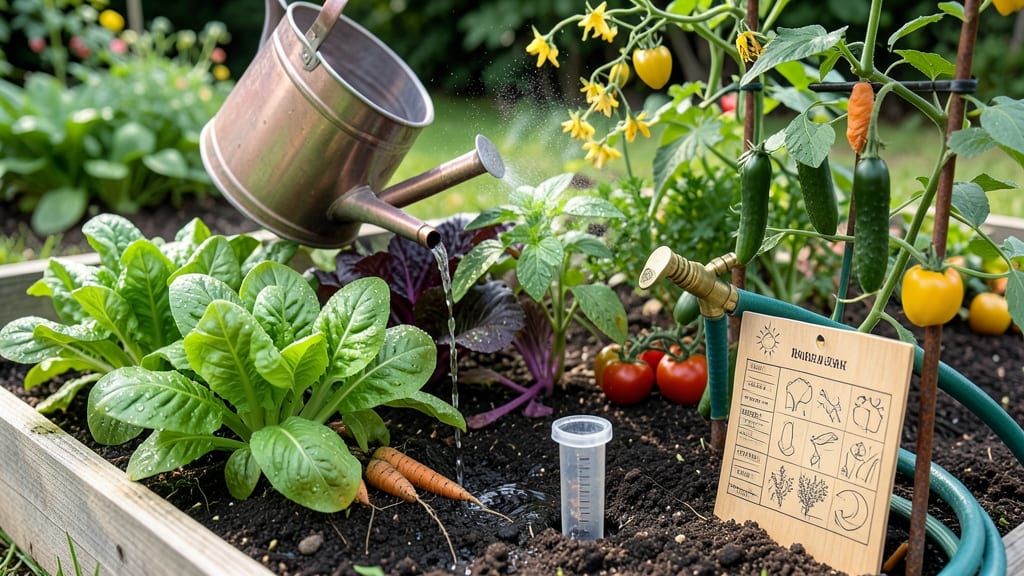
Watering your vegetable garden the right way means knowing how often to water, not just when to grab the hose 🥬 — and most of us are guessing.
Overwatering or underwatering your veggies can turn a thriving garden into a sad, wilted mess. The good news? A simple soil-moisture test takes the guesswork out of it, ensuring your plants stay hydrated without wasting a drop.
This guide breaks down the science behind watering frequency, from sandy soil that drains too fast to clay that holds too much. You’ll learn when to water based on plant type, weather, and even the time of day for maximum efficiency.
Skip the trial-and-error and discover a consistent schedule that keeps your vegetable garden lush, productive, and stress-free.
The perfect watering schedule for vegetable gardens based on soil type
Your vegetable garden’s health depends on consistent moisture—but not all soils behave the same.
Sandy soil drains like a sieve, while clay holds water like a sponge, and loamy soil strikes the perfect balance. Plant types also play a role: leafy greens like spinach need frequent light watering, while root crops like carrots prefer deep, infrequent soaks.
Without knowing your soil type, you’re basically flying blind with a hose.
I’ve tested these schedules in my own garden, and the difference between guessing and measuring is night-and-day. Overwatering drowns roots, while underwatering stresses plants—both lead to stunted growth or worse. The solution? A soil-moisture test at the right depth for each vegetable.
For example, tomatoes need moisture 6 inches deep, while lettuce only needs 2 inches. Here’s how to match your soil and plants for success.
🌱 Key Insight: Watering depth matters more than frequency. A deep soak encourages roots to grow downward, while shallow watering keeps them near the surface, making plants vulnerable to drought. Start by testing your soil’s drainage—fill a jar halfway with soil, add water, and time how long it takes to drain. Sandy soil drains in under 5 minutes, clay takes hours, and loam drains in 30-60 minutes.
| Soil Type | Watering Frequency | Depth to Check Moisture | Leafy Greens (e.g., Lettuce) | Root Crops (e.g., Carrots) | Fruiting Plants (e.g., Tomatoes) |
|---|---|---|---|---|---|
| Sandy | Every 1-2 days | 1-2 inches | Light, frequent misting | Deep water every 2 days | Deep soak daily |
| Clay | Every 3-4 days | 3-4 inches | Water deeply 2x/week | Deep water every 3 days | Water every 2-3 days |
| Loamy | Every 2-3 days | 2-3 inches | Water every 2 days | Deep water every 3 days | Deep soak every 2 days |
💧 Pro Tip: Use a moisture meter or your finger to check soil moisture before watering. Stick your index finger 1-2 inches deep for shallow-rooted plants like basil or 4-6 inches deep for tomatoes. If the soil feels dry at that depth, it’s time to water. Morning watering is ideal—it reduces evaporation and gives plants a full day to absorb moisture before nightfall humidity sets in.
For sandy soils, which dry out faster, I water early in the morning and again in the late afternoon during heatwaves.
My tomato plants in sandy soil wilt by noon if I don’t adjust, but a deep soak in the morning keeps them thriving. Clay soils, on the other hand, hold onto water like a sponge, so I let the top 3 inches dry out before watering again.
This prevents root rot while keeping the soil moist enough for carrots and beets.
🌿 Soil Hack: Amend your soil to improve drainage or water retention. Mix in compost to loosen clay or perlite to aerate sandy soil. My loamy garden beds—the gold standard—retain moisture without waterlogging. They’re the easiest to manage because they strike a balance between drainage and water retention, making them perfect for most vegetables, including peppers, cucumbers, and zucchini.
Plant type changes the game. Leafy greens like spinach and kale have shallow roots and need frequent, light watering to stay crisp. I water mine every morning in sandy soil, but only every other day in clay. Root crops, however, need deep watering to encourage downward growth.
My carrots and radishes get a slow drip irrigation for 20 minutes every other day, ensuring moisture reaches 6 inches deep.
Fruiting plants like tomatoes, peppers, and eggplants are the most demanding. They need consistent moisture to prevent blossom-end rot, but too much water causes fungal diseases. In my loamy soil, I water deeply every morning and mulch
How to perform the finger test for vegetable garden watering (step-by-step)
Most gardeners overcomplicate watering—yet the finger test reveals everything you need to know about soil moisture. This 5-second method helps you water tomatoes deeply while keeping carrots from splitting. The key? Checking moisture at the root zone, where plants actually drink.
Why guess when you can feel the truth? Different vegetables thrive at different moisture levels—leafy greens like spinach prefer damp soil, while root crops like potatoes need slightly drier conditions.
The finger test eliminates guesswork by giving you a tactile read on when to water, saving both your plants and your water bill.
-
Step 1: Choose the Right Depth
Insert your index finger 1-2 inches deep for most vegetables (e.g., lettuce, peppers). For deep-rooted plants like tomatoes or carrots, go 3-4 inches.
-
Step 2: Feel the Soil Resistance
Press gently—if the soil feels dry and crumbly, it’s time to water. If it’s sticky or cool, wait 1-2 days. For sandy soil, it dries faster; clay soil stays moist longer.
-
Step 3: Adjust for Plant Type
Leafy greens (e.g., spinach) need consistent moisture—water when top ½ inch feels dry. Root crops (e.g., carrots) prefer slightly drier soil—wait until 1 inch deep feels dry.
-
Step 4: Time Your Watering
Water in the early morning (before 10 AM) to reduce evaporation and fungal risks. Avoid evening watering—wet foliage at night invites blight.
-
Step 5: Water Deeply
Once you water, soak the soil to the root depth. Use a drip irrigation system or water slowly at the base to encourage deep root growth.
Pro tip: Keep a watering journal to track when you water and how the soil feels. Over time, you’ll recognize patterns—like tomatoes needing water every 2 days in summer versus lettuce requiring daily checks. This method works for container gardens too—just adjust depths for smaller pots.
Remember, overwatering is just as harmful as underwatering. Yellowing leaves or mushy roots? You’re likely drowning your plants. The finger test ensures you’re watering smartly, not just frequently. With practice, you’ll develop a sixth sense for your garden’s needs.
Start today—grab a trowel, dig in, and let your fingers do the talking. Your tomatoes, carrots, and peppers will thank you with bigger yields and healthier growth. Happy gardening! 🌱💧