
Watering
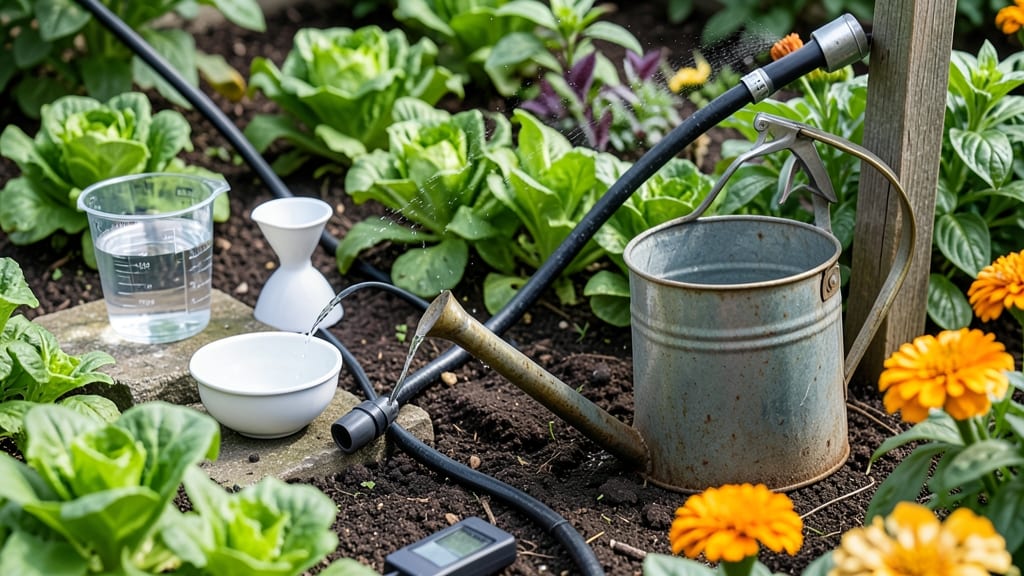
A garden needs about 1 to 1.5 inches of water per day to stay healthy, but that number changes more than you’d think—soil type, plant roots, and even the time you water can turn a thriving plot into a soggy mess or a dusty wasteland.
Picture this: You water your 🌱 General Garden every morning like clockwork, but by afternoon, the soil is bone-dry. Or worse, your plants wilt not from thirst, but from sitting in waterlogged roots.
The truth? Most gardeners guess wrong because they don’t account for how fast their soil drinks—or how much their plants actually use.
Here’s the game-changer: Understanding your garden’s water needs isn’t about rigid rules. It’s about reading your soil, adjusting for heatwaves or rainy spells, and knowing when to dial back.
Whether you’re dealing with sandy soil that drains in minutes or clay that holds moisture like a sponge, the right approach saves water and keeps your plants flourishing.
In this guide, you’ll discover how to calculate your garden’s exact water needs—no PhD required—plus the 5 biggest watering mistakes that waste thousands of gallons a year. Let’s turn your hose into a precision tool instead of a gamble.
Daily water requirements by soil type: the science behind efficient irrigation
Your garden’s soil type is the hidden factor dictating how often and how much you should water. Sandy soil drains like a sieve, while clay soil holds moisture like a sponge—yet both need vastly different approaches.
Ignoring these differences can lead to root rot or wilting plants, even with the same watering schedule. Understanding your soil’s texture and drainage lets you tailor irrigation for zero waste efficiency.
Most gardeners assume 1 inch of water per week is universal, but that’s only true for loamy soil. In reality, sandy soil may need daily top-ups, while clay soil might drown with the same amount.
The key lies in your soil’s porosity and organic matter, which control how water moves through the root zone. Let’s break down the science so you can water like a pro—not a guesser.
If you’re still unsure about your soil type, grab a handful and squeeze it. Sandy soil crumbles instantly, while clay soil forms a tight ball that won’t break. Loamy soil (the gold standard) holds shape loosely and feels crumbly.
For precision, use a soil test kit ($10–$20) to measure organic matter and pH, which directly impact water retention. Pro tip: Compost boosts water-holding capacity in sandy soil by up to 50%.
Root depth is another game-changer. Shallow-rooted plants like lettuce need frequent light watering, while deep-rooted tomatoes thrive with deep soaks every 3–4 days. Match your watering method to your plants: Drip irrigation works best for deep roots, while mist settings suit seedlings. Always water at soil level to avoid fungal diseases from wet foliage.
Overwatering is the silent killer of gardens, costing thousands of gallons wasted annually. Look for yellowing leaves, mushy stems, or white mold—these are red flags. Clay soil is especially prone to waterlogging, which cuts off oxygen to roots.
If your soil feels soggy 2 inches down, hold off on watering. A simple finger test every morning saves time and plants.
Seasonal adjustments are critical. In summer heat, sandy soil may need twice daily watering, while clay soil might only need every 10 days. Use a rain gauge to track natural precipitation—many regions get enough rain to skip irrigation entirely during wet seasons.
Mulch with straw or wood chips to lock in moisture and reduce evaporation by up to 30%. This is especially helpful in sandy soils, where water evaporates faster.
For container gardens, the rules shift entirely. Potted plants dry out 3x faster than in-ground soil because roots have limited access to moisture. Check soil moisture daily by sticking your finger 1 inch deep.
If it’s dry, water until it drains from the bottom. Terracotta pots dry out quicker than plastic, so adjust your schedule accordingly. Pro move: Group pots together to create a microclimate that retains humidity.
Don’t let myths fool you—light daily misting is a waste of water and encourages powdery mildew. Instead, aim for deep, infrequent watering that encourages roots to grow deeper.
Use a moisture meter ($20) for data-driven decisions. Most plants prefer consistent moisture over frequent shallow drinks. For example, herbs like rosemary
How to calculate your garden’s exact water needs without a PhD
Figuring out how much water your garden truly needs can feel like solving a puzzle without all the pieces. But with a few simple tools and methods, you can calculate your garden’s water requirements with precision—no advanced degree required.
The key lies in measuring three critical factors: evaporation rates, soil moisture levels, and plant transpiration. By mastering these, you’ll avoid both drought stress and water waste.
Start by understanding your garden’s unique conditions. Climate, soil type, and plant species all influence how much water your garden needs daily. For example, a sandy soil drains quickly, while clay soil holds moisture longer.
Even the same plant may need twice as much water in July compared to April. The goal? Zero-waste precision—watering just enough to keep roots happy without drowning them.
- 1. Measure evaporation by placing a rain gauge in full sun. Record daily loss—this tells you how much water disappears into the air.
- 2. Test soil moisture with a moisture meter or stick your finger 2 inches deep. If dry, it’s time to water.
- 3. Calculate plant transpiration by grouping plants with similar needs (e.g., tomatoes vs. succulents). Use a tensiometer to monitor root-zone moisture.
- 4. Adjust for weather: Multiply your baseline by 1.5 during heatwaves or halve it after heavy rain.
- 5. Automate with apps like PlantNet or Gardenate, which factor in local climate and plant types.
Grab a rain gauge or DIY one using a plastic bottle buried neck-down in the soil. This will give you real-time data on how much water your garden loses to evaporation daily.
For instance, in arid climates, you might lose up to 0.5 inches of water per day just to the air. Adjust your watering schedule accordingly—this alone can cut your water usage by 20%.
Next, invest in a soil moisture sensor or use the old-fashioned finger test. Stick your finger 2 inches deep into the soil. If it feels dry, your plants need water. If it’s damp, hold off. Overwatering is just as damaging as underwatering—it leaches nutrients and invites root rot.
Aim for consistent moisture, not soggy soil. For container gardens, check moisture daily since pots dry out faster.
Don’t forget to account for plant transpiration, the process where plants “sweat” water through their leaves. Leafy greens like kale or spinach transpire more than succulents like aloe.
Group plants with similar water needs together to simplify your routine. For example, herbs and vegetables often share the same schedule, while ornamental shrubs might need less frequent watering.
Finally, leverage technology to simplify the process. Free apps like Gardenate or Plantix pull data from your location and plant types to generate customized watering schedules. These tools factor in humidity, temperature, and even rainfall forecasts, so you’re never over- or underwatering.
Pair this with a smart sprinkler system for hands-off precision.