
Light Requirements
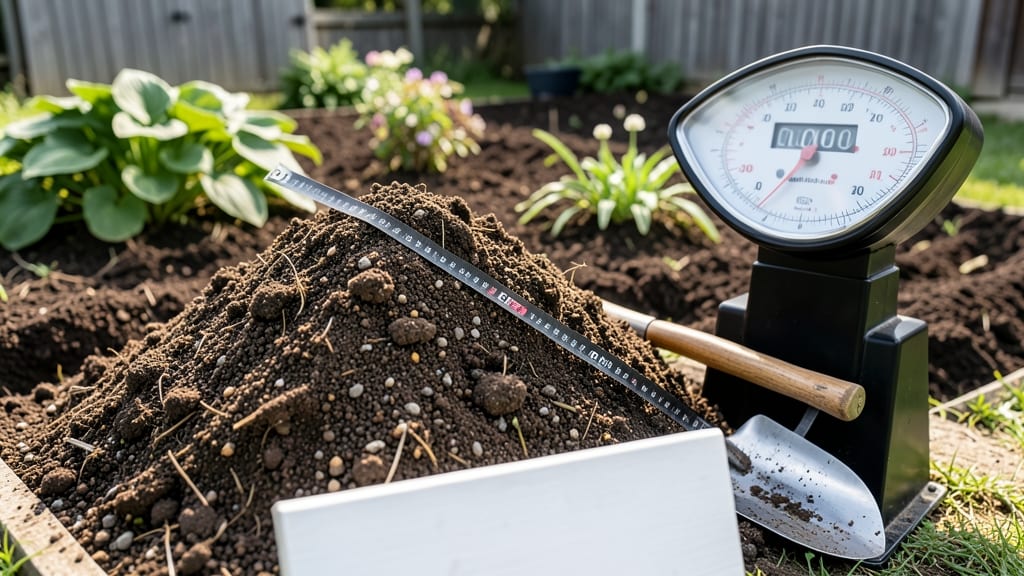
A yard of garden soil typically weighs 1,800 to 2,200 pounds, though this varies based on moisture content, organic matter, and compaction. Loose topsoil averages 1,800–2,000 lbs, while dense clay or wet soil can exceed 2,200 lbs. Always verify with your supplier for precise measurements before ordering.
A yard of garden soil's weight depends heavily on its composition and how tightly it's packed. 🌱 For example, sandy soil will often weigh less than clay-heavy soil because sand particles are larger and less dense.
Moisture plays a huge role too—wet soil can add 200–400 pounds to that yard compared to dry conditions. I always recommend checking with your supplier for exact specs, especially if you're planning a large project where weight affects delivery logistics or equipment needs.
Understanding these variations helps avoid surprises when ordering soil. For instance, if you're filling a raised garden bed, knowing whether your soil is on the lighter or heavier end lets you adjust your order accordingly.
The difference between 1,800 lbs and 2,200 lbs might seem small, but it adds up quickly when you're moving multiple yards of material. Pro tip: Ask your supplier about their soil's moisture content—they should be able to give you a more precise estimate than the standard range.
💡 In This Article
- Factors Affecting Garden Soil Weight per Cubic Yard
- Calculating Soil Weight for Delivery and Landscaping Projects
Factors affecting garden soil weight per cubic yard
Soil weight varies dramatically based on its composition and physical state. The primary factor is moisture content, which can add 200–500 pounds to a cubic yard when comparing dry to saturated soil.
For example, clay soil holds water like a sponge, increasing its weight significantly—imagine a 2,500-pound yard of clay when wet versus 1,800 pounds when dry. Sandy soil, with larger particles and less water retention, stays lighter even when moist.
Particle density plays a critical role too. Clay particles are tiny and densely packed, creating a heavier structure, while sand particles are larger and create air pockets that reduce weight. Organic matter—like decomposed leaves or compost—adds bulk but not much weight, typically increasing density by only 10–20%.
The key difference? A yard of pure clay can feel like lifting a small car, while sandy loam feels more manageable, almost fluffy by comparison.
Compaction is another game-changer. Loose, freshly tilled soil weighs less because it contains more air pockets, while packed or trodden soil can weigh up to 30% more due to reduced air space.
Think of it like comparing a bag of marshmallows to a brick—both occupy the same volume, but their weights couldn't be more different. This is why delivery trucks often specify whether they're hauling "loose fill" or "compacted" soil.
Temperature also sneaks into the equation. Cold, frozen soil can appear heavier because ice crystals form within the pores, adding temporary bulk. In contrast, baked soil in summer loses moisture and becomes lighter.
For instance, a 2,000-pound yard of soil in spring might shrink to 1,600 pounds after a hot, dry summer—until the next rain, of course! 🌧️
Here's a quick breakdown of how these factors stack up:
- Clay soil: 2,200–2,500 lbs (dense, water-retentive)
- Loamy soil: 1,800–2,200 lbs (balanced texture, moderate moisture)
- Sandy soil: 1,500–1,800 lbs (lightweight, drains quickly)
- Organic-rich soil: 1,600–2,000 lbs (lighter but nutrient-dense)
Most suppliers use 2,000 pounds as a standard estimate, but this is a rough average. For precision, always ask for a moisture-adjusted weight—it could save you from overordering or struggling with delivery logistics. 💡