
Light Requirements
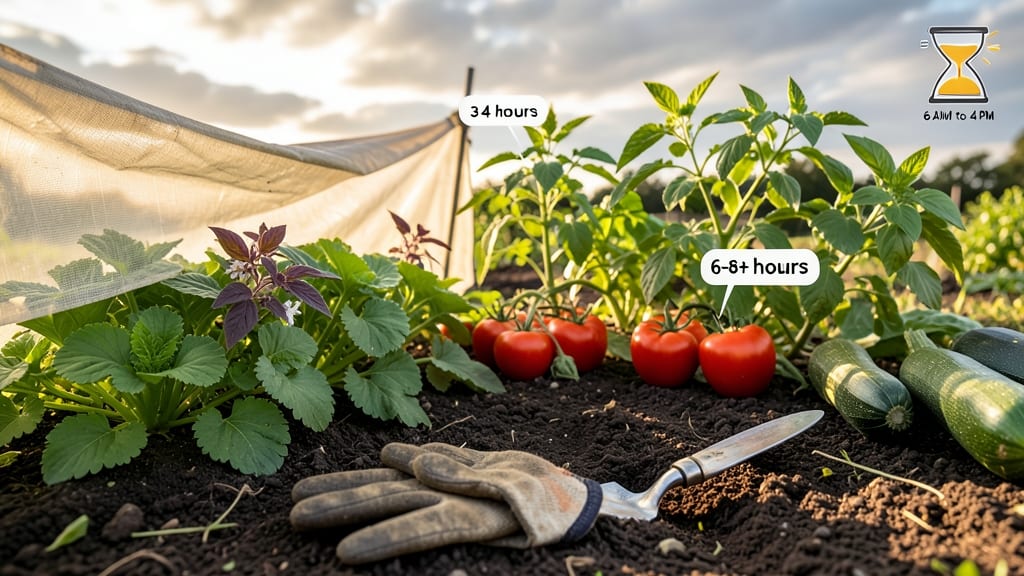
A vegetable garden needs 6 to 8 hours of sun daily 🥬 to thrive, though some crops like leafy greens do just fine with less.
Struggling to decide where to plant your vegetable garden? Sunlight is the single most critical factor for a thriving harvest—but too much or too little can ruin your crops. Too little sun means leggy, weak plants, while too much can scorch delicate leaves or dry out the soil.
Most vegetables—think tomatoes, peppers, and cucumbers—demand full sun, but others like lettuce or spinach can handle partial shade. The key is matching your garden’s light to each plant’s needs, which varies by crop and even by the time of year.
In this guide, I’ll break down exactly how many hours of sun your vegetable garden needs, how to measure sunlight in your space, and what to do if your plot gets too much or too little light for your plants. Let’s get started!


Sunlight requirements by vegetable type: full sun vs partial shade needs
Understanding how many hours of sun your vegetable garden needs is the first step to a bountiful harvest. Most vegetables fall into three categories: full sun lovers (6+ hours), partial shade tolerators (3-6 hours), and low-light specialists (under 3 hours).
The difference isn't just about placement—it's about photosynthesis efficiency and plant physiology. For example, tomatoes and peppers need intense sunlight to produce energy for fruit development, while leafy greens like spinach can scorch in too much sun.
Why does this matter? Plants like cucumbers and zucchini wilt in shade, while kale and arugula bolt (go to seed prematurely) when exposed to too much heat. The key is matching your garden's sunlight map to each plant's botanical needs.
Let's break it down by category so you can plan your layout with confidence.
🌱 Full Sun Vegetables (6+ hours) are the heavyweights of the garden. These plants need at least 6 hours of direct sunlight daily to thrive. Without enough light, they'll produce smaller fruits, fewer flowers, and leggy stems. Think of them as your high-energy crops—they demand the sunniest spots in your yard. Tomatoes, peppers, eggplants, and squash all fall into this category, and they repay your effort with vibrant flavors and abundant yields.
🌿 Partial Shade Vegetables (3-6 hours) are the versatile middle ground. These plants can handle 3 to 6 hours of sunlight and often prefer morning sun with afternoon shade to avoid overheating. This category includes leafy greens like lettuce and Swiss chard, as well as root vegetables like carrots and beets. They’re perfect for gardens with partial shade from trees or buildings, as they won’t bolt in cooler conditions but still need enough light to grow strong.
🌳 Low-Light Vegetables (under 3 hours) are the unsung heroes of shady gardens. These plants thrive in dappled shade or even full shade, making them ideal for woodland gardens, north-facing plots, or urban balconies with limited sunlight. Examples include spinach, arugula, and radishes, which can grow well with just 2-3 hours of indirect light. While they won’t produce as much as their sun-loving cousins, they’re a great way to maximize space in low-light areas.
The science behind sunlight needs comes down to chlorophyll production and energy storage. Plants like tomatoes rely on sunlight to convert carbon dioxide into sugars through photosynthesis, which fuels their fruit development. Without enough light, they simply can't produce energy fast enough, leading to smaller yields.
On the other hand, leafy greens like spinach use sunlight more efficiently for leaf growth and can even overheat in full sun, causing them to bolt or develop bitter flavors.
Understanding how much sunlight your garden receives is the first step to creating a thriving vegetable patch. Most vegetables need 6-8 hours of full sun daily, but some like lettuce or spinach can tolerate 3-4 hours. Without accurate measurements, you risk overcrowding sun-loving plants or wasting space on shade-tolerant crops that won't thrive. I’ve found that even small variations in sunlight—like a 2-hour difference—can mean the difference between a bumper crop and stunted growth. That’s why I recommend using a combination of digital tools and DIY methods to map your garden’s light exposure. This ensures you’re planting the right crops in the right spots, especially as sunlight shifts with the seasons. 🌱
Full sun (6-8 hours): Tomatoes, peppers, cucumbers, beans, corn, squash, and most herbs.
Pro Tip: Use a sunlight calculator app to adjust for your USDA hardiness zone—sunlight duration varies by latitude and season.
Start by using a smartphone app like Sun Surveyor or Gardenate, which tracks sunlight exposure throughout the day. These tools provide a heatmap of your garden, highlighting areas with full sun, partial shade, or deep shade. For a more hands-on approach, place a white piece of paper in different garden spots and mark the shadows every hour from sunrise to sunset. This DIY method gives you a clear visual of how sunlight moves across your space. Seasonal changes can drastically alter your garden’s sunlight exposure. For example, a south-facing plot might receive 8 hours of sun in summer but only 4 hours in winter due to the sun’s lower angle. Adjust your planting plan by rotating crops or using seasonal shade cloth to protect delicate plants. I’ve seen gardeners double their yields simply by shifting tomato plants to a sunnier spot once they noticed their fall harvests were underperforming. For container gardens or urban plots, consider using reflective surfaces like white walls or mirrors to bounce extra light onto shaded areas. Even a 10% increase in sunlight can boost growth for shade-tolerant crops. Pair this with a time-lapse camera (or even your phone on a tripod) to capture how sunlight shifts over a week. This helps you plan for successive planting and ensures you’re not missing critical growth windows. Once you’ve mapped your garden’s sunlight, create a planting zone diagram with notes on sun exposure. Label areas as full sun, partial shade, or low light and keep it updated as your garden evolves. This way, you’ll always know where to plant your sun-loving tomatoes versus your shade-friendly lettuce, even as the seasons change. 🌞How to measure sunlight in your garden: tools and techniques for accurate light mapping
💡 How Many Hours of Sun Does a Vegetable Garden Need?
Partial shade (3-6 hours): Lettuce, spinach, kale, Swiss chard, carrots, radishes, and green onions.
Low light (<3 hours): Microgreens, arugula, and shade-tolerant herbs like cilantro or parsley.