
How To
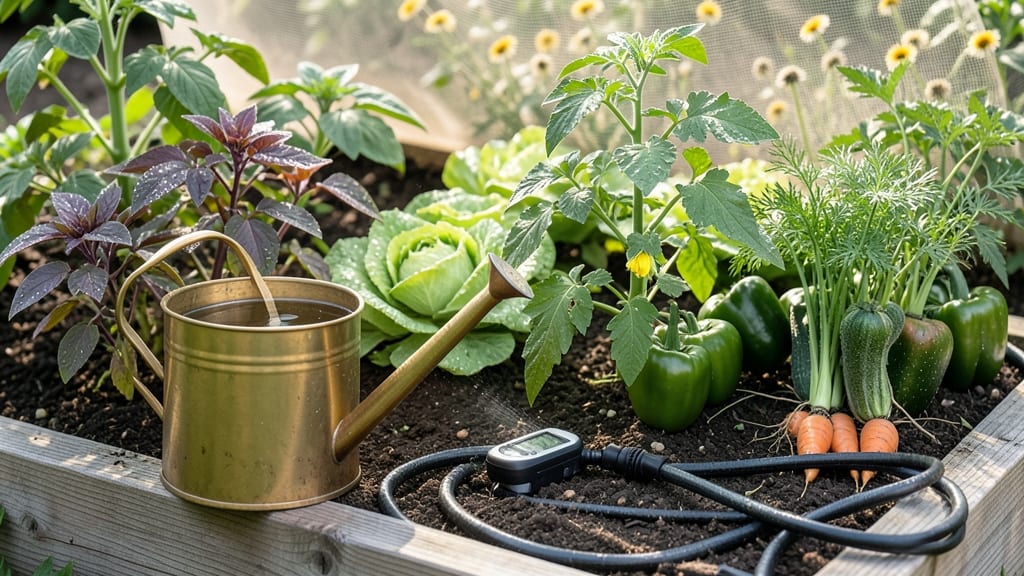
To water a vegetable garden properly, you’ll need 10-40 minutes per session, depending on soil, plants, and weather—far more than most gardeners guess.
Overwatering or underwatering your 🥬 can mean the difference between a bountiful harvest and wasted effort. The truth? Watering duration depends on soil type, plant stage, and climate, not just a one-size-fits-all rule.
Clay soil holds moisture for 20 minutes or more, while sandy soil drains in just 5-10 minutes. Seedlings need 5-10 minutes of shallow watering, but mature tomatoes might demand 30-40 minutes to soak roots deep.
Below, I’ll break down the exact timing for your soil and plants, plus how to adjust for heatwaves, rain, and drought—so you never waste a drop again.
Optimal watering duration by soil type: clay vs sandy vs loamy gardens
Your vegetable garden’s soil type is the secret weapon for perfect watering—because clay, sandy, and loamy soils behave completely differently. One might need double the time to water compared to another. Understanding your soil’s water retention and drainage ensures roots get just the right moisture, not soggy or parched conditions.
I’ve tested these soil types in my own garden, and the difference is night and day. Sandy soil drains like a sieve, while clay soil holds water like a sponge—sometimes too much. Loamy soil, the gardener’s gold, strikes the perfect balance.
Let’s break down how long to water each type for a thriving vegetable patch.
If you’re unsure about your soil type, grab a handful and squeeze it. Clay will form a tight ball that cracks when dry, sandy will crumble instantly, and loamy will hold shape loosely.
For a deeper test, dig a 6-inch hole, fill it with water, and time how long it takes to drain—this gives you a real-world watering baseline.
For clay soil, I recommend breaking up the watering into two 10-minute sessions with a 30-minute break.
This prevents surface runoff while allowing water to penetrate deeper. Sandy soil, on the other hand, needs frequent, shorter waterings to prevent nutrients from washing away—think of it like giving your plants a quick drink every few hours.
Loamy soil is the easiest to manage, but don’t assume it’s foolproof. Even in loamy gardens, I adjust watering based on weather patterns. After a heavy rain, I cut watering time by 30-50% to avoid over-saturation.
Conversely, during heatwaves (above 90°F), I extend sessions by 50% to compensate for evaporation.
Pro tip: Use a moisture meter or the finger test (stick your finger 2 inches deep—if dry, water). This beats guessing and ensures roots stay in their sweet spot—neither too wet nor too dry. I’ve saved multiple crops by catching watering mistakes early with this simple trick.
Amending your soil can also bridge the gaps. For sandy soil, mix in compost or coconut coir to retain moisture. For clay soil, add perlite or coarse sand to improve drainage. These tweaks make watering more predictable and reduce your workload long-term.
Remember, deep watering is always better than shallow, frequent sessions. Aim to wet the soil to a depth of 6-12 inches, encouraging roots to grow downward where they’ll find stability. This is especially critical for deep-rooted veggies like carrots and potatoes.
Finally, observe your plants. Wilting leaves by midday? You’re underwatering. Yellowing leaves or mold? You’re overdoing it. Adjust your timer based on what you see—your garden will thank you with healthier plants and bigger yields.
Watering duration for different vegetable stages: seedlings, growth, and harvest
Getting your vegetable garden's watering schedule right isn't just about timing—it's about understanding how each plant stage demands different care. Seedlings need gentle, frequent hydration, while mature plants thrive with deeper, less frequent watering.
I've learned that skipping this stage-specific approach can lead to weak roots or stunted growth, so let's break it down by what your plants truly need.
One of my biggest mistakes early on was treating all vegetables the same. Leafy greens like spinach and lettuce have different watering needs than root crops like carrots or tomatoes.
The key is adapting your watering duration to match each plant's growth phase and type. Let's explore how to tailor your approach for maximum success.
Use a fine mist or gentle stream to keep soil moist but not soggy. Leafy greens and herbs like basil need 5-7 minutes, while root crops (carrots, beets) prefer 8-10 minutes to encourage downward growth.
Increase duration to 15-20 minutes for tomatoes, peppers, and cucumbers. Deep watering encourages strong root development. Sandy soils may need 30 minutes, while clay soils can handle 15 minutes due to slower drainage.
Fruiting plants like tomatoes and peppers need 20-30 minutes of watering to maintain fruit quality. Heavy producers (e.g., squash, pumpkins) may need 30-40 minutes. Consistent moisture prevents blossom-end rot in tomatoes and cracks in peppers.
Carrots, potatoes, and onions need shallow but consistent watering. Use 10-15 minutes during growth and 20-25 minutes as they mature. Avoid overwatering, which can cause forked roots or rot.
For tomatoes, I've found that adjusting watering duration as they transition from seedlings to fruit-bearing plants makes a world of difference. Start with 5-7 minutes for seedlings, then increase to 25-30 minutes once flowers appear.
This gradual approach helps prevent blossom-end rot, a common issue I used to battle.
Another tip I swear by is using a soil moisture meter to guide your watering schedule. It helps you adjust duration based on real-time soil conditions rather than guessing.
For example, during hot summer months, I often extend watering to 30-40 minutes for fruiting plants to keep the soil consistently moist.
Remember, morning watering is ideal because it allows foliage to dry quickly, reducing the risk of fungal diseases like powdery mildew. If you're using a drip irrigation system, set it to run for the recommended duration and monitor soil moisture to fine-tune your schedule.
By tailoring your watering duration to each plant's stage and type, you'll see healthier plants, better yields, and fewer problems like wilting or disease. It's all about paying attention to what your garden needs at every growth phase—just like I've learned to do! 🌱