
Tools
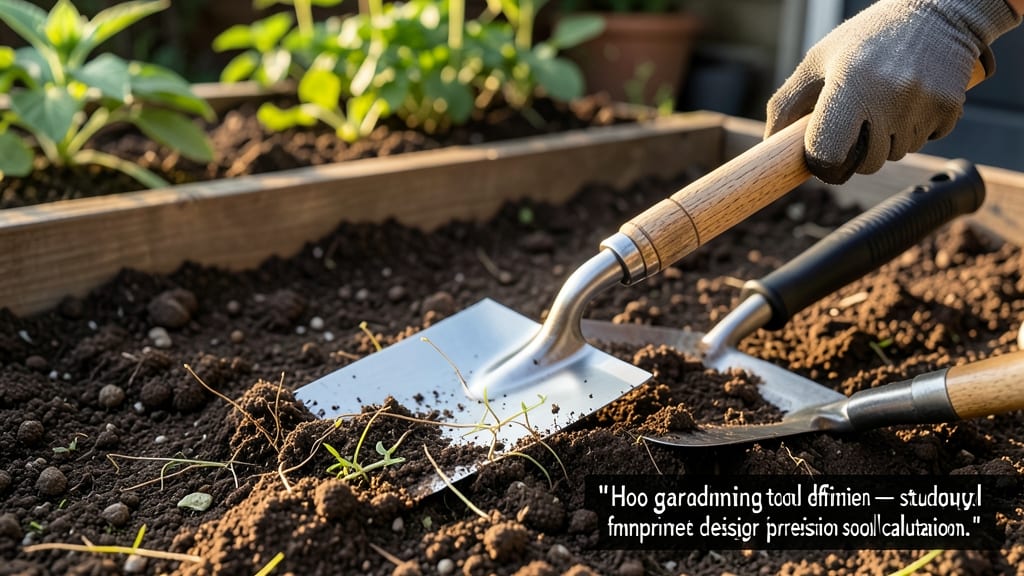
A hoe gardening tool definition centers on its long-handled blade designed to efficiently remove weeds, cultivate soil, and break up garden beds. These versatile tools come in specialized designs like draw hoes for precise weeding and stirrup hoes for deep soil aeration, all while protecting plant roots.
A hoe gardening tool isn't just one type—it's a category of blades with distinct shapes and purposes. 🌱 The draw hoe has a narrow, angled head perfect for slicing weeds between rows, while the stirrup hoe features a looped handle for deep tilling in rocky soil.
Even the warren hoe, with its pointed tip, excels at removing stubborn weeds without disturbing nearby plants. The key difference lies in blade geometry: wider blades chop weeds at the surface, while narrower ones dig deeper for root removal.
Beyond blade design, the right hoe material matters too. Steel hoes last longer but rust faster, while aluminum models resist corrosion but may lack durability for heavy-duty tasks. For ergonomics, handle length is critical—longer handles reduce strain for row weeding, while shorter ones offer better control in tight spaces.
I always recommend keeping your hoe sharp and storing it in a dry place to maintain its cutting edge for years.
💡 In This Article
- Types of Hoes and Their Unique Functions
- Choosing the Right Hoe for Your Garden Tasks
Types of hoes and their unique functions
At the core of hoe gardening tools lies their blade geometry, which directly impacts performance. The draw hoe features a narrow, angled head (typically 3-5 inches wide) that slices weeds cleanly between rows, mimicking a scythe motion.
This design preserves plant roots while cutting weeds at the soil line—ideal for vegetable gardens where precision matters. The blade’s sharp edge creates a clean shear action, reducing regrowth compared to uprooting methods.
For deeper soil work, the stirrup hoe stands out with its looped handle and wide, flat blade (often 6-8 inches wide). This tool lets you stand upright while pushing downward, breaking up compacted soil and removing weeds from the root.
The stirrup design also makes it perfect for rocky gardens, as the blade can lever out stones while aerating the soil. 💫 What’s fascinating is how the blade’s weight distribution shifts when you angle it—this lets you target weeds without disturbing nearby plants.
The warren hoe, with its pointed tip, excels at precision tasks like removing individual weeds or cultivating around delicate plants. Its narrow blade (1-2 inches wide) allows for pinpoint control, making it a favorite for flower beds where broad strokes would damage blooms.
Meanwhile, the scuffle hoe (or action hoe) has a rectangular blade that moves in a figure-8 motion, chopping weeds at the surface while leaving roots intact—a technique called "stale seedbed preparation" that smothers weeds without tilling.
Material science plays a role too: steel blades hold their edge longer but require maintenance to prevent rust, while aluminum blades resist corrosion but may dull faster on tough weeds.
The handle length also affects technique—longer handles (typically 36-48 inches) provide leverage for row weeding, while shorter ones offer better maneuverability in tight spaces. I’ve found that the right hoe for the job can cut weeding time by 50% compared to general-purpose tools.
Consider this comparison: a draw hoe’s narrow blade cuts weeds like a knife through butter, while a stirrup hoe’s wide blade acts like a plow, breaking up soil layers.
The warren hoe’s precision is akin to surgical tools in the garden, whereas the scuffle hoe’s broad strokes resemble a lawnmower for weeds. Each design targets specific gardening challenges, from surface-level weeding to deep soil cultivation, making the right choice dependent on your garden’s needs.
For example, in my own garden, I use a draw hoe for tomato rows (where precision matters) and a stirrup hoe for the vegetable patch (where soil aeration is key). The warren hoe comes out when I need to rescue a struggling plant from weeds without disturbing its roots.
This specialization is what makes hoes indispensable—they’re not just tools, but extensions of your gardening technique. 🌱