
Tools
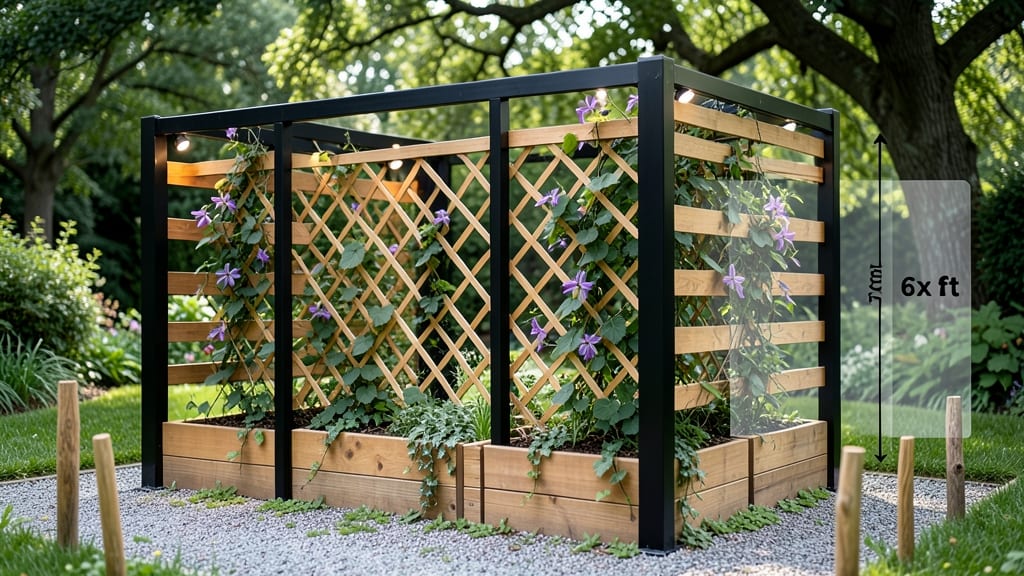
Garden enclosure plans help you build protective barriers that shield your plants from pests, harsh winds, and wandering animals while adding privacy and visual appeal to your outdoor space. Selecting the right materials—whether it's cedar for natural pest resistance, metal for durability, or lattice for flexibility—directly impacts how long your structure lasts and how easy it is to maintain.
Creating a garden enclosure isn't just about putting up a fence—it's about designing a functional space that works with your climate and plant needs. 🌿 For example, if you live in a windy area, tall lattice panels can break up gusts while still allowing airflow, whereas a solid wood fence might be better for blocking wildlife.
I always recommend measuring your space first and sketching a rough layout to visualize how different materials will look and perform over time. The key is balancing aesthetics with practicality, whether you're enclosing a small herb garden or a large vegetable patch.
Most DIY plans include measurements for common garden sizes, but you can easily scale them up or down using basic math. Reinforcing posts with concrete or stakes prevents shifting in heavy winds, and adding ventilation holes in solid structures keeps your plants from overheating during summer months.
For beginners, starting with a simple trellis or raised-bed enclosure is a great way to practice before tackling more complex designs.
💡 In This Article
- Key Materials and Design Factors for Garden Enclosures
- Step-by-Step DIY Enclosure Assembly Guide
Key materials and design factors for garden enclosures
When selecting materials for your garden enclosure, the first consideration is climate compatibility. Cedar, for instance, naturally resists rot and insects due to its high tannin content, making it ideal for humid regions where moisture accelerates wood decay.
In contrast, metal enclosures like galvanized steel offer superior durability in windy areas, withstanding gusts up to 70 mph without bending. Lattice panels, often made from powder-coated aluminum, provide flexibility for trellises while allowing 30-50% more airflow than solid barriers, which is critical for vining plants like cucumbers or beans.
The height of your enclosure plays a dual role in both pest control and privacy. A 3-4 foot barrier effectively blocks ground-dwelling pests like rabbits and squirrels, while a 6-8 foot structure creates a windbreak and screens neighbors.
For ventilation, solid panels should include 1-2 inch gaps at the base to prevent soil-borne diseases from spreading, while lattice designs benefit from vertical slats spaced 2-3 inches apart to encourage upward plant growth.
The structural integrity depends on proper post spacing—every 6-8 feet for wood and 10-12 feet for metal—to distribute weight evenly.
Material maintenance varies dramatically: cedar requires sealing every 2-3 years to preserve its natural oils, while metal needs occasional rust checks and paint touch-ups. Lattice, being lightweight, can be painted in vibrant colors to match your garden's aesthetic, though UV-resistant finishes are essential to prevent fading.
What most people overlook is the foundation—concrete footings for wood posts or gravel bases for metal frames prevent shifting, which is why I always recommend digging 12 inches deep for stability, especially in clay-heavy soils.
For pest resistance, consider treated lumber (like ACQ-treated pine) for ground contact, but avoid pressure-treated wood near edible plants due to potential chemical leaching. Metal enclosures, while durable, can become hot to the touch in sunlight—opt for painted or powder-coated finishes to reflect heat and protect plants underneath.
The trade-off between cost and longevity is real: cedar costs $3-$5 per board foot, while metal runs $5-$10 per linear foot but lasts 20-30 years compared to wood's 10-15 years with proper care.
Designing for aesthetics doesn't mean sacrificing function. For example, a living fence using fast-growing plants like bamboo or wisteria combines natural beauty with pest deterrence, while a geometric lattice adds modern appeal.
The key is aligning your material choice with your garden's primary needs—whether that's privacy, pest control, or wind protection—and then layering in visual elements. A 2-inch overhang on lattice panels creates shade for delicate plants, while a textured wood finish adds warmth to a contemporary space.
One advanced consideration is modular design: pre-cut panels that snap together (like those used in modern chicken coops) allow for easy expansion or rearrangement. This flexibility is especially useful if you're renting or plan to move—simply disassemble and reassemble elsewhere.
For beginners, starting with a pre-assembled kit (available for $50-$150) can save time while teaching foundational skills before tackling custom builds.