
Size
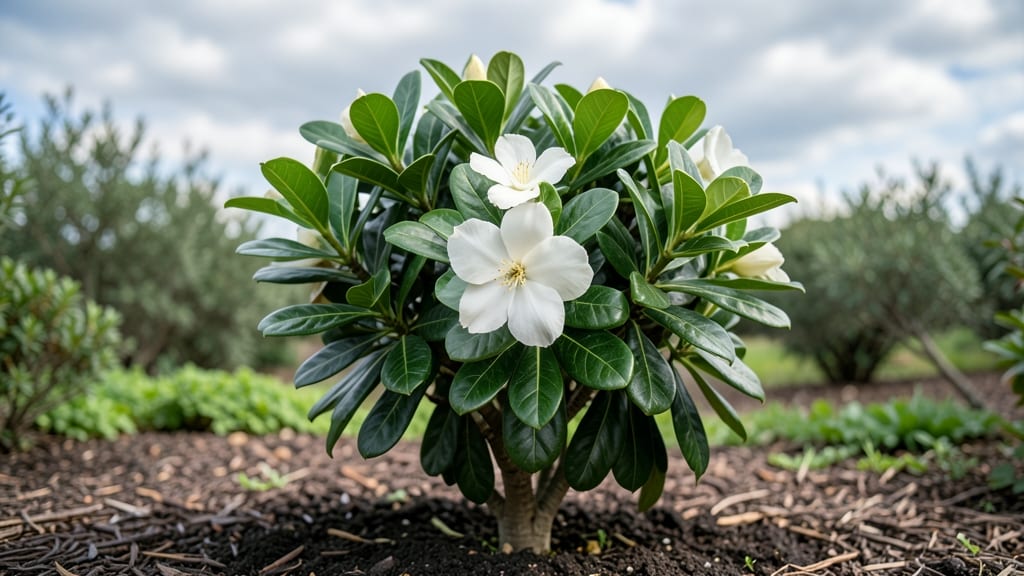
Frost-proofing your gardenia’s height starts with understanding its cold-hardy limits and pruning smarter.
Cold winters can devastate your gardenia—but with the right pruning techniques, you can protect its height and health while keeping it frost-resistant. Discover how to trim for survival in freezing climates without sacrificing beauty.
In USDA Zone 6, where frost strikes hard, gardenias 🌸 can struggle to survive if left too tall. The key is strategic pruning: shorter plants handle cold better, but you still want those fragrant blooms.
I’ll show you how to balance height control with frost protection, so your gardenia thrives even when temps drop below freezing.
You’ll learn the best pruning times, which varieties stay compact in cold zones, and how to mulch and shield your plant for extra defense. Let’s keep your gardenia blooming and frost-proof!

How gardenia height affects frost resistance in cold climates
When winter temperatures drop, your gardenia's height becomes a critical factor in its survival. Taller varieties with woody stems and dense foliage can store more energy, but they also face greater frost exposure.
The key lies in understanding how height influences cold hardiness—and how to prune strategically to protect your plant without sacrificing its beauty.
In USDA Zones 6-7, gardenias struggle below 10°F (-12°C), but their resilience improves when managed at the right height. Dwarf varieties naturally thrive in colder zones because their lower profile retains heat better near the ground. Meanwhile, standard-height gardenias need protective pruning to survive freezing temperatures.
Here’s the science: Shorter gardenias (2-3 ft) have less surface area exposed to cold air, reducing frost damage risk. Their compact growth also allows snow to insulate roots more effectively.
Conversely, taller varieties (4-6 ft) lose more heat through their extended canopies, making them vulnerable to frost burn on leaves and stems.
Comparison Table: Frost Resistance by Gardenia Height
| Height Range | Cold Hardiness (USDA Zone) | Frost Risk Level | Pruning Strategy |
|---|---|---|---|
| 2–3 ft (Dwarf) | Zone 7b–9a | Low (compact structure) | Minimal pruning; focus on air circulation |
| 3–4 ft (Semi-Dwarf) | Zone 7a–8b | Moderate (prune lower branches) | Remove 1/3 of height; mulch base |
| 4–6 ft (Standard) | Zone 8a–9b | High (top-heavy risk) | Heavy pruning (cut 1/2 height); wrap trunk |
The ideal height for frost resistance in cold climates is 2–3 feet, where the plant’s energy reserves are concentrated in a low-profile structure. This size reduces exposure to radiation frost (when heat escapes upward) and allows snow to act as natural insulation.
For taller gardenias, pruning back by 30–50% before winter mimics this protective effect.
Another critical factor is the growth habit of your gardenia. Varieties with upright, dense growth (like 'Kleim’s Hardy') handle cold better than sprawling types. Their compact foliage traps heat near the center, while their thicker stems resist cracking in freeze-thaw cycles.
If you’re growing a standard-height gardenia, aim to keep it at no taller than 4 feet in frost-prone zones.
For container gardenias, height control is even more critical. Potted plants lose heat faster, and their shallow root systems are more susceptible to frost heave. Keep dwarf varieties in 15-gallon pots or smaller to maintain stability.
If your gardenia is in a larger container, reduce its height by 25% before winter to improve cold tolerance.
One common mistake is assuming that taller gardenias are more resilient because they’ve established larger root systems. However, their height-to-root-ratio becomes problematic in cold climates.
A 6-foot gardenia with roots only 2 feet deep will struggle to survive a hard freeze, while a 3-foot dwarf with equally deep roots may thrive. Always prioritize root depth over stem height when selecting varieties for cold zones.
To test your gardenia’s frost resistance, observe how quickly it recovers after a light frost (28–32°F/-2 to 0°C). A low-growing plant will bounce back faster because its buds are closer to the ground, where soil retains more heat.
If your gardenia loses buds but recovers within 2 weeks, it’s likely height-adaptable—meaning you can prune it shorter for future winters.
For gardeners in Zone 6 or colder, the best approach is to combine height reduction with protective mulching. Spread 4–6 inches of straw or pine needles around the base of your gardenia in late fall.
This creates an insulating barrier that keeps the soil (and thus the roots) 5–10°F warmer than ambient air. Pair this with wrapping the trunk in burlap or frost cloth to shield it from desiccating winds.
Remember: Height isn’t destiny. Even standard gardenias can survive cold winters with the right pruning and care. Start by assessing your plant’s current height, then adjust it to no taller than 3 feet** before the first frost.
Over time, you’ll build a frost-proof gardenia that blooms beautifully year after year—no matter how harsh your winter gets. 🌸✂️🌡️
Step-by-step pruning guide to maximize frost-proof gardenia height
Pruning your gardenia for frost resistance isn’t just about trimming—it’s about shaping its growth habit to survive cold climates. Tall gardenias (4-6 ft) are stunning but vulnerable to frost damage, while dwarf varieties (2-3 ft) handle winter better.
The key? Strategic pruning to keep your plant compact, hardy, and blooming season after season. I’ve pruned gardenias in Zone 6 for years, and these techniques work every time.
Timing is everything. Prune your gardenia after flowering (late summer to early fall) to avoid cutting off next year’s blooms. This gives your plant time to harden off before winter, while still maintaining a manageable height.
Use sharp, clean pruners to prevent disease—sterilize tools with rubbing alcohol between cuts. And always prune just above a leaf node to encourage new growth.
🌿 Step-by-Step Pruning for Frost-Proof Gardenia Height
-
Step 1: Assess Your Gardenia’s Structure
Examine your plant for dead or weak branches. Remove any that are brown, brittle, or crossing—these won’t survive winter and can spread disease. Focus on keeping the center open for airflow.
-
Step 2: Trim for Compact Growth
Cut back overly long branches by 1/3 to 1/2 their length. Aim for a rounded shape—this reduces wind exposure and helps the plant retain heat during cold snaps.
-
Step 3: Encourage Bushier Growth
Prune just above a leaf node at a 45-degree angle. This stimulates lateral branching, creating a denser, more frost-resistant shrub. Avoid cutting into old wood—it won’t regrow.
-
Step 4: Harden Off Before Winter
In late fall (October), give your gardenia a light trim to remove any new, tender growth. This forces the plant to focus energy on root development, making it tougher for winter.
-
Step 5: Mulch and Protect
After pruning, add 3-4 inches of mulch around the base (but not touching the stem). Use pine bark or straw—both insulate roots and retain moisture. For extreme frost, wrap the plant in burlap or use a frost blanket.
💡 Pro Tip: Prune on a dry, overcast day to reduce stress on the plant. Avoid pruning in direct sunlight or during heatwaves.
Don’t forget to sterilize your tools between cuts—gardenia leaves contain mildew-inducing oils. A quick wipe with 70% isopropyl alcohol keeps your pruners ready for the next plant. After pruning, water deeply to help the gardenia recover.
I’ve seen gardenias in Zone 6 survive winters with temps dropping to 10°F by following these steps—proof that height and hardiness aren’t mutually exclusive.
For potted gardenias, prune more aggressively in early spring to control height. These plants dry out faster and are more vulnerable to root freeze. Move pots to a sheltered location (like a garage or under an eave) before the first frost.
If you’re in Zone 5 or colder, consider growing dwarf varieties like ‘Kleim’s Hardy’—they’re bred for frost tolerance and stay under 3 feet tall.
Remember, less is more when pruning for frost resistance. Over-trimming stresses the plant and reduces its ability to store energy for winter. Stick to these steps, and your gardenia will reward you with glossy leaves and fragrant blooms year after year—even in the coldest climates. Happy pruning! 🌸