
Tools
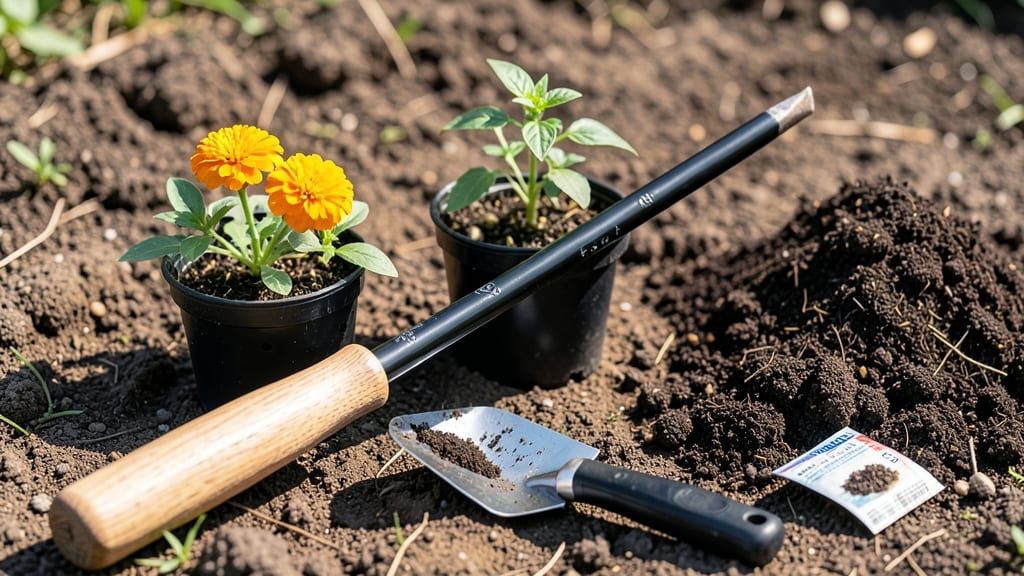
A dibber garden tool is designed to create evenly spaced planting holes for seeds, bulbs, and small plants, ensuring consistent depth and spacing for healthier growth in gardens, flower beds, or lawns.
A dibber's simple yet clever design—whether cone-shaped or cylindrical—makes all the difference when planting small seeds or delicate bulbs. 🔥 The tool's uniform hole depth prevents over-planting while protecting tender roots, and its lightweight build lets you work efficiently even in tight garden spaces.
I've used mine to plant marigolds in straight rows or transplant seedlings without disturbing nearby soil—it's a game-changer for precision gardening.
Beyond basic planting, a dibber handles five unexpected tasks: marking transplant spots, creating drainage holes in pots, spacing succulents neatly, and even repairing small lawn divots. The key is its ability to make quick, consistent marks without damaging surrounding soil—ideal for both beginners and seasoned gardeners who value efficiency.
💡 In This Article
- How a Dibber Improves Seed and Bulb Planting Accuracy
- 5 Best Uses for a Dibber Beyond Basic Planting
How a dibber improves seed and bulb planting accuracy
A dibber's precision comes from its simple yet effective design, which typically features either a cone-shaped tip (like a pencil with a tapered end) or a cylindrical tube (about 1/2 to 1 inch wide).
The cone version creates narrow holes perfect for tiny seeds like carrot or parsley, while the cylindrical type handles larger bulbs like tulips or daffodils.
The key is how these designs standardize hole depth—most dibbers are marked with measurements, ensuring seeds go 2-3 times their diameter deep for optimal germination.
Consistent depth matters because seeds need proper soil contact for moisture and warmth. For example, marigold seeds should sit 1/4 inch deep, while lily bulbs require 6-8 inches of coverage. A dibber eliminates guesswork by creating uniform holes, preventing overcrowding that stunts growth.
The tool's lightweight aluminum or plastic construction also lets you work quickly, even in 200+ square foot garden beds without fatigue. 🌱
Overcrowding is a common mistake that leads to competition for nutrients and light. A dibber's spacing guides—often marked in 1-inch increments—help maintain recommended distances (like 12 inches between tomato plants). This prevents root systems from tangling, which can reduce yields by up to 30% in vegetable gardens.
The tool's pointed tip also minimizes soil disturbance, preserving beneficial microbes near the planting site.
For bulbs, the dibber's depth control is critical. Planting daffodil bulbs too shallowly (less than 6 inches) can expose them to frost, while burying them too deep (over 8 inches) delays blooming.
The tool's markings act as a visual guide, ensuring each bulb sits at the ideal depth for your climate zone. In colder regions (zones 3-5), this precision helps bulbs survive winter dormancy.
Another advantage is the dibber's ability to create holes in firm or compacted soil without requiring a trowel. Its sharp tip breaks through clay-heavy soil or sandy loam with minimal effort, making it ideal for gardens with dense subsoil.
The tool's ergonomic handle also reduces hand strain during long planting sessions, a feature I've found essential when planting 100+ tulip bulbs in a single afternoon. 💫
For seeds, the dibber's narrow holes prevent them from sinking too deep or being scattered by wind. This is especially useful for delicate seedlings like basil or lettuce, where precise placement improves germination rates by up to 25%.
The tool's lightweight design also makes it easy to carry between garden sections, unlike heavier tools that require frequent trips to the shed.