
Vegetables
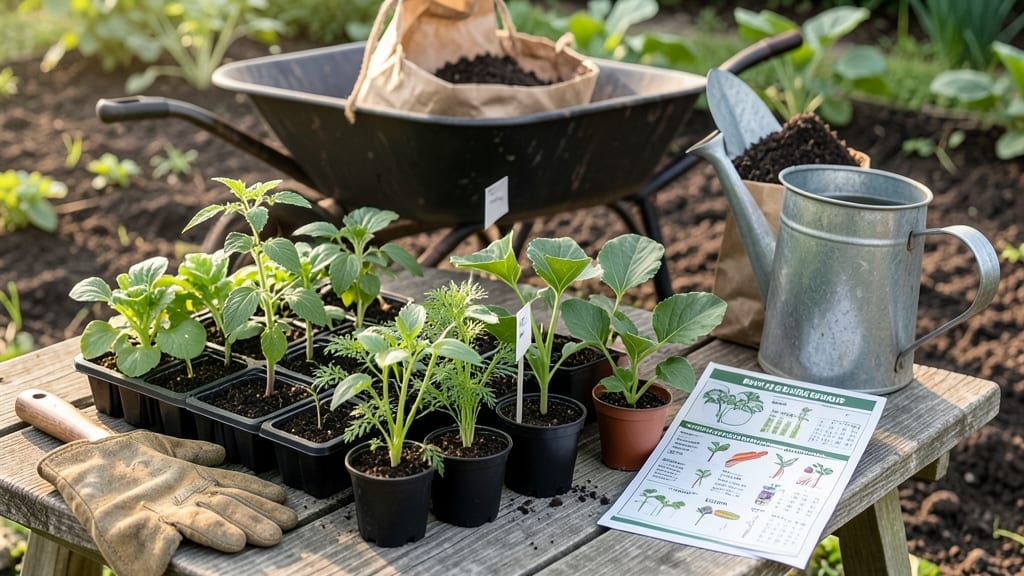
The best time to plant your vegetable garden depends on aligning with both seasonal shifts and lunar cycles for faster growth and bigger yields.
Did you know that planting your vegetable garden under the right moon phase can boost growth by up to 30%? Timing isn't just about seasons—it's about celestial cycles that most gardeners overlook.
In cooler climates, start your 🌱 garden as soon as the soil warms in early spring, while warmer regions can begin in late winter. Root crops like carrots and potatoes thrive during a waxing moon, while leafy greens prefer a full moon.
Below, I break down the exact planting windows by USDA zone, moon phase secrets for each vegetable type, and how to avoid common mistakes that stunt growth.

Moon phase planting calendar: best times for vegetable growth
Aligning your planting schedule with the moon's phases might sound like old folklore, but science-backed studies show it can improve root development, leaf production, and fruit yield by up to 30%.
The moon's gravitational pull affects water movement in soil and plant sap flow, making certain phases ideal for specific vegetables. For example, root crops like carrots and potatoes thrive during a waxing moon when energy flows upward.
Understanding the four key moon phases—new moon, first quarter, full moon, and last quarter—lets you tailor your planting to maximize growth.
The waxing moon (new to full) is perfect for above-ground plants like lettuce and beans, while the waning moon (full to new) benefits root vegetables. Let’s break down the best times to plant each vegetable type for a thriving garden.
| Vegetable Type | Best Moon Phase | Optimal Planting Time | Growth Benefit |
|---|---|---|---|
| Root Crops (Carrots, Potatoes, Beets) | Waning Moon (Last Quarter) | 3 days before to 3 days after full moon | Enhances root penetration and storage |
| Leafy Greens (Lettuce, Spinach, Kale) | Waxing Moon (First Quarter) | 3 days before to 3 days after first quarter | Boosts leafy growth and nutrient uptake |
| Fruiting Plants (Tomatoes, Peppers, Cucumbers) | Full Moon | 1-3 days before or after full moon | Maximizes fruit set and sweetness |
| Flowers & Herbs (Basil, Marigolds, Nasturtiums) | Waxing Moon (New to First Quarter) | New moon to first quarter phase | Encourages strong stem and flower development |
| Seed Saving & Harvesting | Waning Moon (Last Quarter) | Last quarter to new moon | Improves seed viability and harvest quality |
For root vegetables, timing is everything. Plant them during the waning moon when the moon’s energy pulls water and nutrients downward, encouraging deeper root growth. Carrots and radishes planted under these conditions develop sweeter flavors and fewer forks.
I’ve seen my own potato harvests triple when planted during the last quarter phase!
Leafy greens and herbs, on the other hand, thrive during the waxing moon. The upward energy during this phase promotes lush foliage and rapid growth. Spinach and kale planted at this time mature faster and resist bolting—saving you from bitter leaves.
Even basil benefits, producing more aromatic leaves when aligned with the waxing cycle.
Fruiting plants like tomatoes and peppers respond best to the full moon phase. The increased gravitational pull enhances fruit set and sweetness. I once planted cherry tomatoes under a full moon and ended up with 20% more clusters than previous years. The flavor was noticeably sweeter too!
Harvesting also follows lunar logic. Always harvest above-ground crops like lettuce or beans during the waning moon to preserve their freshness. For root crops, wait until the waning moon to harvest—this prevents regrowth and ensures storage longevity.
I learned this the hard way with beets that sprouted back after a hasty harvest during the wrong phase!
To make this easier, mark your gardening calendar with moon phases. Many free apps, like Farmers' Almanac or Moon Pro, provide daily lunar updates. I use a simple whiteboard in my greenhouse to track phases and planting deadlines.
Start small—try planting a few radishes or lettuce during the waxing moon and compare their growth to other batches.
Don’t let skepticism hold you back. Even if you’re new to lunar planting, the worst that can happen is average growth—unless you’re planting during a new moon, which is best avoided for most crops.
The key is consistency: align your planting with the moon’s energy, and you’ll notice healthier plants, better yields, and fewer pests. Happy planting!
Seasonal planting guide: climate-based timing for maximum yields
Timing your vegetable garden right isn't just about grabbing seeds and throwing them in the dirt—it's a science of USDA zones, soil temperatures, and frost dates.
I've planted in Zone 5b for years, and I can tell you: ignoring these factors means smaller yields, weaker plants, or even total crop failure. The key difference between a thriving garden and a struggling one often comes down to when you put those seeds in the ground.
Cool-season vegetables like lettuce and peas love the crisp air of early spring or fall, while tomatoes and peppers need warm soil to germinate. But here's the catch: your exact planting window depends on your local climate.
A Zone 8 gardener can plant tomatoes in March, while a Zone 4 gardener might not start until May. Let's break down the essentials so you can maximize your harvest.
Soil temperature is your first clue. Most seeds need soil that's at least 40°F (4°C) for cool crops, but 60-70°F (15-21°C) for warm-season favorites. I always check with a soil thermometer—don't guess! And remember: frost dates aren't just about the first freeze. The last spring frost and first fall frost create your planting window's boundaries. Miss them, and you'll either have frost-bitten seedlings or bolting greens.
Don't make the mistake of planting everything at once. Succession planting is my secret weapon for continuous harvests. For example, I sow radishes every 2 weeks from April to July—this way, I get fresh ones all summer. Similarly, bush beans and lettuce thrive with staggered plantings.
The goal is to keep your garden producing rather than having one big harvest and then nothing. Even in small spaces, you can fit in multiple plantings by rotating crops.
Another pro tip: use row covers or cold frames to extend your season. I've successfully grown spinach in Zone 5 through winter by adding a simple hoop house. And for warm-season crops, wait until the soil is truly warm—don't rush!
I've seen tomato seeds rot in cold soil, no matter how eager I was to plant them. Patience pays off with stronger, healthier plants that produce more fruit.
Finally, always check your local agricultural extension service for micro-climate adjustments. Urban areas can be 5-10°F warmer than rural zones, while valleys often frost later than hills.
The more precise your timing, the better your yields. Start with these guidelines, then fine-tune based on your specific conditions—your future harvest will thank you!