
Pests
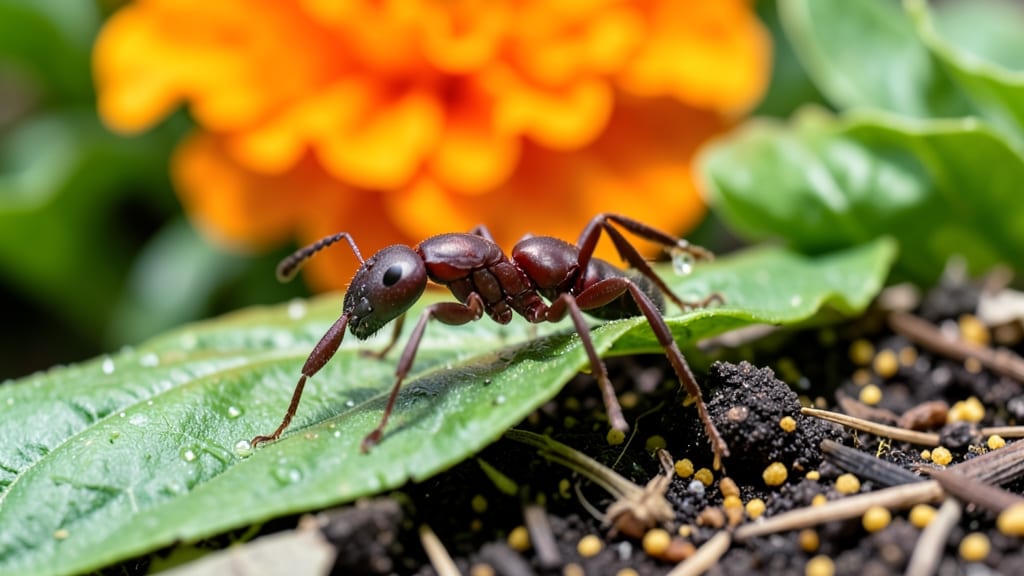
Managing ants in raised garden beds requires sealing entry points with diatomaceous earth or copper tape, creating physical barriers like cardboard, and using organic deterrents such as nematodes or citrus sprays that won't harm plants or soil. The key is eliminating attractants like moisture and food sources.
Ants in raised beds are usually drawn in by moisture, food scraps, or pests like aphids they tend to protect. 🔥 While some species help aerate soil, others create problems by shielding harmful insects from predators.
The first step is identifying whether you're dealing with nuisance ants (like pavement ants) or beneficial varieties (like harvester ants), as this determines your approach.
I've found that combining physical barriers with targeted organic treatments works best—copper tape around bed edges stops them cold, while citrus oil sprays disrupt their trails without chemicals.
For persistent infestations, beneficial nematodes offer a long-term solution by targeting ant larvae in the soil. The trick is consistency: reapply treatments every few weeks and keep your garden bed dry, as ants seek out damp conditions.
Always test organic solutions in small areas first to ensure they won't harm your plants—some citrus oils can be too strong for sensitive foliage.
💡 In This Article
- Why Ants Invade Raised Garden Beds and How They Affect Plants
- Natural Ant Barriers and Repellents for Raised Beds
Why ants invade raised garden beds and how they affect plants
Ants invade raised garden beds primarily because these environments offer three critical resources: moisture, food, and shelter. The compacted soil in raised beds retains more water than open ground, creating ideal humidity levels that ants seek for their colonies.
Additionally, garden beds often contain food sources like aphids (which ants "farm" for honeydew), fallen fruit, or spilled nectar from flowering plants. The porous wood or fabric edges of raised beds also provide perfect entry points for these tiny architects.
Here's what's actually happening ecologically: certain ant species act as "bodyguards" for pests like aphids, protecting them from natural predators in exchange for their sugary secretions. This mutualism means ants indirectly harm your plants by shielding these sap-sucking insects.
However, not all ants are problematic—harvester ants, for example, help break down organic matter and aerate soil. The key difference lies in their behavior: nuisance species like pavement ants create visible trails and mound soil, while beneficial species remain mostly underground and improve soil structure.
The moisture factor is critical—ants detect dampness through specialized antennae receptors that sense humidity gradients.
A raised bed with consistent moisture levels above 60% (measured with a soil moisture meter) becomes an ant magnet. 💫 What most gardeners don't realize is that even well-drained beds can attract ants if they contain hidden moisture pockets near the bed's edges.
This is why I recommend checking the soil 1-2 inches deep along the perimeter before treating—dry conditions often eliminate the primary attractant.
Visual identification helps determine your approach. Pavement ants leave shiny, irregular trails and create small mounds with fine soil particles, while carpenter ants create larger, sawdust-like piles near wooden structures.
The size of the ants themselves matters too: worker ants measuring 1/8 inch or smaller typically indicate nuisance species, while larger workers (over 1/4 inch) often belong to beneficial varieties. This distinction affects your treatment choices—aggressive repellents work for pests but may harm beneficial species.
Consider this comparison: a single ant colony can contain 100,000 to 1 million individuals, with each worker capable of carrying 10-50 times its body weight in food. When they discover a food source in your raised bed, they release pheromone trails that recruit thousands of reinforcements within hours.
This explains why you might see a sudden ant invasion after planting sweet corn or tomatoes—those plants emit volatile organic compounds that ants detect from up to 30 feet away. 🌟
The indirect damage ants cause often goes unnoticed until plants show signs of stress. For instance, aphid populations can increase 10-fold when protected by ants, leading to stunted growth and curled leaves. The ants' tunneling activity also disrupts root systems, though this effect is usually minimal in well-aerated raised beds.
The most visible damage typically comes from their trail patterns—ants create smooth, shiny paths along plant stems that can weaken young seedlings.