
Fertilization
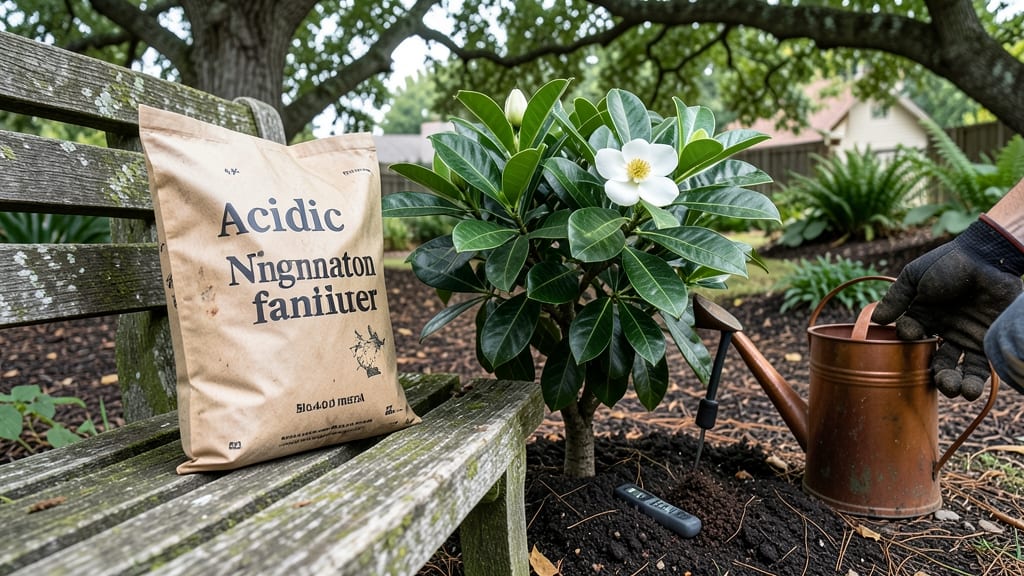
Your gardenias need acidic nitrogen fertilizer to thrive and produce those fragrant blooms you love, and getting the balance right is the key to lush, healthy growth.
Picture this: you’ve spent months nurturing your 🌸 gardenias, only to watch them produce sparse, weak flowers—or worse, no blooms at all. The issue might not be water or light, but the pH of your fertilizer.
Gardenias are picky about their soil acidity, and nitrogen in the wrong form can actually stunt their growth or burn their roots.
In this guide, I’ll walk you through the science behind why acidic nitrogen works best for gardenias, how to spot signs of deficiency or excess, and the exact feeding schedule to keep your plants blooming year after year—whether you’re in USDA Zones 8-11 or container gardening in a cooler climate.
You’ll also discover the top organic and synthetic fertilizer options, how to adjust pH levels for maximum results, and when to skip feeding entirely to avoid overdoing it. Let’s get those gardenias thriving!
Why acidic nitrogen fertilizer is essential for gardenia flower health
If your gardenias are struggling to produce those fragrant, creamy-white blooms, the issue might be deeper than just water or sunlight. Gardenias are acid-loving plants that require acidic nitrogen fertilizer to thrive.
Without the right balance of pH 5.0–6.5 and nitrogen types, your plants may suffer from stunted growth, yellowing leaves, or fewer flowers. The science behind this need is rooted in how gardenias absorb nutrients—let’s break it down.
Gardenias belong to the Rubiaceae family, which evolved in acidic, nutrient-rich soils. Their roots struggle to uptake nitrogen efficiently when soil pH rises above 6.5.
This is because alkaline conditions lock out essential micronutrients like iron, manganese, and zinc, even if you’re applying fertilizer. Ammoniacal nitrogen (NH₄⁺), found in organic fertilizers, is more readily available to gardenias than nitrate nitrogen (NO₃⁻), which can leach away in acidic soils.
Balancing these factors is key to unlocking your gardenia’s full potential.
Here’s the catch: not all nitrogen sources work equally well. Synthetic fertilizers often provide nitrate nitrogen, which can raise soil pH over time if not buffered properly. Organic options, like peat moss or pine bark fines, maintain acidity while delivering ammoniacal nitrogen.
The choice between synthetic and organic isn’t just about blooms—it’s about long-term soil health and your gardenia’s ability to absorb nutrients efficiently.
One of the first signs your gardenia needs acidic nitrogen fertilizer is yellowing leaves, starting from the older leaves and moving inward. This chlorosis (loss of green pigment) signals iron deficiency, often caused by alkaline soil.
Meanwhile, stunted growth or small, sparse blooms may indicate nitrogen deficiency, even if your soil tests acidic. Over-fertilizing with the wrong nitrogen type can also cause leaf burn or root damage, so precision matters.
Now, let’s compare the two main types of acidic nitrogen fertilizers—synthetic and organic—to help you decide which aligns best with your gardening goals and your gardenia’s needs.
| Type | Nitrogen Form | pH Impact | Pros | Cons | Best For |
|---|---|---|---|---|---|
| Synthetic (e.g., Miracle-Gro Azalea) | Nitrate (NO₃⁻) | Neutral to slightly alkaline if unbuffered | Fast-acting, precise NPK ratios, easy to apply | Can raise pH over time; risk of over-fertilization | Quick blooms, container gardenias |
| Organic (e.g., Peat Moss + Blood Meal) | Ammoniacal (NH₄⁺) | Maintains or lowers pH naturally | Improves soil structure, slow-release, eco-friendly | Slower results, requires more frequent reapplication | Long-term health, in-ground gardenias |
| Buffered Synthetic (e.g., Espoma Garden-Tone) | Balanced NH₄⁺/NO₃⁻ | Stabilizes pH at 5.0–6.5 | Best of both worlds: fast + acid-safe | More expensive than generic synthetics | Ideal for most gardeners, all soil types |
When choosing a fertilizer, consider your gardenia’s current soil pH. If it’s already below 5.0, opt for a buffered synthetic or lime-free organic blend to avoid over-acidifying. For soils above 6.5, peat moss or sulfur amendments paired with an ammoniacal nitrogen source will help restore balance.
Always test your soil every 6–12 months—gardenias are sensitive to shifts in pH, and small adjustments can make a huge difference in bloom quality.
Another critical factor is application timing. Gardenias are heavy feeders in spring (March–May) when new growth emerges, but they need less nitrogen in summer to focus on blooming. Overloading with nitrogen during summer months can lead to leafy growth at the expense of flowers.
Instead, switch to a low-nitrogen, high-phosphorus fertilizer (e.g., 10-20-10) to encourage blooming.
Let’s talk about the visual cues that confirm you’re on the right track. Healthy gardenias should have deep green
Step-by-step pH-balanced feeding schedule for maximum blooms
Gardenias reward precise care with glorious blooms, but their acid-loving nature demands a tailored feeding schedule. The key is balancing acidic nitrogen fertilizer with seasonal growth cycles—too much or too little disrupts blooming.
My approach focuses on pH-adjusted feedings that align with your gardenia’s natural rhythm, from spring’s vigorous growth to summer’s bloom phase.
Start by testing your soil pH—gardenias thrive at 5.0–6.5. If your soil tests higher, amend it with sulfur or peat moss before applying fertilizer. Sandy soils drain quickly, so you’ll need frequent light feedings, while clay holds moisture longer, requiring diluted applications to avoid root burn.
Always water thoroughly after feeding to help nutrients penetrate the root zone.
🌸 Seasonal Feeding Guide for Gardenias
-
Spring (March–May): Growth Boost
Apply acidic nitrogen fertilizer (16-4-8 or 12-6-6) every 6 weeks. Use 1 tbsp per plant, diluted to half-strength for sandy soil. Focus on new foliage—this is when roots expand.
-
Summer (June–August): Bloom Maintenance
Switch to light feedings every 8 weeks. Use quarter-strength fertilizer to avoid leaf burn. Clay soils? Reduce to once every 10 weeks. Watch for bud drop—a sign of over-fertilizing.
-
Fall (September–November): Zero Feeding
Stop fertilizing entirely to prepare for dormancy. Focus on mulching with pine needles or oak leaves to maintain soil acidity naturally.
-
Winter (December–February): Dormant Care
No fertilizer needed. If in Zone 8-9, protect roots with extra mulch. Resume feeding in early spring when new growth appears.
Adjust your schedule based on your gardenia’s response. Yellowing leaves signal nitrogen excess, while slow growth or few blooms mean more nitrogen is needed. For container gardenias, flush the soil with water after feeding to prevent salt buildup.
And remember: organic options like cottonseed meal or fish emulsion work well but require more frequent applications to match synthetic strength.
By following this seasonal rhythm, your gardenias will thrive year-round. The result? Abundant, fragrant blooms that turn heads—and noses!—from spring through fall. Happy gardening! 🌿