
Planting
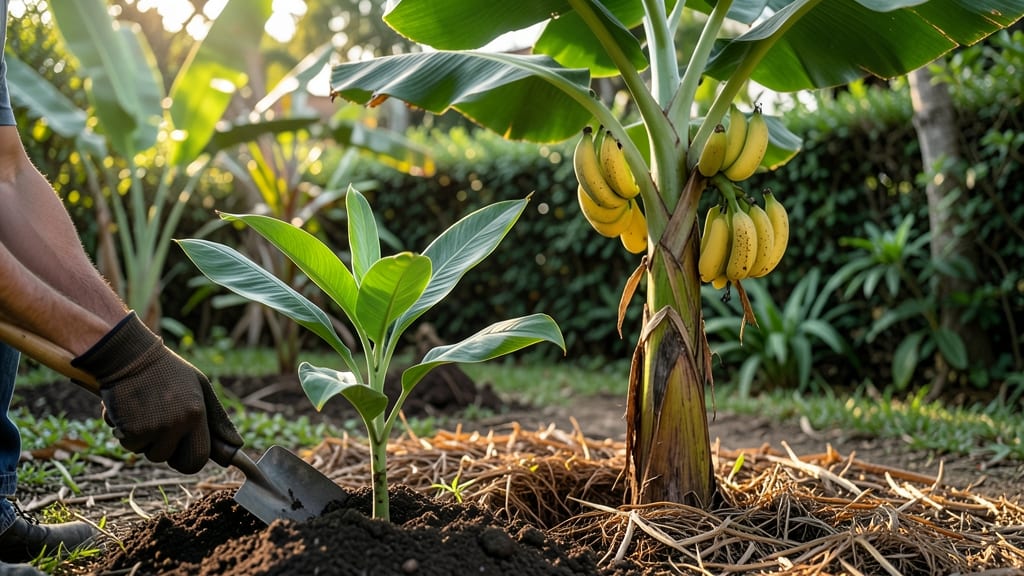
What happens if you plant bananas in your garden? You’ll grow a large, tropical herb—not a tree—producing edible fruit in 3–5 years if given warm climates (60°F+), rich soil, and consistent moisture. The plant thrives in USDA zones 10–11 but may die back in frost, though regrowth often occurs from the rhizome.
When you plant bananas in your garden, you're actually cultivating a giant herbaceous plant with a pseudostem that can reach 15 feet tall. 🌱 The growth process begins with a rhizome, which sends up large leaves before eventually flowering and producing fruit—though the plant itself won't survive cold winters.
What's fascinating is that the "trunk" you see is actually tightly packed leaf sheaths, not wood. Even in frost-prone areas, the underground rhizome often revives in spring, giving gardeners another chance to harvest fruit.
For successful growth, focus on well-draining soil with a pH between 5.5 and 7.0, and provide 6+ hours of sunlight daily. The plant's dramatic growth rate—up to 3 feet per month in ideal conditions—makes it a rewarding but patient project.
Many gardeners in cooler climates grow bananas as annuals, harvesting fruit before the first frost kills the above-ground portion.
💡 In This Article
- Banana Plant Growth Stages and Development Timeline
- Climate and Soil Requirements for Growing Bananas at Home
Banana plant growth stages and development timeline
The banana plant's journey begins as a rhizome—a thick, horizontal underground stem that stores nutrients and fuels rapid growth.
When planted, this rhizome sends up shoots that quickly unfurl into massive leaves, each up to 8 feet long, creating the iconic "trunk" that's actually a tightly packed sheath of these leaves.
This structure, called a pseudostem, can grow 3-4 feet per month under ideal conditions, reaching heights of 15-25 feet before flowering.
What's truly remarkable is the plant's flowering process. After about 9-12 months of vegetative growth, the center of the pseudostem begins producing a 2-foot-long inflorescence that emerges from the leaf sheaths.
This flower cluster, called a banana heart, contains both male and female flowers that develop into bunches of fruit. The plant's energy shifts dramatically at this stage—leaf production slows as the plant directs resources toward fruit development, which takes 3-5 months to mature.
Here's what happens next: The fruit you harvest grows from the bottom of the inflorescence upward, with the youngest bananas at the top. Each hand (cluster) can contain 10-20 individual bananas, and the plant typically produces 1-2 harvests before dying—though the rhizome often survives to produce new shoots.
The plant's lifecycle is complete when it flowers, fruits, and then dies, but the underground rhizome contains dormant buds that can sprout new plants within 2-3 months.
What most people don't realize is that bananas are technically herbaceous plants, not trees. Their "trunks" contain no wood—just tightly packed leaf bases that provide structural support. This makes them vulnerable to frost damage, as the above-ground portions lack protective bark.
However, the rhizome's hardiness explains why bananas often regrow after winter dieback in cooler climates.
The timing between stages varies by variety. Dwarf banana cultivars (like Musa acuminata 'Dwarf Cavendish') may produce fruit in as little as 9 months, while larger varieties can take 18 months or more.
The key to accelerating growth lies in maintaining optimal conditions: consistent moisture, 70-85°F temperatures, and rich, well-draining soil with high potassium levels (bananas are heavy feeders).
One fascinating detail is how the plant's growth affects fruit quality. Early-maturing bananas tend to be sweeter because they develop more slowly, allowing starches to convert to sugars. Later fruit may be larger but less sweet.
This biological trade-off explains why commercial growers often harvest bananas green for shipping—allowing them to ripen naturally with ethylene gas during transport.