
Tools
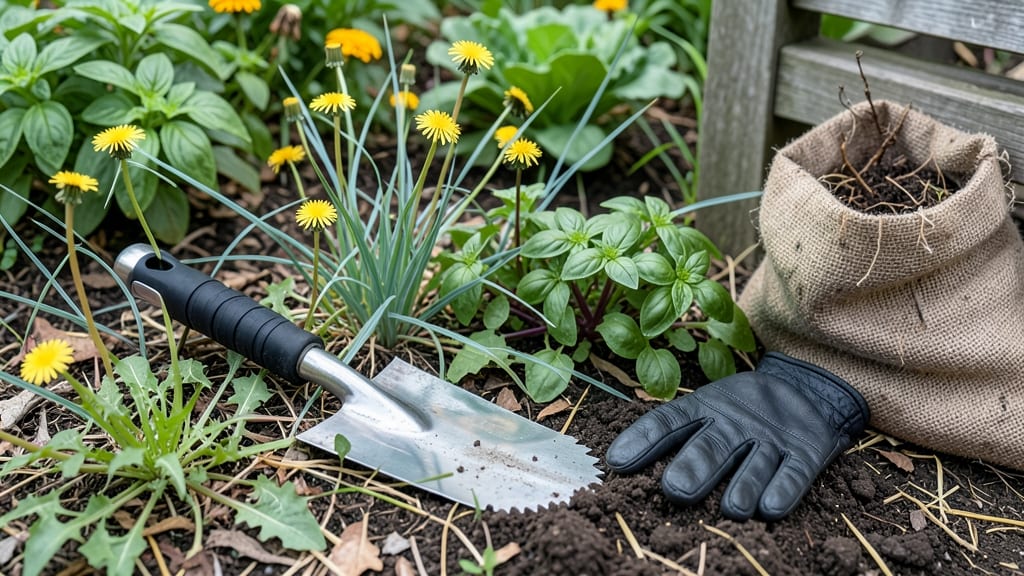
Choosing the right weed clearing garden tool depends on your garden size and weed type, with hand tools like hoes and trowels perfect for small areas, while cultivators and weed burners handle larger spaces more efficiently. Match your selection to the terrain and weed density for best results.
Hand tools like hoes and trowels give you precise control for weeding between plants or in tight spaces, but they can be time-consuming for larger areas. 🌱 For bigger gardens, cultivators and weed pullers save time by targeting multiple weeds at once, though they may disturb nearby plants.
Solar-powered weed burners offer a chemical-free option for tough weeds, especially in hard-to-reach spots where manual tools struggle.
Your garden's terrain also matters—flat areas work well with push-style cultivators, while hilly slopes may require lighter, handheld tools. Consider whether you're dealing with shallow annual weeds or deep-rooted perennials, as some tools excel at one but not the other.
I always recommend testing a few options if you're unsure which will work best for your specific needs.
💡 In This Article
- How Different Weed Tools Work for Garden Efficiency
- Selecting the Best Weed Tool for Your Garden Size
How different weed tools work for garden efficiency
The mechanics behind weed tools vary dramatically—each is designed to exploit a specific weakness in weed biology. Manual tools like hand hoes work by cutting weeds at the soil line, severing their vascular system and preventing nutrient flow.
Their narrow blades (typically 1/8-inch thick) allow precise cuts between plants, while their angled design lifts soil slightly to expose hidden weed sprouts. This method excels for shallow-rooted annuals like crabgrass, where removing just 1/4-inch of stem can kill 90% of the plant within 3-5 days.
Motorized cultivators take a different approach by vibrating or spinning tines that penetrate 2-4 inches deep, uprooting weeds by disrupting their root systems. The rapid motion (typically 3,000-5,000 vibrations per minute) creates soil turbulence that exposes dormant weed seeds to sunlight, where they'll often die from desiccation.
These tools shine on perennial weeds like dandelions, whose deep taproots (up to 12 inches) require mechanical force to break. The trade-off? They can damage nearby plants if not used carefully, especially in vegetable beds where roots are shallow.
Solar-powered weed burners use concentrated heat (reaching 1,500°F) to denature plant proteins in seconds, effectively "cooking" the weed tissue. The infrared rays penetrate 1/8-inch deep, causing cellular dehydration and immediate wilting.
This method is particularly effective for broadleaf weeds like clover, which have thinner leaves that absorb heat quickly. Unlike manual tools, burners don't require physical contact, making them ideal for rocky terrain or areas with dense weed mats where pulling would be impossible.
Weed pullers—whether manual or powered—target the root-ball system, using leverage to extract weeds entirely. The D-shaped handles on tools like the Stihl weeder provide 20-30 pounds of pulling force, enough to remove weeds with roots up to 6 inches deep.
This method is most effective for established perennials, where cutting alone would regrow from the root. The key advantage? No soil disturbance means nearby plants stay undamaged, making it perfect for orchards or flower beds where precision matters.
For tough weeds like bindweed or nutsedge, soil solarization (using clear plastic sheets) works by trapping heat to raise soil temperatures to 120-140°F for 4-6 weeks. This kills weeds at all growth stages by disrupting their metabolic processes.
The process is slow but chemical-free, ideal for organic gardens where herbicides are prohibited. Most gardeners combine this with manual tools for immediate visible results while the solarization works beneath the surface.
What most people overlook is how tool weight affects efficiency. Lightweight tools (2-4 pounds) reduce fatigue for 30-minute sessions, while heavier cultivators (10-15 pounds) deliver more force per swing.
The right choice depends on your garden's scale—small plots benefit from precision tools, while large lawns need power and coverage.
For example, a Hula hoe (weighing just 1.5 pounds) can clear 50 square feet per minute in tight spaces, while a riding cultivator covers 1,000 square feet per hour on flat terrain.