
Watering
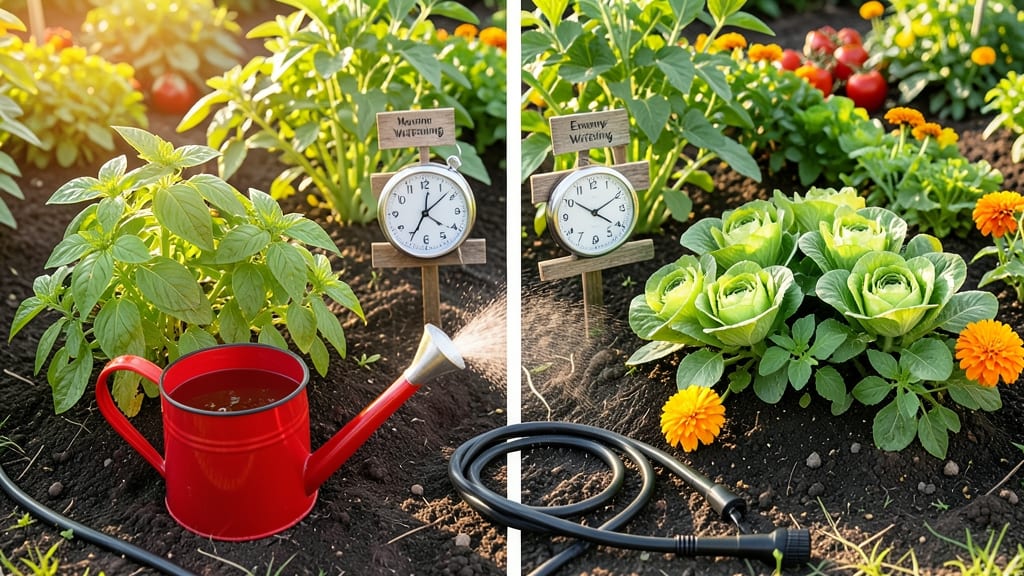
Watering your garden in the morning or evening isn’t just about convenience—it’s about maximizing plant health, minimizing waste, and even fighting pests.
You’ve probably heard conflicting advice: some say morning watering prevents fungal diseases, while others swear by evening sessions to reduce evaporation. But what does the science say?
And how do you adapt for your specific plants and climate? The answer isn’t one-size-fits-all, and getting it wrong can mean wasted water or stressed roots.
Morning watering gives plants a head start with moisture before the heat of the day, while evening sessions can help retain water longer—but both have trade-offs. Factors like humidity, soil type, and even the types of General Garden Plants 🌱 you’re growing play a role.
For example, drought-prone areas might benefit from evening watering, while fungal-prone plants thrive with morning hydration.
In this guide, I’ll break down the pros and cons of each approach, share science-backed timing tips, and help you decide the best schedule for your garden’s needs—so you can water smarter, not harder.
Morning vs. evening watering: how plant biology decides the winner
Deciding whether to water your garden in the morning or evening isn’t just about your schedule—it’s about how plants absorb water, how quickly it evaporates, and even how fungal diseases spread.
Studies show that morning watering gives roots time to soak up moisture before the heat of the day, while evening watering can leave foliage damp overnight, inviting pests and diseases. Let’s break down the science behind each approach to help you make the best choice for your plants.
One of the biggest factors is evaporation rates. Water evaporates faster in the midday sun, meaning morning watering ensures moisture reaches the roots before it disappears. In contrast, evening watering can lead to up to 30% more water loss due to cooler temperatures and still air.
But it’s not just about evaporation—soil temperature also plays a role. Cooler evening soils can slow water absorption, while morning watering aligns with the plant’s natural hydration cycle.
Here’s how the two methods stack up in key areas:
Morning vs. Evening Watering Comparison
| Factor | Morning Watering | Evening Watering |
|---|---|---|
| Evaporation Rate | Low (cooler air, less wind) | High (cooler temps but still significant loss) |
| Root Uptake | Optimal (roots absorb before heat stress) | Slower (cooler soil reduces absorption) |
| Fungal Risk | Low (foliage dries quickly) | High (damp leaves overnight) |
| Pest Attraction | Minimal (dry foliage) | Increased (moisture attracts slugs, snails) |
| Soil Temperature | Warmer (enhances root growth) | Cooler (slows water absorption) |
| Best For | Most plants (veggies, flowers, herbs) | Drought-prone areas, succulents |
For most gardeners, morning watering between 6 AM and 10 AM is the gold standard. This timing allows water to penetrate the soil deeply before the sun peaks, giving plants a full day to use the moisture.
It also reduces the risk of powdery mildew and bacterial spot, two common fungal diseases that thrive in damp conditions. If you’re watering in the evening, aim for after 6 PM to give foliage time to dry before nightfall.
However, morning watering isn’t always the answer. In hot, dry climates, like the Southwest U.S., evening watering can be more efficient because the cooler air reduces evaporation.
For example, succulents and cacti often prefer evening watering to avoid the intense midday heat. Always consider your local climate and plant types when deciding.
Another critical factor is pest control. Wet leaves at night create the perfect environment for slugs, snails, and fungal spores to multiply. If you notice an uptick in pests, switching to morning watering can make a noticeable difference.
I’ve seen tomato plants in my garden develop early blight after consistent evening watering—once I switched to mornings, the problem disappeared.
Soil type also influences the best watering time. Sandy soils drain quickly, so morning watering ensures moisture stays available longer. In contrast, clay soils hold water well, making evening watering less risky for fungal issues.
To test your soil’s drainage, dig a hole, fill it with water, and time how long it takes to drain. If it’s gone in under an hour, morning watering is ideal.
If you’re torn between morning and evening, try this experiment: Water half your garden in the morning and the other half in the evening for a month. Observe the leaf health, growth rate, and pest activity.
You’ll quickly see which method works best for your specific conditions. For most gardeners, though, the science leans heavily toward morning watering as the safer, more efficient choice.
Pro tip: Pair your watering schedule with mulching. A 2-3 inch layer of organic mulch (like straw or wood chips) can reduce evaporation by up to 30% and keep soil temperatures stable.
This means you’ll need to water less frequently, regardless of the time you choose. Mulch also suppresses weeds, which compete with your plants for water.
Ultimately, the best time to water depends on your plants, climate, and soil. Start with morning watering as your baseline, but don’t hesitate to adjust based on what you observe in your garden.
The goal is to give your plants the moisture they need while minimizing waste and disease risk—so experiment and find what works best for your green thumb!
When to break the rules: exceptions for climate, plant type, and pest control
While morning watering is often the golden rule, some drought-prone regions or specific plant types actually thrive with evening watering. In arid climates like the Southwest U.S., watering at dusk reduces evaporation rates by up to 30% compared to morning sessions.
This means more water reaches roots instead of disappearing into dry air. For succulents and cacti, evening watering mimics their natural desert environments where moisture arrives after nightfall.
Another exception? Humidity-loving plants like ferns or calatheas benefit from evening watering because it increases air moisture overnight. This prevents leaf scorch and crispiness—common issues in dry indoor environments.
Even lawns in humid zones may need evening watering to combat fungal diseases like brown patch, which thrive in damp morning dew.
For tomatoes and other vegetables, evening watering can reduce blossom-end rot by keeping soil consistently moist.
However, avoid wetting foliage to prevent early blight—use drip irrigation instead. Herbs like basil and cilantro also appreciate evening hydration, especially in hot climates, as it reduces leaf burn from midday sun exposure.
🌱 Pros-Cons Box:
- 30% less evaporation in dry climates
- Reduces fungal risks in humid zones
- Better for succulents and desert plants
- Keeps soil moist longer for deep roots
- Increases pest activity (slugs, snails)
- Can promote foliar diseases if leaves stay wet
- Less efficient in windy areas (water loss)
- Reduces pest activity (dries foliage faster)
- Encourages stronger root growth (cooler soil)
- Better for most vegetables (tomatoes, peppers)
- Prevents overnight fungal growth
- Higher evaporation rates in heat
- Less effective in drought-prone areas
- Can stress heat-sensitive plants (e.g., basil)
If you live in a coastal region with high humidity, evening watering can be a game-changer. The cooler night air helps prevent powdery mildew on roses and zucchini, while also giving container plants a chance to absorb moisture before daytime heat evaporates it.
For lawns, evening watering in hot summers can reduce brown patches by keeping grass blades from drying out too quickly.
To adapt, time your watering based on your local climate and plant needs. In desert areas, water deeply at dusk to maximize root penetration. In humid zones, stick to early evening (before 8 PM) to avoid fungal issues.
Always check soil moisture—if the top 1-2 inches are dry, it’s time to water, regardless of the time.
For potted plants, evening watering works well because containers dry out faster. Just ensure pots have drainage holes to prevent root rot from overnight saturation. And remember: mulch is your best friend—it retains moisture whether you water in the morning or evening. 🌿