
Light Requirements
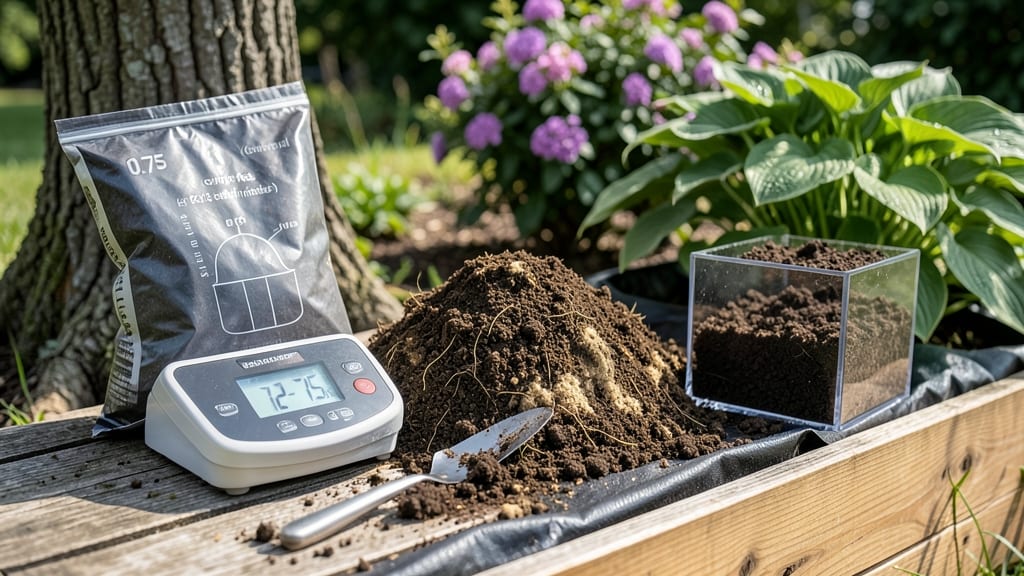
.75 cubic feet of garden soil typically weighs between 15 to 25 pounds, depending on moisture content, organic matter, and soil type—sandy soil leans lighter (15-18 lbs), while clay-heavy or compost-rich soil can reach 22-25 lbs. Always account for compaction when estimating weight for projects like raised beds or containers.
.75 cubic feet of soil isn't a one-size-fits-all measurement—its weight shifts dramatically based on composition.
For example, sandy soil barely hits 15 pounds due to its loose particles, while clay-heavy mixes can approach 25 pounds when packed. 🌱 Even a 10% moisture increase can add 2-3 pounds to that half-cubic-foot volume, so always check your soil's dampness before calculating.
This variability explains why gardeners often overestimate when buying materials for raised beds or containers.
Understanding these differences helps avoid costly mistakes. A 10-cubic-foot bag of potting mix might weigh 40-50 pounds when dry but swell to 60 pounds after watering.
For precise projects, I recommend weighing a small sample first—just scoop .25 cubic feet into a known container, then multiply by three for your total estimate.
💡 In This Article
- Soil Density Factors Affecting Weight per Cubic Foot
- Practical Weight Estimates for Gardening Projects
Soil density factors affecting weight per cubic foot
Soil weight varies because of its particle composition and porosity. Sandy soil has large particles with minimal surface area, so it barely reaches 15-18 pounds per .75 cubic feet due to high air pockets.
Clay soil, with its tiny, tightly packed particles, can hit 22-25 pounds—nearly double the weight—because water clings to those surfaces like a sponge. 🌿 The secret lies in bulk density, which measures how tightly particles pack: sandy soils average 90-100 lbs/cubic foot, while clay soils hit 110-130 lbs/cubic foot.
Organic matter adds another layer. Compost or peat moss can increase weight by 30-50% compared to mineral soil alone, since decaying plant material holds moisture and adds mass.
For example, a .75 cubic feet mix of 50% topsoil and 50% compost might weigh 20-22 pounds—heavier than pure sand but lighter than clay.
Moisture is the wild card: saturated soil gains 1-2 pounds per cubic foot per 10% water increase, turning a 15-pound sandy sample into a 17-pound burden after rain.
Compaction matters too. Tamping down soil (like when building raised beds) can increase weight by 10-20% by squeezing out air. A loose pile of .75 cubic feet might weigh 16 pounds, but after adding plants and watering, it could hit 19 pounds.
This is why gardeners often overestimate container capacity—what seems like enough space for roots might actually be 30% heavier once filled with moist, settled soil.
To test your soil's density at home, use a simple method: fill a 1-gallon bucket (about .13 cubic feet) with soil, then weigh it. Multiply that result by 5.77 to estimate weight per .75 cubic feet.
For example, if your sample weighs 10 pounds, your .75 cubic feet would weigh roughly 57.7 pounds—clearly, this approach highlights why understanding soil type is critical for accurate planning.
Here’s a quick reference for common soil types:
- Sandy soil: 15-18 lbs (dry), 17-20 lbs (moist)
- Loamy soil: 18-22 lbs (balanced texture, ideal for gardens)
- Clay soil: 22-25 lbs (dry), 25-30 lbs (saturated)
- Peat/compost mixes: 16-20 lbs (varies with organic content)
Knowing these ranges helps you adjust for projects like erosion control mats or container gardening, where weight affects stability and drainage. For instance, a 4'x8' raised bed (32 cubic feet) filled with clay soil could weigh over 800 pounds—heavy enough to require structural reinforcement! 💡