
Planting
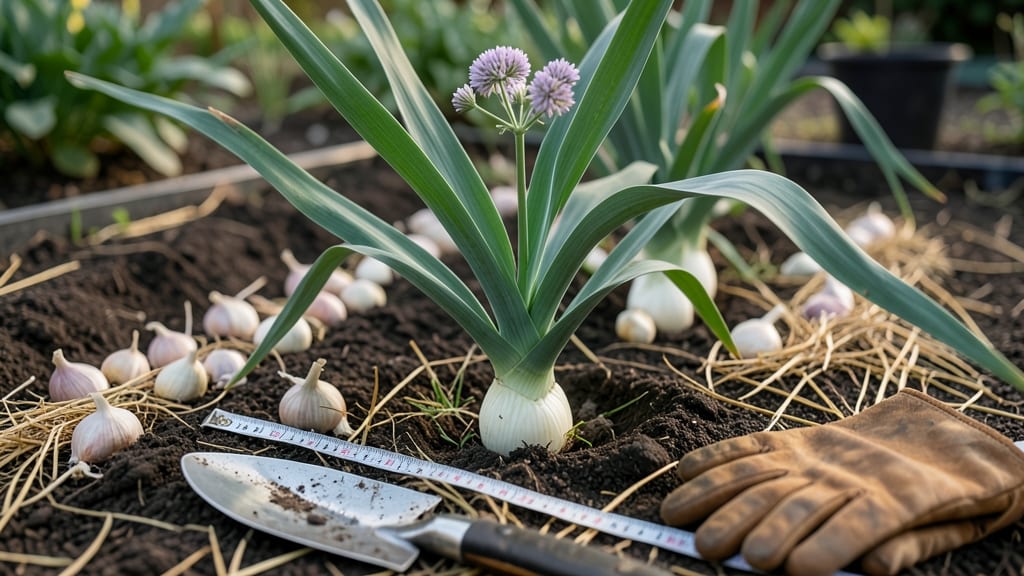
Spacing garlic in your garden correctly is the secret to plump bulbs and fewer pests—4-6 inches apart gives roots room to spread without stealing nutrients from neighbors.
Planting garlic too close together steals nutrients and invites disease, while spacing it too far wastes precious garden space—so how do you strike the perfect balance for a bumper harvest? The answer lies in understanding how garlic grows and what your soil can handle.
Hardneck varieties need slightly more room than softnecks, and clay soil demands wider spacing than loose, sandy ground. Even your climate plays a role—cooler zones like 6a benefit from tighter spacing than hotter regions.
Below, I break down the science behind ideal spacing, common mistakes to avoid, and how to adjust for different soil types and garden setups—so you can grow healthier, larger bulbs every season.
Optimal garlic spacing: 4-6 inches apart for bulb growth
When planting garlic, the 4-6 inch spacing rule isn't arbitrary—it's rooted in how garlic bulbs develop underground.
Each clove grows into a bulb that needs room to expand horizontally and vertically. Hardneck varieties (like Rocambole) often need the full 6 inches, while softneck types (like Silverskin) can sometimes tolerate 4 inches.
This spacing ensures bulbs don't compete for nutrients or water, which directly impacts their size and flavor.
Garlic bulbs develop from a single clove, but they're not solitary growers—they send out root systems that spread 6-12 inches wide. Planting too close forces roots to tangle, creating a perfect environment for fungal diseases like white rot.
Meanwhile, spacing too far wastes garden real estate when you could be growing more plants. The 4-6 inch range strikes that perfect balance between yield and plant health.
Here's the science behind it: each garlic bulb needs about 1 square foot of space to reach its full potential. That's roughly 12 inches in diameter when you account for root spread and bulb expansion.
The 4-6 inch spacing between cloves in a row creates this 12-inch diameter circle when you consider the spacing between rows (typically 12-18 inches). This arrangement mimics how garlic grows in its native habitats.
The 4-6 inch spacing also creates crucial air circulation between plants. Garlic leaves transpire moisture, and stagnant air between crowded plants can lead to fungal infections. Proper spacing allows air to flow, keeping foliage dry and reducing the risk of botrytis leaf blight.
This is especially important for hardneck varieties, which produce scapes that need room to grow upright without touching neighboring plants.
Another key factor is how garlic bulbs develop from the base. Each clove grows downward, forming a bulb that pushes upward through the soil. With 4-6 inch spacing, bulbs have room to form multiple cloves per bulb rather than just one or two.
This is why properly spaced garlic often yields larger bulbs with more individual cloves—each clove represents a potential new plant for next season's harvest.
For hardneck garlic, the 6-inch spacing is ideal because these varieties produce longer stems and larger bulbs.
The extra space accommodates their broader root systems and allows scapes to grow without crowding. Softneck varieties, on the other hand, can handle slightly closer spacing (4-5 inches) because they produce smaller bulbs with more cloves per bulb. This makes them better suited for tighter spaces or container growing.
One common misconception is that garlic needs deep planting to develop large bulbs. While planting 2 inches deep is standard, the real magic happens with proper spacing. Deep planting helps anchor the clove, but it's the horizontal space that allows roots to establish and bulbs to expand.
Think of it like giving each garlic plant its own personal growing zone where it won't be competing for resources.
When planning your garlic bed, consider using a grid system with 6-inch spacing between cloves and 12-18 inches between rows. This creates a checkerboard pattern that maximizes space while ensuring each plant has equal access to sunlight, water, and nutrients.
For container growing, reduce spacing to 4 inches and use larger pots (at least 12 inches wide) to accommodate root spread without overcrowding.
Proper spacing also makes harvesting easier. When bulbs are spaced correctly, they're easier to dig up without damaging neighboring plants. Overcrowded garlic often results in smaller, irregularly shaped bulbs that store poorly.
The 4-6 inch spacing ensures you'll harvest plump, well-formed bulbs that store beautifully through winter and even into the next growing season.
Remember, garlic is a perennial crop that can be left in the ground for multiple years if properly cared for. The spacing you establish now will pay dividends in future harvests.
By giving each clove its own space to grow, you're not just optimizing this year's crop—you're setting the stage for years of abundant garlic harvests with minimal effort.
Garlic spacing mistakes that kill your harvest (and how to Fix them)
Even the most experienced gardeners can fall into garlic spacing traps that sabotage harvests. Overcrowding stunts bulb growth, while uneven rows create maintenance nightmares. The good news? Most spacing issues have simple fixes—even in established beds. Let’s diagnose the most common mistakes and rescue your crop before it’s too late.
I’ve seen gardeners plant garlic too close together because they assume more cloves mean more bulbs. But crowded garlic competes for nutrients, leading to small, weak bulbs and higher disease risk. On the flip side, spacing garlic too far apart wastes garden real estate and makes weeding a chore.
The sweet spot? 4-6 inches apart in rows spaced 12-18 inches apart—but only if you adjust for your soil and variety.
⚠️ 3 Spacing Mistakes That Ruin Garlic Harvests
- Crowding: Cloves planted less than 3 inches apart compete for nutrients, leading to tiny bulbs and fungal rot from poor airflow.
- Uneven Rows: Jagged or inconsistent spacing makes weeding and harvesting messy, increasing pest access.
- Over-Spacing: Gaps wider than 8 inches waste space and make plants vulnerable to wind damage.
💡 Fix: Thin crowded beds immediately or replant gaps in spring.
If your garlic bed is already planted too tightly, don’t panic. You can thin garlic clumps early in the season (before shoots reach 4 inches tall). Gently pull out excess cloves, leaving the strongest ones spaced 4-6 inches apart.
For hardneck varieties, prioritize keeping the largest cloves—they’ll produce the biggest bulbs. Mulch heavily afterward to retain moisture and reduce stress on the remaining plants.
Uneven rows? It’s a common issue when planting by hand, but it’s fixable. Use a string line to create straight rows if replanting isn’t an option. For established beds, mark new spacing guidelines with stakes or flags and thin out plants that fall outside the 4-6 inch rule.
This also helps prevent garlic rust, which thrives in crowded, damp conditions.
For container-grown garlic, spacing mistakes are even costlier. Overcrowding in pots leads to root-bound bulbs that split or rot. If your container garlic looks stunted, repot individual bulbs into 5-gallon pots with fresh soil, spacing them 6 inches apart.
Choose larger containers next time—garlic needs room to breathe, even in pots.
Remember, soil type matters. In clay soil, space garlic 6 inches apart to prevent waterlogging, while sandy soil can handle closer 4-inch spacing since it drains faster.
Always adjust based on your garden’s conditions. With these fixes, your garlic will have the space it needs to grow into plump, flavorful bulbs instead of struggling for survival.