
Gardening Tropical Plants: Sun-Loving Varieties That Thrive Indoors & Out

Companion Plants

Gardening Tropical Plants: Sun-Loving Varieties That Thrive Indoors & Out

Gardening with tropical plants is all about recreating their sun-drenched, humid homeland—whether you're planting in your backyard or on a windowsill.

Picture this: vibrant hibiscus blooms, lush ferns unfurling, and orchids that seem to dance in the breeze—all thriving in your own space. The key isn’t just sunlight (though they love it) but understanding their unique needs for moisture, airflow, and the right soil.

You don’t need a greenhouse or a tropical climate to grow these beauties. With the right sun-loving varieties and a few simple tricks, you can bring the jungle indoors or transform your outdoor oasis into a year-round paradise.

In this guide, I’ll walk you through the best tropical plants for beginners and experts, how to mimic their natural habitat, and troubleshoot common problems—so your 🌴 friends stay happy and healthy, no matter where you live.

Top 10 sun-loving tropical plants for beginners and experts

Bringing a slice of the tropics to your garden doesn’t require a vacation in Hawaii. These sun-loving tropical plants thrive with 6+ hours of sunlight daily, making them perfect for both outdoor gardens and bright indoor spaces.

Whether you're a beginner or a seasoned gardener, these varieties offer vibrant colors, low-maintenance care, and dramatic foliage that will make your space feel like a jungle retreat.

From the bold architectural leaves of the Bird of Paradise to the stunning blooms of hibiscus, each plant on this list brings something unique to your collection. I’ve included both easy-care options for newbies and showstopper varieties for those ready to level up their tropical game.

Let’s dive into the top 10 sun-loving tropical plants that will transform your garden into a lush paradise.

Plant Name Sunlight Needs Water Needs Mature Size Care Tips
Bird of Paradise (Strelitzia) Full sun (6+ hrs) Moderate (dry slightly) 6-12 ft tall Fertilize spring-fall; prune dead blooms
Hibiscus (Hibiscus rosa-sinensis) Full sun to partial shade High (keep soil moist) 6-15 ft tall Deadhead spent blooms; mulch roots
Bromeliad (Bromeliaceae) Bright indirect light Low (water central cup) 1-3 ft tall Remove old pups; avoid cold drafts
Plumeria (Frangipani) Full sun (8+ hrs) Moderate (drought-tolerant) 10-20 ft tall Prune for shape; protect from frost
Bird of Paradise (Caesalpinia) Full sun Moderate (dry between waterings) 8-12 ft tall Fertilize lightly; trim leggy growth
Bougainvillea Full sun (6-8 hrs) Low (drought-resistant) 10-30 ft (vining) Prune for shape; train on trellis
Calathea (Rattlesnake Plant) Bright indirect light High (keep soil moist) 1-3 ft tall Mist leaves; avoid cold drafts
Philodendron (Heartleaf) Indirect bright light Moderate (let topsoil dry) 2-10 ft (vining)

How to create the perfect microclimate for tropical plants indoors

Bringing tropical plants indoors doesn’t mean sacrificing their lush, jungle-like growth. With a few clever DIY microclimate tricks, you can recreate their natural environment using everyday household items. The key lies in controlling humidity, temperature, and airflow—three factors that make or break tropical plant health.

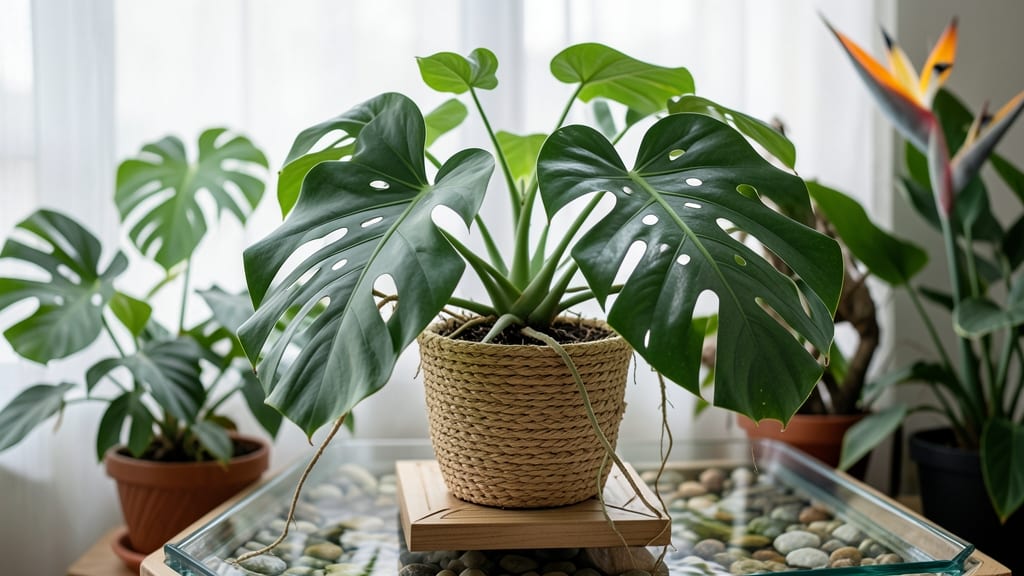
Many tropical plants, like Monstera deliciosa or Philodendron, thrive in 70-80% humidity, far higher than most homes naturally provide. Without intervention, their leaves crisp at the edges, and growth slows dramatically.

But don’t worry—simple solutions like pebble trays and humidity domes can work wonders with minimal effort or cost.

🌿 Key Takeaway:

3 Essential Microclimate Controls for Tropical Plants

Factor DIY Solution Tools Needed
Humidity Pebble trays or humidity domes Tray, pebbles, water
Temperature Warmth near windows or heat mats Thermometer, heat mat
Airflow Strategic fan placement or open windows Small fan, screen

💡 Pro Tip: Group tropical plants together to create a self-sustaining humidity zone—they’ll boost each other’s moisture levels naturally!

Start with a pebble tray, the simplest humidity hack. Fill a shallow tray with pebbles or gravel, add water until just below the top layer, and place your plant’s pot on top. As water evaporates, it creates a microclimate of moisture around the roots and leaves.

For extra humidity, cover the plant with a clear plastic dome (like a repurposed salad container) to trap moisture—just remember to remove it for airflow when watering.

Temperature control is equally critical. Most tropical plants prefer 65-80°F, so position them near south-facing windows where sunlight naturally warms the air. If your home runs cooler, use a small heat mat (like those for seedlings) underneath the pot.

Monitor with a thermometer to avoid drafts from AC vents or open windows, which can shock delicate foliage.

Don’t overlook airflow, often the forgotten piece of the puzzle. Stagnant air encourages pests and fungal diseases like powdery mildew. Place a small fan nearby on low speed to mimic gentle jungle breezes—just keep it far enough to avoid direct blasts.

Alternatively, place plants near an open window with a screen to allow fresh air circulation without pests.

With these three adjustments—humidity, temperature, and airflow—your tropical plants will reward you with vibrant growth and lush foliage, even in a non-tropical home. The best part? These solutions require no greenhouse and can be scaled to fit any space, from a sunny windowsill to a cozy corner.

★★★★★4.8(14 reviews)
Categories Companion Plants