
Fertilization
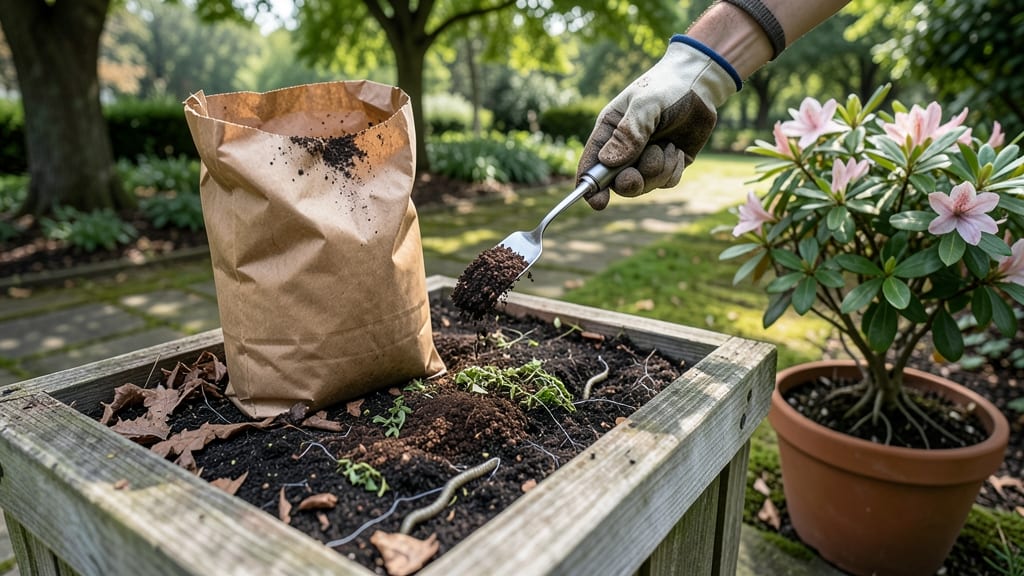
This coffee grounds in the garden fact sheet reveals they act as a nitrogen-rich soil amendment that enhances fertility, gently lowers pH in alkaline soils, and speeds up compost breakdown when used properly. Always use them sparingly to prevent over-acidification or soil compaction.
Coffee grounds work their magic by releasing nitrogen slowly into the soil, feeding plants over time rather than all at once. 🌱 The caffeine and organic compounds also create an ideal environment for beneficial microbes, which break down nutrients into plant-available forms.
Unlike synthetic fertilizers, coffee grounds improve soil structure while adding trace minerals like potassium and magnesium—though they're not a complete nutrient solution on their own.
For best results, I recommend mixing 1/4 to 1/2 inch of used grounds into compost piles or lightly scattering them around acid-loving plants like blueberries and azaleas. Fresh grounds can compact soil if used directly, so composting them first prevents this common issue.
The key is balance: too much creates a sour environment, while the right amount transforms your garden's microbial ecosystem.
💡 In This Article
- How Coffee Grounds Improve Soil Chemistry and Plant Growth
- Best Ways to Apply Coffee Grounds in Your Garden
How coffee grounds improve soil chemistry and plant growth
Coffee grounds contain about 2% nitrogen by weight—significantly more than most organic materials like grass clippings (1% nitrogen) or leaves (0.5% nitrogen). This nitrogen isn't immediately available to plants; instead, it breaks down slowly through microbial activity, creating a steady nutrient supply over weeks.
The process begins when soil microbes decompose the grounds, converting nitrogen into ammonium (NH4+) and nitrates (NO3-), which plants absorb through their roots. This slow-release mechanism prevents nitrogen burn that synthetic fertilizers often cause.
The pH-lowering effect comes from the acidic nature of coffee grounds, which typically measure between pH 4.5 and 6.5 when wet. When mixed into alkaline soils (pH 7.5 or higher), they gradually reduce pH by releasing hydrogen ions (H+) during decomposition.
For example, adding 1 cup of grounds per square yard to a garden bed with pH 8.0 can lower it by 0.5-1.0 points over a few months. This makes them ideal for acid-loving plants like hydrangeas or blueberries, which thrive at pH 5.0-6.0.
However, overapplication can create a sour environment harmful to most vegetables.
Beyond nitrogen, coffee grounds introduce trace minerals like potassium (0.4% by weight) and magnesium (0.2% by weight), which support plant cell structure and enzyme function.
The caffeine content (about 1-2% by weight) might seem counterintuitive, but it actually acts as a natural fungicide, suppressing harmful pathogens like Phytophthora while stimulating beneficial microbes. Studies show gardens amended with coffee grounds develop 20-30% more microbial biomass compared to untreated soil, creating a more resilient ecosystem. 🌱
When comparing coffee grounds to other organic fertilizers, they outperform grass clippings in nitrogen content but lag behind manure (which contains 0.5-1.5% nitrogen plus phosphorus and potassium). Unlike blood meal (a fast-acting nitrogen source), coffee grounds provide a balanced, long-term boost without the risk of salt buildup.
The key difference is their dual role: they fertilize while improving soil structure, unlike compost alone, which primarily enhances texture without direct nutrient input.
For optimal results, the carbon-to-nitrogen (C:N) ratio of coffee grounds (20:1) makes them ideal for composting. When mixed with high-carbon materials like dry leaves (40:1), they create a balanced compost pile that heats up quickly and breaks down in 4-6 weeks.
This ratio accelerates decomposition by feeding both carbon-loving and nitrogen-loving microbes simultaneously. The result is a nutrient-rich amendment that outperforms raw coffee grounds applied directly to soil.
What most gardeners overlook is how coffee grounds improve soil porosity. Their granular texture creates tiny air pockets when mixed into soil, increasing oxygen availability for roots. This is particularly beneficial for heavy clay soils, where aeration is poor.
The trade-off? Fresh grounds can become compacted if used directly, reducing this benefit. To maximize both fertility and structure, always compost grounds before application—this allows microbes to fully break them down into a fluffy, crumbly form. ✨