
Planting
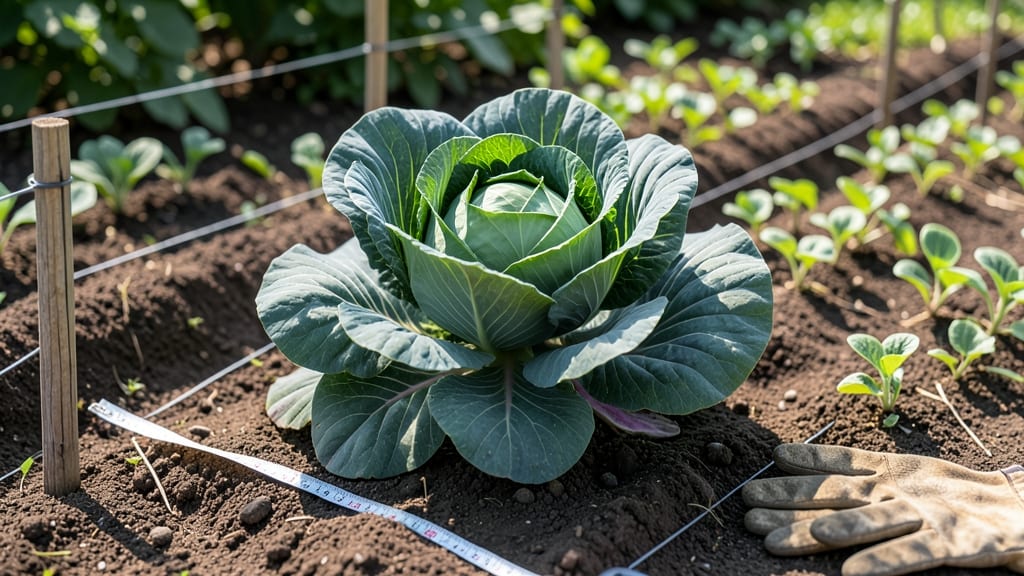
Proper cabbage garden spacing is the secret to growing heads so dense and uniform they look like they were sculpted 🥬 — and it all starts with the right layout.
Struggling to grow cabbages with dense, compact heads? The secret isn’t just soil or water—it’s smart spacing. Too close, and you’ll end up with stunted, misshapen heads fighting for nutrients. Too far apart, and you’ll waste garden space on plants that could’ve been thriving neighbors.
In this guide, you’ll learn the exact spacing rules for different cabbage varieties—whether you’re growing heading cabbages like Green or Red or leafy types like Savoy—plus how to arrange them in rows or grids for maximum yield.
We’ll also cover the most common spacing mistakes that lead to split heads or slow growth, so you can avoid them and enjoy a bountiful harvest every season.
Optimal cabbage garden spacing by variety type: head size matters
Cabbage plants thrive when given the right amount of space to develop large, firm heads. Unlike some vegetables, cabbage varieties vary dramatically in size—from tiny bok choy to massive savoy cabbage—and each requires distinct spacing. Overcrowding leads to stunted growth, while excessive spacing wastes garden real estate.
The key is balancing competition with air circulation to prevent disease and maximize yield.
Spacing needs change as cabbage grows through three critical stages: seedling (0-4 weeks), heading (4-8 weeks), and maturity (8+ weeks). For example, green cabbage seedlings can start close together but need 12-18 inches apart by maturity.
Meanwhile, bok choy stays compact, requiring only 6-8 inches of space. Understanding these differences ensures your cabbage patch produces high-quality, market-ready heads.
Direct-sown cabbage seeds require tighter initial spacing (6-12 inches apart) until they develop 4-6 true leaves. At this stage, thin seedlings to match the mature spacing for your variety.
Transplants, however, can be set directly into their final positions, saving time and reducing transplant shock. Proper transplant spacing from the start avoids the need for later thinning, which can stress plants.
| Variety | Seedling Spacing (inches) | Mature Spacing (inches) | Direct Sow vs. Transplant | Head Size |
|---|---|---|---|---|
| Green Cabbage (e.g., Golden Acre) | 6-12 | 12-18 | Thin to 12-18" | Medium-Large (5-8 lbs) |
| Red Cabbage (e.g., Ruby Perfection) | 8-12 | 14-20 | Thin to 14-20" | Large (6-10 lbs) |
| Savoy Cabbage (e.g., Savoy King) | 10-14 | 18-24 | Thin to 18-24" | Extra Large (8-12 lbs) |
| Bok Choy (e.g., Toy Choy) | 4-6 | 6-8 | No thinning needed | Small (1-2 lbs) |
| Napa Cabbage (e.g., Early Treasure) | 6-8 | 10-12 | Thin to 10-12" | Medium (3-5 lbs) |
For green cabbage, the most common variety, aim for 12-18 inches apart at maturity.
This spacing accommodates their medium-large heads (5-8 lbs) while allowing leaves to spread without overlapping. Red cabbage, with its tighter, more compact heads, benefits from slightly wider spacing (14-20 inches) to prevent head splitting and ensure vibrant color development.
Savoy cabbage, known for its wrinkled leaves, requires the most space (18-24 inches) due to its extra-large heads (8-12 lbs). These varieties need room to develop their distinctive texture and size. Meanwhile, bok choy and napa cabbage stay small, so 6-12 inches apart is ideal. Their compact growth makes them perfect for interplanting with other crops like radishes or lettuce.
When planting in rows, maintain 24-36 inches between rows to allow for easy access and airflow. This
How to arrange cabbage plants for maximum yield: row vs. grid layouts
When arranging your cabbage plants, the layout you choose directly impacts your harvest efficiency and plant health. Traditional row planting has been the go-to method for decades, but modern grid layouts and square-foot gardening offer compelling advantages.
The right spacing improves air circulation, reduces disease pressure, and makes harvesting easier. Let’s compare the two approaches to help you decide which works best for your garden.
In row planting, cabbages are spaced evenly along straight lines, typically 12-18 inches apart within rows and 24-36 inches between rows. This method maximizes sunlight exposure and makes it simple to access plants for weeding or harvesting.
However, it can leave gaps in your garden bed that go unused. On the other hand, grid layouts arrange plants in a more compact, organized pattern, often using 18-inch spacing in all directions, which optimizes space and makes it easier to monitor each plant’s progress.
Here’s a side-by-side comparison of how these layouts perform in real-world cabbage gardens, including their impact on yield, pest control, and harvest efficiency:
| Factor | Row Planting | Grid Layout |
|---|---|---|
| Spacing | 12-18" apart in rows, 24-36" between rows | 18" in all directions (square-foot) |
| Air Circulation | Good, but gaps between rows can trap moisture | Excellent, uniform spacing reduces humidity |
| Pest Control | Moderate, pests may hide in row gaps | Superior, easier to spot and remove pests |
| Harvest Efficiency | Easy access, but may require bending | High, upright access reduces strain |
| Yield per Square Foot | Lower, unused gaps in bed | Higher, maximizes space |
| Best For | Large gardens, traditionalists | Small spaces, intensive gardening |
For small gardens or urban plots, a grid layout is often the winner. I’ve seen gardeners in 10x10-foot beds fit 25-30 cabbage plants using this method, compared to just 15-20 in a row layout. The uniform spacing also makes it easier to rotate crops in subsequent seasons.
However, if you have a large, open garden, rows can still be efficient and easier to manage with machinery like tractors or broadforks.
One real-world example is my neighbor’s 4x8-foot raised bed, where she planted 16 cabbage starts in a grid pattern.
By spacing them 18 inches apart, she achieved 100% yield with heads averaging 6-8 inches wide, compared to her previous row method, which yielded only 12 plants with smaller heads. The grid also made it easier to spot cabbage worms early and remove them before damage occurred.
If you’re experimenting with layouts, start with a hybrid approach. Plant a few rows in the traditional style and a small grid section to compare yields. Pay attention to leaf health, disease presence, and harvest quality over the season.
You might be surprised by how much a few extra inches of space can improve your cabbage heads!
Remember, the key to both layouts is consistent spacing. Whether you choose rows or grids, stick to your chosen gap measurements to avoid overcrowding, which leads to pale, loose heads and increased disease risk.
With the right arrangement, your cabbage patch will thrive—and your dinner table won’t go wanting.