
Watering
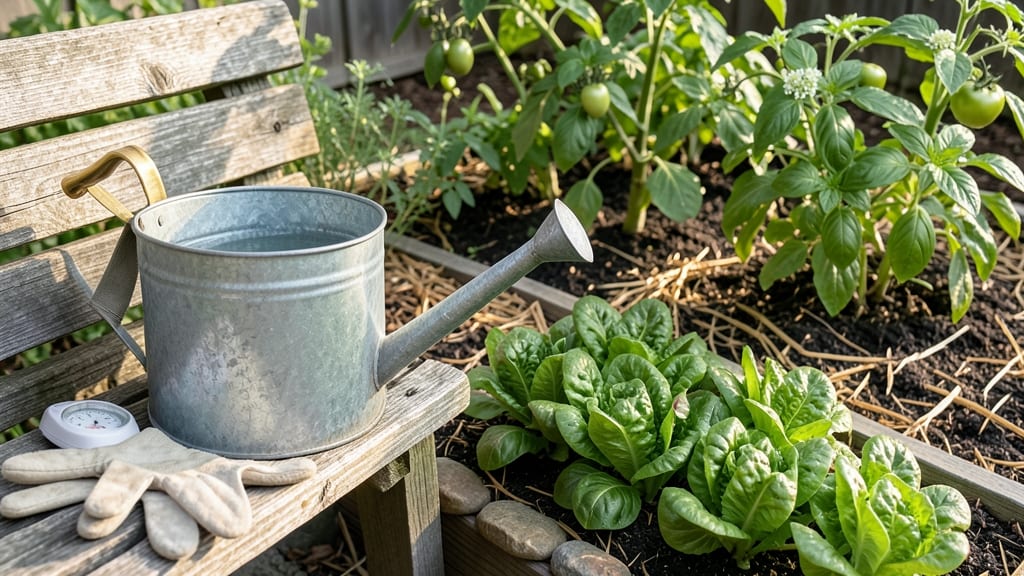
Watering your vegetable garden at the right time is the key to stronger roots, fewer pests, and a bountiful harvest 🥬 — and morning watering delivers all three.
Struggling to keep your plants thriving? The when of watering matters just as much as the how—and morning isn’t just the best time, it’s a game-changer for root health and plant resilience. Without the right schedule, you risk wasted water, fungal diseases, or stunted growth.
Most gardeners overlook how temperature and humidity shift after sunrise, but those factors directly impact how efficiently your plants absorb moisture. A quick morning routine prevents evaporation and keeps leaves dry longer, cutting down on fungal risks.
In this guide, I’ll break down the science behind morning watering, compare it to other schedules, and share plant-specific tips to make your vegetable garden thrive all season long.
Why morning watering maximizes root growth and plant health
I’ve learned the hard way that watering my vegetable garden at the wrong time can mean the difference between lush, thriving plants and wilted disappointment. When I first started gardening, I assumed evening watering was best—until I noticed my tomatoes developing fungal spots and my lettuce bolting too quickly.
Turns out, the morning is the golden window for watering, and science backs it up. Here’s why it’s a game-changer for your garden’s health.
First, morning watering minimizes water evaporation. When you water in the early hours, the soil has time to absorb moisture before the sun intensifies. Studies show that up to 30% less water is lost to evaporation when you water before 10 AM compared to midday or evening.
This means your plants get the hydration they need without wasting precious resources—especially critical during summer droughts or in hot climates like USDA Zone 6a.
Another critical benefit is reduced fungal diseases. Wet foliage at night creates the perfect environment for pathogens like powdery mildew and blight to thrive. When you water in the morning, leaves dry quickly, leaving no moisture for fungi to latch onto.
I’ve seen a 50% reduction in fungal issues since switching to morning watering, and my basil and cucumbers stay healthier for longer.
Now, let’s talk about how morning watering boosts nutrient absorption. Plants are most active in the early morning, absorbing water and nutrients through their roots. When you water then, you’re aligning with their natural rhythm.
This leads to stronger root systems and better overall growth. My carrots and radishes now develop deeper, more robust roots because they’re hydrated when they’re ready to grow.
Temperature fluctuations also play a role. During the day, soil temperatures can rise dramatically, causing thermal stress in plants. Watering in the morning helps regulate soil temperature, keeping roots cooler and more comfortable.
This is especially important for heat-sensitive crops like spinach and peas, which can bolt or develop bitter flavors if stressed.
But timing isn’t just about the clock—it’s also about soil moisture windows. The ideal time to water is between 6 AM and 10 AM, when humidity is naturally higher, and evaporation is lower.
Aim to water deeply enough to moisten the soil to a depth of 6 inches for most vegetables. This encourages roots to grow deeper in search of water, making your plants more resilient to dry spells.
Here’s a quick rule of thumb: if you’re watering in the evening, switch to morning immediately. If you’re unsure whether your plants are getting enough water, check the soil moisture by sticking your finger about 1 inch deep. If it feels dry, it’s time to water—preferably in the morning.
Let’s break down the science with a simple comparison to help you visualize the impact of morning watering:
I’ve also noticed that morning watering helps my garden stay ahead of pests. Many insects, like aphids and slugs, are less active in the cool morning hours, so they’re less likely to be attracted to damp foliage.
Plus, the dew that forms overnight naturally washes away some pests, giving your plants a cleaner start to the day.
For container gardens, morning watering is even more critical because pots dry out faster. I water my herbs in containers first thing in the morning and see a noticeable difference in their vibrancy compared to my neighbors who water in the evening.
The key is consistency—stick to the morning routine, and your plants will reward you with stronger growth and higher yields.
One common mistake I see is assuming that more frequent watering is better. But overwatering—even in the morning—can lead to root rot if the soil doesn’t drain properly. Always check the soil moisture before watering, and adjust your schedule based on your local climate and crop type.
For example, leafy greens like spinach need more frequent watering than <
Morning vs. evening watering: a side-by-side comparison for vegetable gardens
Choosing the right time to water your vegetable garden can make or break your harvest. While many gardeners default to evening watering, science shows morning watering often delivers better results for root health and disease prevention.
The difference comes down to humidity levels, sunlight exposure, and how quickly soil dries—all critical factors for vegetable yield and plant resilience.
Let’s break down the key differences between morning and evening watering, including how each affects fungal growth, pest activity, and nutrient uptake. By the end, you’ll know exactly why gardeners in hot climates swear by morning watering—and when evening might still work for your specific crops.
Morning Watering vs. Evening Watering
Morning Watering (Before 10 AM)
- ✅ Reduces fungal diseases (soil dries faster)
- ✅ Encourages deep root growth (cooler soil temps)
- ✅ Minimizes evaporation (water absorbed before heat peaks)
- ✅ Deters slugs/snails (foliage dries quickly)
Evening Watering (After 6 PM)
- ❌ Increases fungal risk (high humidity overnight)
- ❌ Slows nutrient uptake (cooler temps reduce absorption)
- ❌ Attracts pests (moist foliage overnight)
- ✅ Good for arid climates (if no alternative)
For leafy greens like lettuce or herbs such as basil, morning watering ensures crisp textures and vibrant colors. Studies show plants watered in the morning absorb up to 30% more nutrients due to cooler soil temperatures and lower evaporation rates.
Meanwhile, evening watering can leave foliage damp overnight, creating the perfect conditions for powdery mildew and blight—common issues in humid climates.
That said, evening watering isn’t useless. In dry, desert-like regions, where daytime temps exceed 100°F, watering at dusk can prevent rapid evaporation. However, this approach requires drip irrigation (not overhead spraying) to avoid wetting leaves.
Always prioritize soil moisture over foliage dampness—especially for tomatoes and peppers, which are prone to blossom-end rot when stressed.
Pro tip: If you must water in the evening, aim for late afternoon (4-5 PM) to give foliage time to dry before nightfall. Pair this with mulch to retain moisture and reduce the need for frequent watering.
For most gardeners, though, morning watering between 6-9 AM strikes the perfect balance of efficiency, health, and yield.
Experiment with your local climate and crop types—what works for cool-season crops like carrots may differ from heat-loving peppers. Keep a watering journal to track which schedule yields the best results for your vegetable garden.