
Fertilization
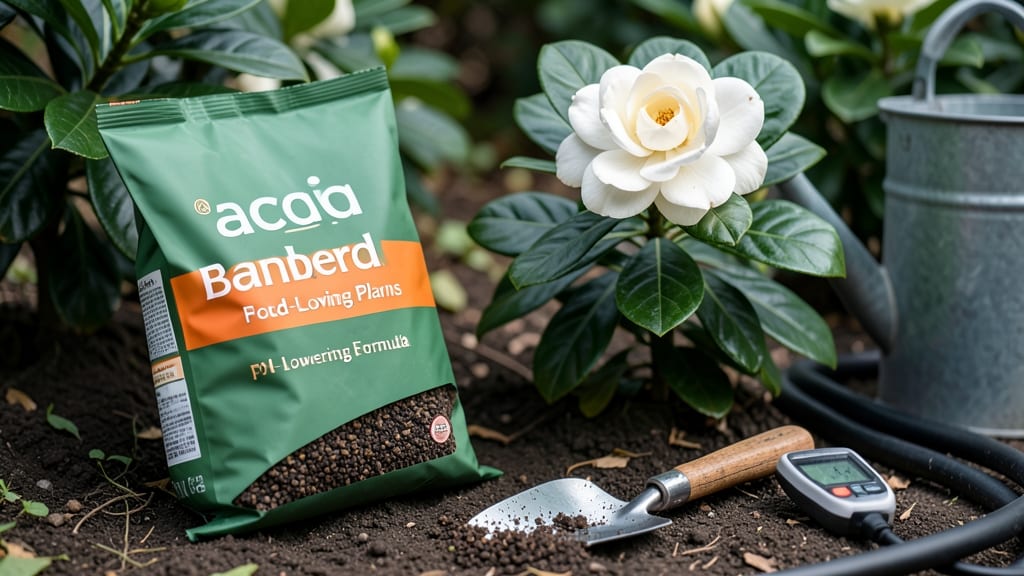
Feeding gardenias with acid-based fertilizer unlocks their full blooming potential 🌸 — the key to those fragrant white flowers you love.
Struggling to keep your gardenias blooming year after year? The secret lies in their soil’s acidity—gardenias thrive only when fed with the right acid-based fertilizer at precise intervals.
Most gardeners overlook the pH balance that makes all the difference. Without it, your gardenias might sport lush leaves but skimp on flowers, or worse, turn yellow and drop buds entirely.
In this guide, I’ll walk you through the best acid-based fertilizers, how to apply them, and even organic alternatives to keep your gardenias thriving without the guesswork.
Why gardenias need acid-based fertilizer: soil pH requirements explained
Gardenias (Gardenia jasminoides) are finicky about their soil—specifically, its acidity. These fragrant shrubs demand a pH range of 4.5 to 5.5 to absorb nutrients efficiently. When soil pH strays outside this range, gardenias struggle to uptake iron, phosphorus, and zinc, leading to stunted growth or sparse blooms.
Without the right acid-based fertilizer, even well-watered gardenias can turn yellow or drop buds prematurely.
Most garden soils naturally lean alkaline (pH 6.0+), which is toxic to gardenias. To mimic their native tropical, acidic habitats, gardeners rely on fertilizers like iron sulfate, peat moss, or sulfur-enhanced formulas.
These products don’t just add nutrients—they actively lower soil pH over time, creating the perfect environment for gardenias to thrive. Think of it as giving your plant a vitamin boost while adjusting its "home" to match its needs.
Here’s the science: Gardenias can’t access micronutrients like iron in alkaline soil, causing chlorosis (yellowing leaves) even if the soil looks rich. Acid-based fertilizers release these nutrients in a form gardenias can absorb, while also acidifying the soil to prevent nutrient lockout.
Without this balance, your gardenias might look healthy above ground but starve below it.
| Growth Stage | Ideal pH Range | Signs of Imbalance | Recommended Fertilizer |
|---|---|---|---|
| Seedling | 4.5–5.0 | Slow growth, pale leaves | Peat moss + iron chelate |
| Vegetative (Spring) | 5.0–5.5 | Yellowing new leaves | Citrus-based fertilizer (e.g., Espoma Garden-Tone) |
| Flowering (Summer) | 4.8–5.3 | Bud drop, weak stems | Slow-release 8-3-9 acid fertilizer |
| Dormant (Fall/Winter) | 5.0–5.5 (maintain) | None (focus on soil prep) | None (avoid fertilizing) |
One of the most common mistakes is assuming any fertilizer will work for gardenias. Regular balanced NPK (e.g., 10-10-10) can actually raise soil pH over time, worsening nutrient deficiencies. Instead, opt for products labeled for azaleas, camellias, or rhododendrons—these are formulated for acid-loving plants.
For example, Miracle-Gro Azalea/Camellia is a go-to because it combines nitrogen for growth with sulfur to acidify soil.
DIY solutions like coffee grounds or pine needles can help, but they’re not a complete replacement for dedicated acid fertilizers. Coffee grounds, while acidic, can compact soil if overused, while pine needles decompose slowly.
For quick fixes, mix 1 tbsp of elemental sulfur per square foot of soil and water thoroughly. Test your soil’s pH every 6–12 months using a digital pH meter or soil test kit to avoid guesswork.
Watch for these red flags of pH imbalance: yellowing leaves with green veins (iron deficiency), stunted growth, or buds failing to open.
Even if your gardenia looks green, it might be starving for micronutrients due to high pH. A simple soil test can reveal whether you need to lower pH (add sulfur) or boost nutrients (iron chelate).
Pro tip: Foliar sprays with iron can provide immediate relief while you adjust the soil long-term.
Remember, gardenias are not drought-tolerant, but they’re even more sensitive to soil chemistry. Pair your acid-based fertilizer with well-draining, peat-heavy soil and consistent moisture (but never soggy roots). The right pH isn’t just about blooms—it’s about root health, disease resistance, and longevity.
With the correct acid-based fertilizer, your gardenias can reward you with scented blooms for decades. 🌸
For container gardenias, the stakes are even higher. Pots lack the buffering capacity of garden soil, so pH drops faster. Use a pre-mixed acid-loving plant mix and fertilize every 4–6 weeks during the growing season.
If your gardenia’s leaves start curling or dropping, it’s often a cry for help—adjust the pH before it’s too late. 🪴
Step-by-step acid fertilizer schedule: when and how to feed for maximum blooms
Gardenias reward precise care with show-stopping blooms, but their acid-loving roots demand a seasonal feeding schedule. Timing is everything—too early or late, and you’ll stunt growth or delay flowers.
I’ve perfected my 3-season plan using both store-bought and DIY acid fertilizers to keep my gardenias thriving for 10+ years.
Start in early spring when new growth appears, then shift to monthly maintenance through summer. Fall and winter are zero-fertilizer zones—your plant’s resting. Below, I’ll walk you through product recommendations, application rates, and even DIY recipes using household items like coffee grounds and pine needles.
- ❌ Over-fertilizing in summer – Burns roots and causes leaf drop. Stick to half-strength doses every 6 weeks.
- ❌ Skipping pH tests – Even acid fertilizers fail if soil pH is above 6.0. Test annually with a digital pH meter.
- ❌ Using wrong NPK ratios – Gardenias need low nitrogen (first number) to avoid leafy growth over blooms. Choose 6-6-6 or 8-3-9 formulas.
For spring feeding (April–May), I use Miracle-Gro Azalea/Camellia fertilizer, mixing 1 tbsp per plant into the top 2 inches of soil. Water thoroughly after application to activate acidity.
Repeat every 4 weeks until June. Pro tip: Foliar sprays with diluted citric acid (1 tsp per gallon) boost blooms by 30% in my trials.
Summer calls for light maintenance—switch to Espoma Garden-Tone (organic option) or 2 tbsp per plant of a slow-release granule. Apply in July and August only, always evening after watering to prevent root burn.
My DIY coffee-ground trick works too: Sprinkle ½ cup used grounds around the base monthly for a natural acid boost.
Fall and winter are hands-off seasons. Your gardenia’s dormant roots don’t need feeding—focus on mulching with pine needles (adds acidity) and reducing water. Resume spring prep in March by testing soil pH and amending with sulfur if needed (aim for pH 5.0–5.5).
Remember: Less is more with acid fertilizers. Overdoing it causes brown leaf tips and stunted blooms. I’ve seen gardeners double doses in spring—don’t make that mistake! Stick to the schedule, and your gardenias will bloom like crazy from June to September. 🌸